

























Metabolism

CRISPR Applications in Metabolism Research
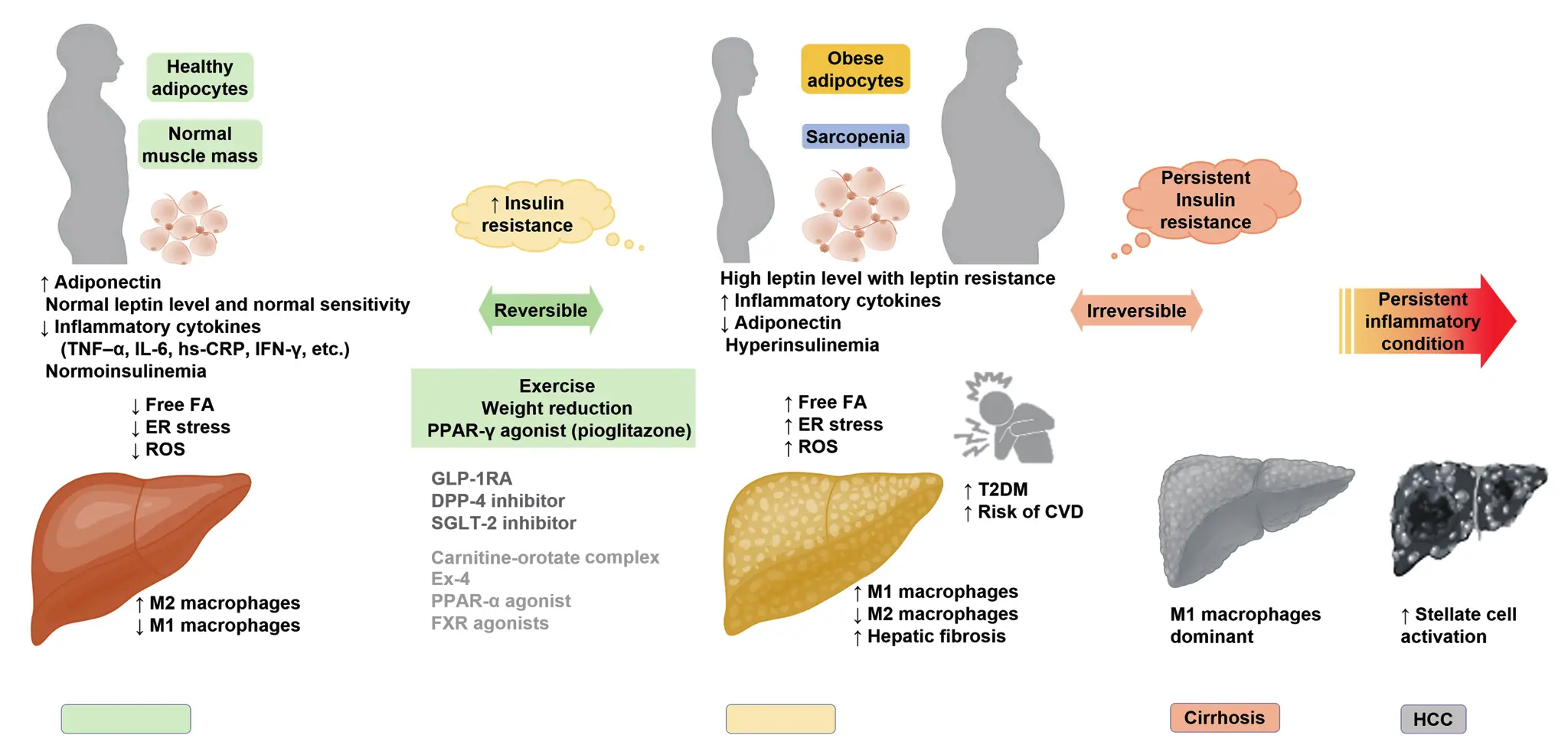
Pathophysiology in insulin resistance associated with metabolic disorders and progression to non-alcoholic fatty liver disease and type 2 diabetes mellitus (T2DM)
Jung et al., Diabetes Metab J, 2024
Metabolic disorders, including obesity, type 2 diabetes, metabolic dysfunction-associated steatotic liver disease (MASLD), and mitochondrial disorders, represent some of the most significant global health challenges.
At the molecular level, metabolic homeostasis depends on complex genetic networks that regulate nutrient sensing, energy storage, lipid metabolism, glucose regulation, and mitochondrial function across multiple cell types, including adipocytes, hepatocytes, pancreatic beta cells, and muscle cells.
However, traditional approaches often reveal disease-associated changes without fully understanding:
Which genes control metabolic pathways?
How do genetic variations drive metabolic dysfunction?
Which targets can be modulated for therapeutic intervention?
CRISPR gene editing technology enables researchers to move beyond correlation toward precise functional investigation.
By enabling targeted gene knockout, knock-in, activation, repression, and genome-wide screening, CRISPR provides powerful tools to:
Systematically discover genes controlling adipogenesis, lipid metabolism, glucose homeostasis, and energy balance.
Introduce, correct, or validate disease-associated mutations in human cells and iPSC-derived metabolic models.
Identify novel metabolic regulators and therapeutic targets through CRISPR-based screening approaches.
Generate genetically defined cellular models for drug discovery, target validation, and therapeutic development.



Adipose tissue plays a central role in energy storage, endocrine regulation, and metabolic homeostasis. Abnormal adipocyte differentiation, lipid accumulation, and impaired energy expenditure contribute to obesity and related metabolic disorders.
CRISPR technology enables systematic investigation of the genes and pathways controlling adipocyte biology.
CRISPR knockout screening allows researchers to identify genes involved in:
By combining CRISPR screening with phenotypic analysis, researchers can uncover previously unknown regulators of adipocyte function.
CRISPR-based gene manipulation enables comparison of different adipocyte states and investigation of:
The liver is a central metabolic organ responsible for lipid processing, glucose regulation, and detoxification.
Metabolic dysfunction-associated steatotic liver disease (MASLD) and metabolic dysfunction-associated steatohepatitis (MASH) are strongly influenced by genetic factors, environmental conditions, and metabolic stress.
CRISPR enables researchers to create genetically defined liver models for studying disease mechanisms and therapeutic strategies.
CRISPR editing enables precise introduction of metabolic disease-associated variants into human liver cells, allowing researchers to investigate:
By generating matched wild-type and mutant cell models, researchers can isolate the functional impact of specific genetic variants.
Applications include:
Diabetes is driven by impaired insulin production, beta cell dysfunction, and metabolic imbalance.
CRISPR technology provides powerful approaches to understand beta cell regulation, optimize cell differentiation strategies, and develop next-generation diabetes models.
CRISPR screening enables discovery of regulators involved in:
Mitochondria regulate cellular energy production and metabolic balance. Genetic defects affecting mitochondrial pathways can lead to severe metabolic and multisystem disorders.
CRISPR technology enables researchers to investigate mitochondrial disease mechanisms through precise genetic manipulation.
EDITGENE supports a complete CRISPR research workflow:
| Research Area | Key Scientific Question | CRISPR Strategy | EDITGENE Solution |
| Adipocyte Biology | Which genes regulate fat formation and energy balance? | CRISPR KO, CRISPR screening | sgRNA design, adipocyte models, functional screening |
| Liver Disease Modeling | How do genetic variants drive metabolic liver disorders? | KI, KO, base editing | Hepatocyte engineering, isogenic models |
| Diabetes Research | How can beta cell function be restored? | CRISPRa/i, screening, gene editing | Beta cell models, differentiation, immune engineering |
| Mitochondrial Disorders | How do genetic defects affect metabolism? | Gene KO/KI editing | iPSC models, mitochondrial functional studies |
Building Reliable CRISPR Solutions for Metabolism Research
Supported technologies include:
From:

EDITGENE provides complete project support.

Metabolic Cell Model Expertise

Proprietary sgRNA Design

Comprehensive Gene Editing Services

Advanced Screening Capabilities

Rapid Custom Model Generation

Proven CRO Track Record

Broad Cell Type Coverage

Global Support and Delivery
From adipocyte biology and obesity mechanisms, to liver disease modeling and diabetes research, from mitochondrial dysfunction analysis, to metabolic therapeutic target discovery—
EDITGENE empowers researchers with precise CRISPR solutions to decode metabolic regulation, build disease models, and accelerate translational discoveries.
