
Genetic Disease
Advancing Genetic Disease Research with CRISPR
From Variant to Therapy: Decoding Genetic Diseases
From Variant to Function: Identify Pathogenic Mutations
Genomic datasets often contain thousands of candidate variants per sample, yet only a subset contribute to disease phenotypes. Functional validation requires the ability to interrogate variants within their native chromatin and regulatory context, where epigenetic state, transcriptional regulation, and allele-specific effects can influence outcomes.
Leveraging CRISPR-mediated precision editing technologies (including base editing and prime editing), EDITGENE enables targeted introduction, correction, or modulation of variants at endogenous loci. This allows direct assessment of variant pathogenicity under controlled genetic backgrounds and supports rigorous genotype–phenotype mapping.
Build Genotype-Defined Systems
A fundamental requirement for mechanistic studies in genetic disease is the use of genetically defined and reproducible model systems. Heterogeneous genetic backgrounds can obscure causal relationships and introduce variability in phenotypic readouts.
CRISPR-based genome engineering enables the generation of isogenic model systems, where only the variant of interest differs between experimental conditions. This design is critical for isolating the functional contribution of specific mutations and improving experimental reproducibility.
In addition, combining genome editing with advanced biological systems—such as iPSC-derived cells and organoids—allows disease modeling across multiple layers of biological organization, from molecular pathways to tissue-level phenotypes.
| Model Type | Applications | CRISPR Strategy |
| Immortalized cell lines | Mechanistic studies, high-throughput screening | Knockout, point mutation knock-in, CRISPR library screening |
| iPSC-derived cells | Disease-relevant cell types | Patient-derived iPSC editing, isogenic control generation |
| Organoids | Tissue-level function, developmental processes | Genome editing combined with organoid differentiation |
| Genetically engineered animals | In vivo mechanism, efficacy evaluation | Embryo editing, conditional knockout |
By controlling genetic background and editing precision, researchers can establish direct causal links between genetic variation and phenotypic outcomes, significantly enhancing data interpretability.
From Mechanism to Intervention
Bridging the gap between genetic findings and therapeutic strategies requires systematic identification of disease-driving genes, modifier genes, and actionable intervention points. Functional genomics approaches are essential to move beyond correlation and establish therapeutic relevance.
CRISPR-based screening technologies—ranging from targeted perturbation to genome-wide knockout/activation libraries—enable unbiased discovery of genes that influence disease phenotypes. When combined with engineered disease models, these approaches support multi-layer validation of candidate targets.
Furthermore, precision editing technologies facilitate the evaluation of gene correction strategies, allele-specific interventions, and functional rescue experiments, providing critical insights into therapeutic feasibility.
CRISPR Strategies by Mutation Type
| Model Type | Recommended Strategy | Technical Considerations |
| Loss-of-function (LoF) point mutations | HDR-mediated precise correction | Donor template design is critical to improve repair efficiency |
| Gain-of-function (GoF) mutations | Allele-specific knockout | sgRNA design must leverage sequence differences |
| Repeat expansions | Selective disruption of mutant allele | Target expanded regions or flanking sequences |
| Large deletions | Gene replacement | Insert functional copies into safe harbor loci |
A Unified Path from Variant to Therapeutic Strategy

· to uncovering cellular vulnerabilities (dependency)
· to identifying actionable targets (drug discovery)
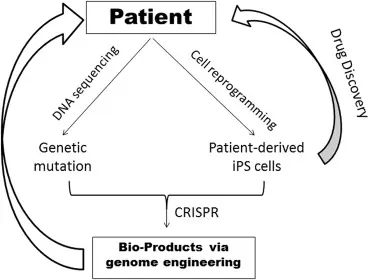
Variant → Function → Modeling → Target → Validation
This unified framework reduces experimental fragmentation and accelerates the generation of reproducible, translatable insights.
Built for Precision and Speed
· Monoclonal validation with sequencing confirmation (Sanger & NGS)
· Global project support and delivery
Explore Cell Models
Request Project Design
Explore Point Mutation Models
View Prime Editing Solutions
Explore Disease Models
Request Custom Model Development