
Oncology
Empowering Precision Oncology with CRISPR
From Mutation to Target Discovery and Mechanistic Insights
CRISPR-Powered Oncology Research
From Mutation to Target: Accelerating Discovery and Validation
Cancer originates from genetic alterations. From understanding how specific point mutations drive tumorigenesis, to identifying gene dependencies that sustain cancer cell survival, and ultimately discovering actionable therapeutic targets—CRISPR-based genome editing provides a powerful and versatile toolkit to address these fundamental questions.
EDITGENE offers a fully integrated platform, spanning precise genome editing to high-throughput screening, along with a comprehensive portfolio of ready-to-use cell models to accelerate your oncology research.
Point Mutations
From Variant to Function: Identify True Driver Mutations
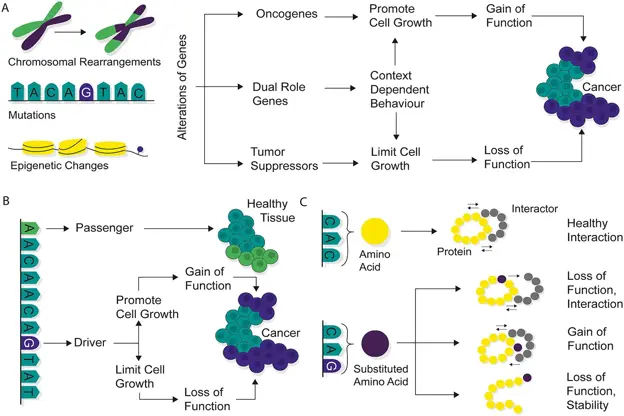
Tumor genomes are characterized by extensive genetic heterogeneity, harboring thousands of somatic variants across coding and non-coding regions. However, only a limited subset of these alterations act as true driver mutations that confer selective growth advantages, promote malignant transformation, or mediate therapeutic resistance. The majority remain passenger variants with minimal functional impact. Therefore, distinguishing driver from passenger mutations is essential for understanding tumor biology and for prioritizing clinically actionable targets.
A major challenge in cancer research lies in the functional interpretation of variants identified through high-throughput sequencing, particularly variants of uncertain significance (VUS). Experimental systems that enable precise, locus-specific manipulation of these variants are critical for establishing causal relationships between genotype and phenotype.
CRISPR-based precision genome editing technologies, including Prime Editing, provide a powerful framework for this purpose. By enabling accurate single-nucleotide substitutions, insertions, or corrections at endogenous loci, these approaches preserve native genomic context, epigenetic regulation, and transcriptional control. This allows for the generation of isogenic cellular models, in which the functional consequences of individual mutations can be systematically evaluated without confounding background variation.
Such models support mechanistic investigations into how specific mutations alter signaling pathway activity, cellular fitness, and drug response, and are particularly valuable for dissecting allele-specific effects within the same gene.
Key Applications:
· Identify functionally relevant variants from clinical sequencing data
· Compare mutation-specific drug responses (e.g., KRAS G12C vs G12D)
· Validate resistance mutations in targeted therapy (EGFR, ALK, etc.)
Available Resources:
Pre-built mutation models covering key oncogenes and tumor suppressors:
KRAS · TP53 · EGFR · and more
Tumor Dependency Mapping
Identify Cancer Cell Vulnerabilities
Tumor cells, following the acquisition of oncogenic alterations, often become highly dependent on a subset of genes for survival and proliferation—a phenomenon known as tumor dependency or oncogene addiction. These dependencies reflect functional rewiring of cellular networks and represent critical vulnerabilities that can be therapeutically exploited.
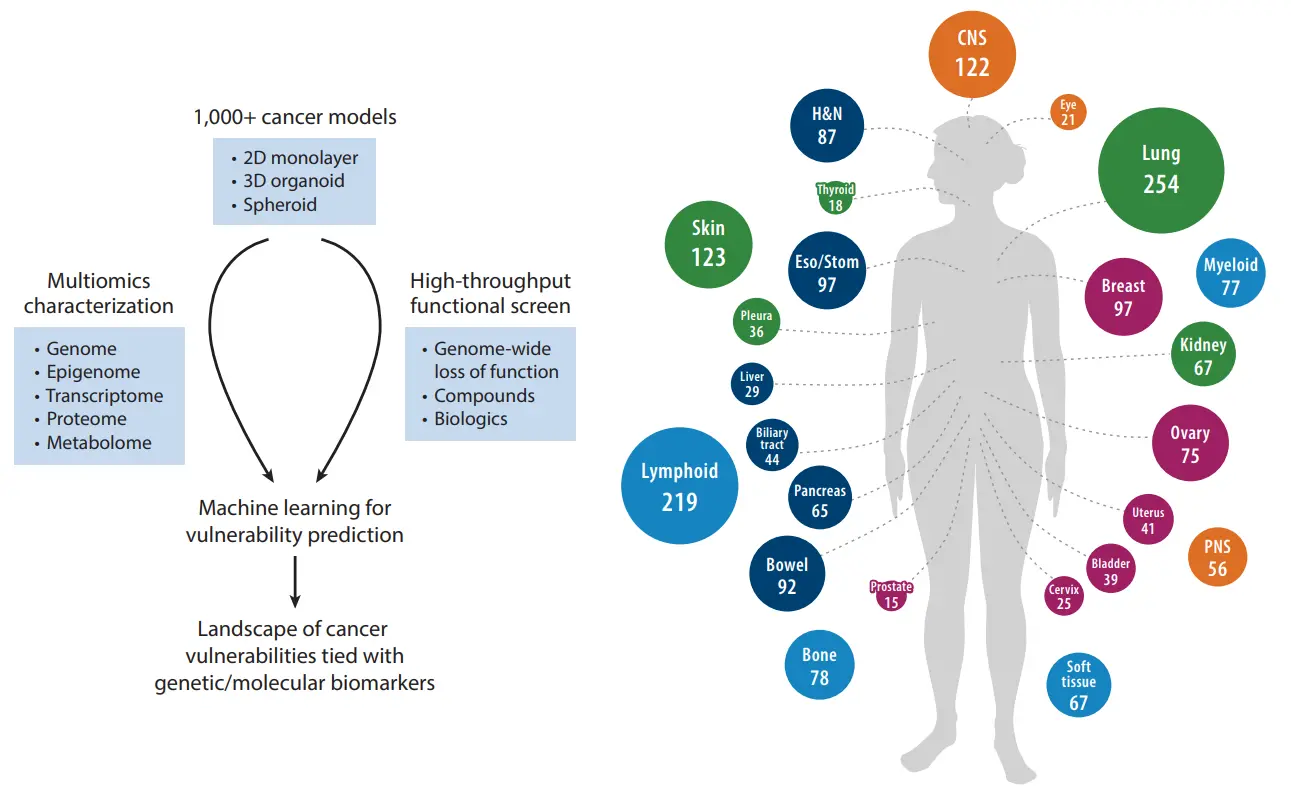
Large-scale CRISPR screening efforts, including the Broad Institute and Wellcome Sanger Institute Cancer Dependency Map initiatives, have systematically profiled gene essentiality across hundreds of cancer cell lines. These studies reveal that each cancer cell line depends on approximately ~500 genes, with the vast majority of these dependencies being highly context-specific, often restricted to particular tissue types or genetic backgrounds.
Importantly, dependencies driven by gain-of-function events—such as oncogenic mutations or aberrant overexpression—are significantly more prevalent than classical synthetic lethal interactions. This highlights a key strategy in cancer research: modeling clinically relevant mutations to uncover downstream dependency networks, thereby enabling mechanism-based target discovery.
Research Strategies and Applications
- 1. Targeting “Undruggable” Oncogenes via Dependency Networks
- Certain oncogenic drivers (e.g., KRAS, MYC, mutant TP53) remain challenging to target directly. However, tumor cells often rely on downstream pathways or compensatory mechanisms activated by these drivers. Systematic dependency mapping enables identification of genes that are essential in tumor cells but dispensable in normal cells, providing actionable intervention points for indirect targeting strategies.
2. Evaluating Gene Essentiality for Functional Studies
A key question in gene perturbation studies is whether disruption of a gene will impact tumor cell viability. Dependency profiling allows researchers to assess:
· Which genes are essential within a specific cellular context
· In which cancer types or genetic backgrounds a given gene becomes critical
This provides a rational basis for prioritizing knockout targets and interpreting functional screening results.
3. Systematic Identification of Context-Specific Vulnerabilities
CRISPR-based screening platforms enable unbiased discovery of selective dependencies across cancer models. Studies across ~900+ cancer cell lines have shown that:
· ~90% of dependency genes are required in only a small subset of models
· Many known targets (KRAS, BRAF, FGFR2) and emerging vulnerabilities (e.g., WRN, XPR1) fall into this category
By comparing dependency profiles between mutation-positive and mutation-negative models, researchers can identify genetic interactions and co-dependencies linked to specific oncogenic events.
4. Linking Genomic Alterations to Functional Dependencies
Dependencies associated with gain-of-function alterations often exhibit strong correlations with molecular features such as mutation status or gene expression levels. Integrating CRISPR screening with transcriptomic or multi-omics data enables identification of:
· Genes that are upregulated and essential in specific mutation contexts
· Candidate targets with enhanced druggability, particularly those driven by hyperactivation rather than loss-of-function
For example, in KRAS mutant models, downstream pathway components or transcriptionally activated genes may emerge as context-specific vulnerabilities, representing potential therapeutic entry points.
Key Insights:
· Each cancer cell line depends on ~500 genes
· Most dependencies are highly context-specific
· Mutation-driven dependencies are more prevalent than synthetic lethality
What We Enable:
· Genome-wide or targeted CRISPR screening
· Mutation-driven dependency mapping
· Identification of synthetic lethal and addiction dependencies
Large-scale studies (Broad, Sanger) have shown that each cancer cell line depends on ~500 genes, most of which are highly context-specific, making them ideal candidates for precision therapies.
Our Advantage:
Using isogenic mutation models, you can directly compare WT vs mutant dependency profiles, eliminating background noise from cell line variability.
Drug Target Discovery & Validation
From Dependency to Drug Target
Effective cancer drug targets typically share three key features: essentiality for tumor survival, selective dependency in cancer cells, and pharmacological tractability. With the advancement of CRISPR-based functional genomics, these properties can now be systematically evaluated through integrated dependency profiling and gene perturbation studies.
An ideal therapeutic target must be:
· Essential for tumor survival
· Selectively required in cancer cells
· Biologically and pharmacologically actionable
Leveraging these principles, EDITGENE supports the full workflow from target identification to functional validation and drug response evaluation, enabling efficient translation from candidate genes to actionable targets.
Research Strategies and Applications
1. Prioritizing Targets Based on Dependency
Not all candidate genes contribute equally to tumor survival. By leveraging tumor dependency data, genes can be ranked based on functional essentiality, enabling rapid prioritization of targets most likely to yield therapeutic impact.
2. Functional Validation via Gene Knockout
CRISPR-mediated knockout models allow direct assessment of gene function in defined contexts, helping determine whether target disruption leads to reduced viability or growth inhibition, and whether such effects are context-dependent.
3. Identifying Combination Therapy Opportunities
To overcome resistance, combination strategies are essential. Systematic gene perturbation combined with drug treatment enables identification of:
· Synergistic targets
· Drug-sensitizing gene perturbations
· Context-specific vulnerabilities
For example, evaluating drug response in specific knockout backgrounds (e.g., EGFR) can reveal rational combination strategies.
Key Applications:
· Prioritize targets based on dependency strength
· Validate gene function via knockout models
· Identify synergistic targets for combination therapy
Ready-to-Use Tools:
To support these applications, we offer:
· Target gene knockout cell panels
· Drug sensitivity testing platforms
· Combination screening workflows
Together, these tools enable a streamlined transition from candidate selection to functional validation and preclinical evaluation.
A Unified Path from Mutation to Therapeutic Target
· From understanding the origin of cancer (mutation)
· to uncovering cellular vulnerabilities (dependency)
· to identifying actionable targets (drug discovery)
EDITGENE enables a seamless research pipeline:

Mutation → Dependency → Target → Validation
| Dimension |
Key Scientific Question |
Our Technology |
Key Resources |
| Point Mutations |
Which variants are true drivers of tumorigenesis? |
Precision genome editing (point mutation, gene knock-in) |
Mutation cell model library covering KRAS, TP53, EGFR, and more |
| Tumor Dependency |
Which genes are essential for cancer cell survival? |
Gene dependency profiling (including CRISPR screening) |
Tumor dependency evaluation platform |
| Drug Targets |
Which genes are viable therapeutic targets? |
Target validation, functional assessment, and safety evaluation |
Knockout cell line panels covering key oncology targets |
Platform Strength
Built for Precision and Speed

· Extensive mutation model library (KRAS, TP53, EGFR, etc.)
· 5–10 week turnaround for custom knockout models
· Monoclonal validation with sequencing confirmation
· Global project support and delivery