

























Toxicology & Drug Discovery

CRISPR Applications in Toxicology & Drug Discovery
Decoding Drug Safety and Toxicity Mechanisms with Genome Editing Decoding Host–Pathogen Interactions Through Precision Genome Editing
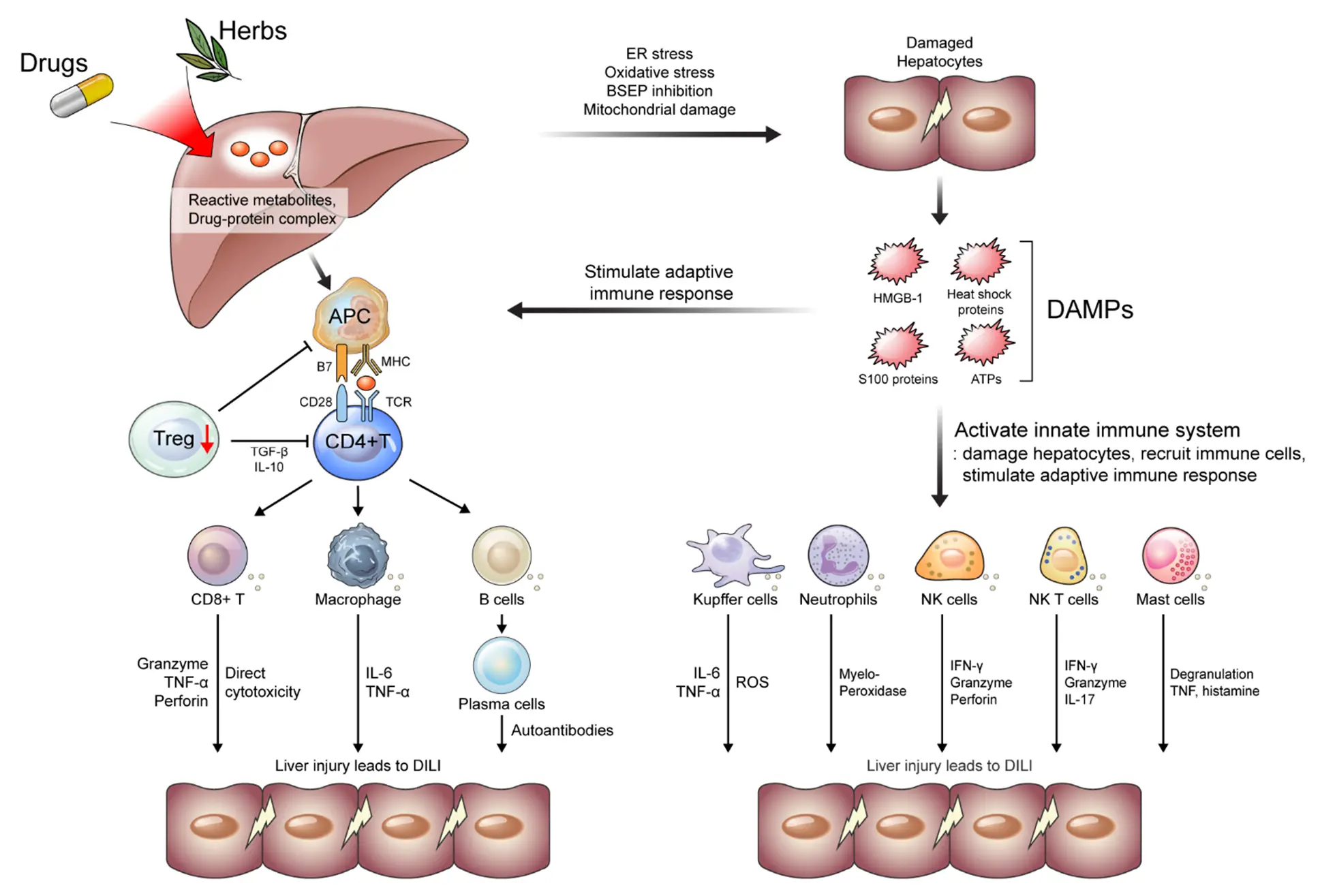
Mechanisms of the development of drug-induced liver injury (DILI)
Lee et al., Int. J. Mol. Sci., 2023
Drug safety evaluation is one of the most critical steps in pharmaceutical development and a major reason for clinical failure of drug candidates. Traditional 2D cell culture models often fail to accurately reproduce human physiological responses to chemical exposure.
CRISPR genome editing enables researchers to move from phenotype observation toward mechanism-based toxicology. By performing genome-wide genetic perturbation in relevant cell types and combining CRISPR approaches with physiologically relevant 3D models, researchers can:
EDITGENE provides comprehensive CRISPR solutions for toxicology and drug discovery research, supporting toxicity mechanism studies, safety screening, organoid-based models, and genetic risk assessment.
Drug-induced liver injury (DILI) is one of the leading causes of drug development failure and post-market withdrawal. CRISPR screening provides a powerful approach for identifying genetic regulators of liver toxicity.
Genome-wide CRISPR-Cas9 knockout screening enables systematic identification of genes involved in drug-induced liver damage. Using hepatocyte models treated with compounds such as acetaminophen (APAP), researchers can identify genes associated with cellular sensitivity, resistance, metabolism, and stress responses.
Three-dimensional CRISPR screening platforms based on HepG2/C3A spheroid models provide improved physiological relevance compared with conventional 2D systems.
3D screening approaches can identify:
CRISPR-based disruption of the bile salt export pump (BSEP) enables investigation of cholestatic liver injury mechanisms and evaluation of bile acid transport dysfunction in liver organoid models.
CRISPR-engineered cellular models provide powerful platforms for early identification of drug toxicity risks.
Human stem cell-derived liver organoid toxicity platforms enable evaluation of compound-induced toxicity using physiologically relevant models.
Applications include:
CRISPR screening can help evaluate genetic toxicity risks and improve understanding of safety concerns associated with genome editing and therapeutic development.
CRISPR delivery systems and edited models can be evaluated in vivo for physiological tolerance, immune responses, liver effects, and molecular safety profiles.
Drug-induced cardiotoxicity remains a major challenge in pharmaceutical development.
CRISPR-edited iPSC-derived cardiomyocytes provide a powerful platform for studying:
CRISPR technologies also support development of toxicity models for kidney, neural, lung, and other organ systems.
Beyond toxicity assessment, CRISPR plays an important role in discovering and validating drug targets.
Applications include:
EDITGENE supports the complete research workflow:

Building Reliable Foundations for Toxicology and Drug Discovery
Advanced Genome Editing Platforms
Extensive Toxicity Cell Model Portfolio
3D Spheroid and Organoid Platforms

Proprietary sgRNA Design Algorithms
Monoclonal Validation with Sequencing
Rapid Delivery of Customized Models
Proven CRO Experience

Global Support and Delivery
From hepatotoxicity mechanism discovery to drug safety screening, from 3D organoid toxicity models to therapeutic target validation, EDITGENE provides reliable CRISPR solutions for every stage of toxicology and drug discovery research.
