
Neuroscience

CRISPR Applications in Neuroscience Research
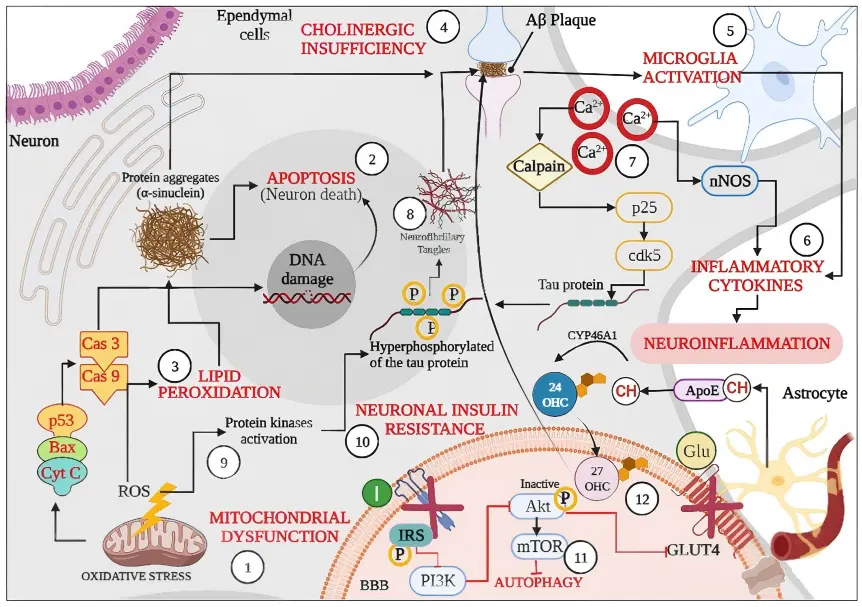

CRISPR Applications in Neuroscience Research

From Neural Development Mechanisms to Disease Modeling and Therapeutic Target Discovery
CRISPR-Powered Neuroscience Research

physiopathological hallmarks in neurodegenerative diseases (NDs)

Guerra-Vázquez et al., Foods, 2022

Decoding the Complexity of the Nervous System with Precision Genome Editing

The nervous system is one of the most complex biological systems in the human body.

From neural stem cell expansion and differentiation to neuronal migration, synapse formation, and neural circuit assembly, every stage of nervous system development depends on precisely coordinated gene regulatory networks.

At the same time, genetic disruptions contribute to a wide range of neurological conditions, including neurodevelopmental disorders, neurodegenerative diseases, and psychiatric disorders.

Traditional approaches often make it difficult to answer critical biological questions:

Which genes determine neural cell identity and fate?

How do regulatory networks control neuronal development and maturation?

How do genetic variants contribute to neurological disease?

Which genes represent potential therapeutic targets?

The emergence of CRISPR genome editing technology is transforming neuroscience research from correlation-based observation into precise functional investigation.

By enabling targeted genetic manipulation in stem cells, neurons, brain organoids, and in vivo models, CRISPR allows researchers to systematically investigate the molecular mechanisms underlying the nervous system.

CRISPR Enables Breakthroughs Across Neuroscience Research
Neural Development Mechanism Discovery

Use CRISPR knockout, CRISPRi, and CRISPRa screening approaches to identify key regulators of neural stem cell maintenance, differentiation, migration, and neuronal maturation.

Brain Organoid Functional Screening

Combine human brain organoid models with CRISPR screening technologies to investigate gene function within physiologically relevant three-dimensional neural systems.

Precision Neurological Disease Modeling

Generate patient-specific and isogenic iPSC-derived neural disease models through targeted gene knockout, knock-in, and correction.

Therapeutic Target Discovery

Apply genome-wide CRISPR screening and CRISPRa/i functional approaches to identify disease-associated regulators and potential intervention targets.


EDITGENE provides comprehensive CRISPR solutions covering the entire neuroscience research workflow: ≡
Application 1: Neural Development Mechanism Research
Systematically Identifying Genes That Control Neural Fate and Function

Neural development is a highly coordinated process involving:

Neural stem cell maintenance → Neuronal differentiation → Migration → Maturation → Synaptic network formation

Disruption of these processes can lead to developmental abnormalities and neurological disorders.

CRISPR technology enables researchers to precisely perturb candidate genes and systematically determine their roles in neural development.

CRISPR Supports Neural Development Research Through
Genome-Wide Functional Screening:
· Identify key regulators involved in:
· Neural stem cell self-renewal
· Neuronal differentiation
· Neuronal maturation
· Synapse formation
Transcriptional Regulatory Network Analysis:
· Using:
· CRISPR knockout
· CRISPR interference (CRISPRi)
· CRISPR activation (CRISPRa)
· to investigate how transcription factors and regulatory networks determine neural cell fate.
Human Stem Cell-Based Neural Models
· Combining iPSC and pluripotent stem cell differentiation systems to:
· Generate human neural cell models
· Study region-specific brain development
· Validate candidate gene functions
Key Applications:
· Neural stem cell fate determination studies
· Neuronal maturation mechanism research
· Discovery of neurodevelopmental disorder-associated genes
· Investigation of brain region-specific regulatory networks
EDITGENE Solutions:
· CRISPR KO/i/a screening
· sgRNA library design and construction
· iPSC neural differentiation services
· Functional validation of neural genes
Application 2: Brain Organoid Models & CRISPR High-Throughput Screening
Decoding Gene Function in Human 3D Neural Systems

Brain organoids generated from pluripotent stem cells can reproduce key aspects of human brain development, providing powerful platforms for studying neurological mechanisms and diseases.

By integrating CRISPR screening with brain organoid technologies, researchers can investigate gene function in complex human neural environments.

Advantages of CRISPR Brain Organoid Screening
Human-Relevant Research Systems

Reduce species differences by studying gene function directly in human-derived neural tissues.

High-Throughput Functional Discovery

Screen hundreds or thousands of candidate genes to identify regulators of neural development and disease phenotypes.

Multi-Omics Integration
· Combine CRISPR screening with:
· Single-cell RNA sequencing
· Transcriptomic analysis
· Cellular phenotyping

to comprehensively understand genetic perturbation effects.

Key Applications:
· Identification of neural development regulators
· Investigation of disease-associated gene functions
· Analysis of neuronal migration and differentiation pathways
· Construction of genetically engineered brain organoid disease models
EDITGENE Solutions:
· Brain organoid model development
· CRISPR screening strategy design
· sgRNA library construction
· NGS-based screening analysis
Application 3: iPSC-Based Neurological Disease Modeling
Transforming Patient Cells into Precision Disease Models

Induced pluripotent stem cells (iPSCs) enable researchers to generate human neural cells from patient-derived samples.

Combined with CRISPR genome editing, iPSC technology enables precise modeling of disease-associated genetic changes and the generation of highly controlled experimental systems.

Advantages of CRISPR-iPSC Disease Models
Generation of Isogenic Disease Models

Through:

· Gene knockout
· Gene knock-in
· Mutation correction

researchers can create experimental systems differing only at the target genetic locus, improving disease mechanism studies.

Modeling Diverse Neurological Disorders:
· CRISPR-engineered iPSC models support research into:
· Neurodevelopmental disorders
· Alzheimer’s disease
· Parkinson’s disease
· ALS/FTD
· Epilepsy-related disorders
Generation of Disease-Relevant Neural Cell Types:
· EDITGENE supports differentiation into:
· Cortical neurons
· Dopaminergic neurons
· Cerebellar neurons
· Astrocytes
· Microglia
Key Applications:
· Functional validation of disease mutations
· Mechanistic studies of neurological disorders
· Therapeutic target identification
· Evaluation of treatment strategies
EDITGENE Solutions:
· iPSC genome editing
· Isogenic model generation
· Gene correction validation
· Neural lineage differentiation services
Application 4: Neuroscience Target Discovery & Therapeutic Development
From Functional Genomics to Precision Therapeutic Strategies

CRISPR technology is not only a powerful tool for disease modeling but also enables systematic discovery of therapeutic targets for neurological disorders.

CRISPR Functional Screening Enables:
Identification of Disease Regulators:
· Using:
· Genome-wide CRISPR screening
· CRISPRi screening
· CRISPRa screening
· to identify genes regulating neuronal survival, function, and disease-associated phenotypes.
Therapeutic Target Validation:
· Evaluate candidate targets in:
· Neuronal models
· Brain organoids
· Animal models
· to confirm biological relevance.
Development of Gene-Based Therapeutic Strategies:
· Explore:
· Gene activation approaches
· Gene repression strategies
· Functional gene restoration
· for neurological disease intervention.
Key Applications:
· Identification of neurological disease targets
· Functional validation of candidate genes
· Therapeutic strategy evaluation
· Development of gene therapy approaches
From Neural Mechanism Discovery to Therapeutic Translation
EDITGENE Provides Complete CRISPR Neuroscience Research Solutions
Research Area Key Scientific Question CRISPR Strategy EDITGENE Solution
Neural Development Research Which genes regulate neural formation and maturation? CRISPR KO/i/a screening Neural functional genomics screening
Brain Organoid Research How do disease genes affect human neural tissues? CRISPR screening Brain organoid screening platforms
Disease Modeling How do genetic mutations cause neurological dysfunction? KI/KO/Gene correction iPSC-based isogenic models
Target Discovery Which genes represent therapeutic opportunities? Genome-wide screening Functional genomics services
EDITGENE Platform Advantages
Building Reliable Foundations for Neuroscience Research
Advanced Genome Editing Platforms

Supported by:

Complete Research Workflow Support

From:

EDITGENE provides integrated genome engineering solutions from project design to validated research models.

Why Choose EDITGENE?
Extensive Experience in Neuroscience Cell Models

With deep expertise in neuroscience-related cell models, we deliver tailored solutions for complex neurological research and drug discovery programs.
Support Across iPSC and Diverse Neural Cell Types

Comprehensive support for iPSC-derived neurons, astrocytes, microglia, and other neural cell types, enabling physiologically relevant disease modeling and screening.
Proprietary sgRNA Design Algorithms
Our in-house sgRNA design algorithms are optimized for neural genomes, significantly improving editing efficiency and reducing off-target effects.
Advanced 3D Bioprinting-Assisted Single-Clone Screening

Integrating cutting-edge 3D bioprinting technology with single-clone screening, we enhance cloning efficiency and accelerate the isolation of validated edited clones.
Proven Track Record with 3,000+ CRO Projects

With over 3,000 successful gene editing CRO projects completed, our team brings unmatched reliability and execution excellence to every collaboration.
Broad Expertise Across 400+ Cell Types
Our extensive experience spans more than 400 cell types, covering a wide range of neural and non-neural models for versatile research applications.
Accelerating the Future of Neuroscience Discovery

From understanding neural development mechanisms to performing brain organoid functional screening; from building iPSC neurological disease models to discovering therapeutic targets—

EDITGENE empowers neuroscience researchers with precise CRISPR genome editing solutions to uncover the molecular principles of the nervous system and accelerate the translation of discoveries into therapeutic strategies.

Contact Us

*
*
*
*
How did you hear about us:
Contact Us
*
*
*
*
How did you hear about us: