Flash-KI Platform
High‑Efficiency Targeted Integration Platform (FLASH‑KI): Precise Writing, Unprecedented Efficiency
Gene knock-in (KI) is a critical technology for endogenous gene fluorescent tagging, reporter gene insertion, and site-directed mutagenesis. It is widely used in dynamic protein tracking, cell line development, disease modeling, and drug screening. However, conventional KI methods rely on Homology-Directed Repair (HDR), which notoriously suffers from extremely low efficiency in most cell types, high cytotoxicity, and prolonged screening cycles—making it the primary bottleneck in cell model generation.
To address these pain points, EDITGENE has developed the FLASH-KI technology platform, integrating two core technologies: a high-efficiency delivery system and cellular repair pathway modulation. By combining precision editing components with transient efficiency-enhancing strategies, FLASH-KI achieves highly efficient, low-toxicity, and selection-free precise knock-in across a variety of hard-to-transfect cells (e.g., hESCs, iPSCs) and complex genomic loci.
Service Advantages
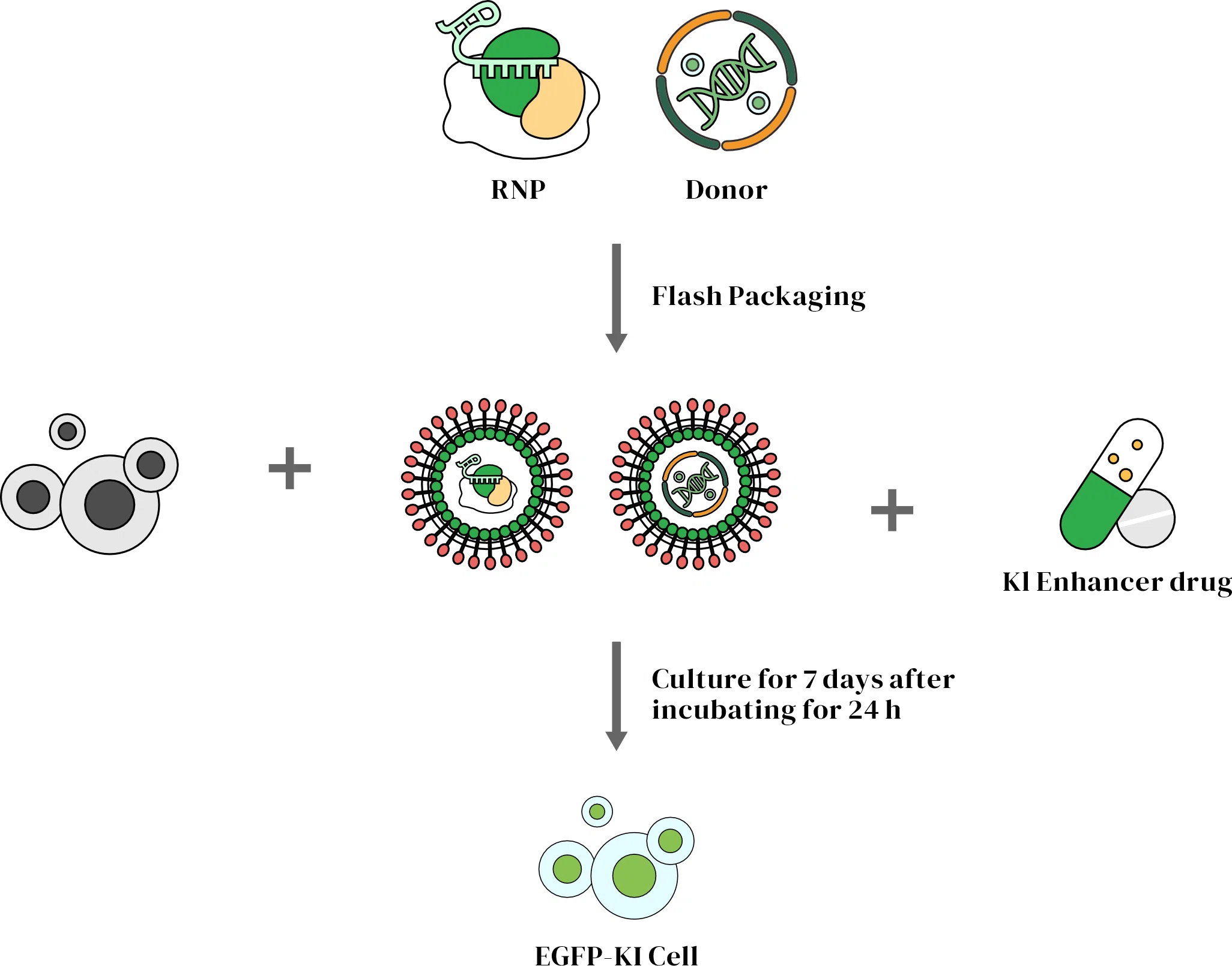
Conventional knock-in strategies typically require separate delivery of Cas9 protein, sgRNA, and Donor templates, resulting in cumbersome procedures and limited efficiency. EDITGENE’s proprietary FLASH-KI delivery vector enables the simultaneous delivery of the RNP complex and Donor DNA, significantly streamlining the workflow and boosting synergistic efficiency.

Co‑delivery Design

Low Cytotoxicity

Broad Applicability

Drug Selection-Free
During CRISPR-mediated DNA double-strand break repair, Non-Homologous End Joining (NHEJ) is the dominant repair pathway, while HDR efficiency is typically below 10%. EDITGENE has independently developed an NHEJ inhibitor that transiently and reversibly suppresses key NHEJ proteins during the editing process, forcing the cell to prioritize the HDR pathway.

Significant Efficiency Boost
Reversible Inhibition

No Genetic Modification Required

High Compatibility
| Technical Metric | Conventional HDR (Plasmid/Electroporation) | Conventional Electroporation (Donor Only) | FLASH-KI (+ NHEJ Inhibitor) | Improvement |
|---|---|---|---|---|
| 293T GAPDH KI Efficiency | ~10-15% | 68% | 88% | 1.3x (vs. Electroporation) 5-8x (vs. Conv. HDR) |
| A9 T1R1 KI Efficiency | <5% | ~10-15% | 46% | 3-9x |
| hESC TH KI Efficiency | <3% | ~5% | 20% | 4-6x |
| Selection-Free High-Purity Pool | No | No | Yes (Validated across multiple targets) | — |
| Cell Viability (24h Post-Transfection) | 60‑70% | 50‑60% | >90% | Significant Improvement |
| Difficulty Level | Representative Cell Lines | Expected KI Efficiency (Pool) | Project Success Rate (Homozygous Clones) | Turnaround Time | Key Influencing Factors |
|---|---|---|---|---|---|
| ⭐ Low(Standard Immortalized) | HEK293, HeLa, CHO, HCT-116 | 60-90% | >90% | 8-10 weeks | Target locus, Donor design quality |
| ⭐⭐ Medium(Hard-to-transfect, some suspension) | A9, THP-1, K562, Jurkat | 30-60% | 70-80% | 10‑12 weeks | Cell state, transfection parameters, NHEJ inhibitor concentration |
| ⭐⭐⭐ High (Stem cells, Primary, Organoids) | iPSC, hESC, Primary T cells, Organoids | 15-30% | 60-70% | 12-14 weeks | Cell health, monoclonal formation efficiency |
• Pool Efficiency: The proportion of cells with correct knock-in within the unselected post-transfection population (assessed via flow cytometry or sequencing).
• Project Success Rate: The percentage of projects that successfully deliver at least one homozygous monoclonal cell line.
• Data is based on statistics from 100+ completed KI projects by EDITGENE.
Service Types

Standard KI

High-Purity Cell Pool

Custom Hard-to-Transfect Cells
Technical Workflow
Application Cases
As of Q1 2026, the FLASH-KI platform has successfully delivered 20+ commercial projects covering immortalized cells, tumor cells, and stem cells, achieving precise integrations of fragments ranging from 0.5 to 5.5 kb. The overall project success rate is 98.6%, with a 100% success rate for fragments under 5500 bp.
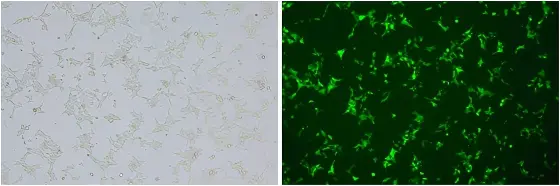
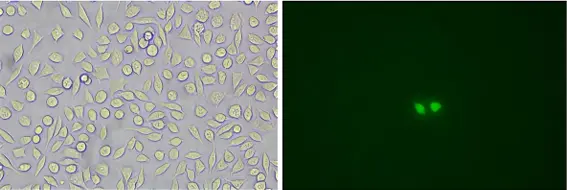
Insert an EGFP fluorescent tag (841 bp) at the C-terminus of the GAPDH gene in HEK293T cells for live-cell dynamic tracking, requiring a high-purity positive pool without drug selection.
Conventional electroporation yielded only 68% positivity with 30% cell death. FLASH-KI achieved:
① 88% positivity without antibiotic screening;
② >95% cell viability;
③ 40% improvement in fluorescence signal uniformity.
Delivered an 88% positive polyclonal pool in 4 weeks; obtained homozygous KI monoclonal cell lines in 8 weeks (30% faster than the industry average).
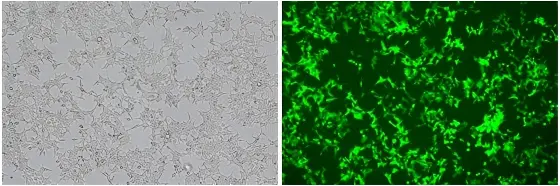
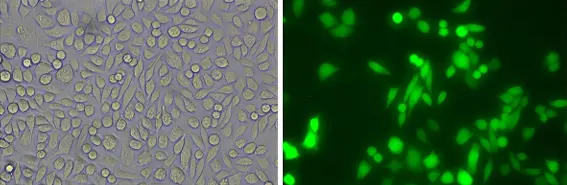
Insert an EF1a-CoGFP-T2A-Puro cassette (2115 bp) into the T1R1 locus of A-9 cells while preserving native receptor conformation and signaling pathway integrity.
FLASH-KI achieved:
① 46% positivity without selection markers;
② >95% cell viability;
③ Monoclonal stability exceeding 15 passages.
Functional polyclonal pool in 5 weeks; monoclonal screening and validation completed in 9 weeks.
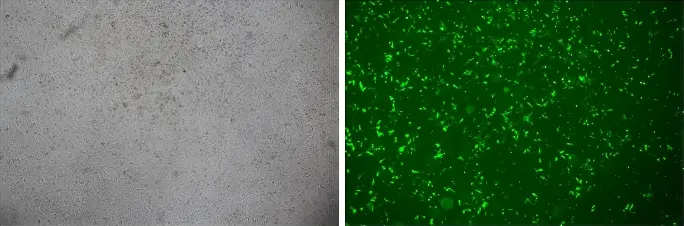
Insert a P2A-NeoR-EF1a-EGFP cassette (2283 bp) at the C-terminus of the TH gene in hESC-H9 cells, maintaining pluripotency and differentiation potential.
Overcame barriers for hard-to-transfect stem cells:
① 20% positivity without drug selection (industry average <5%);
② >90% cell viability;
③ Normal expression of Oct4/Sox2 pluripotency markers.
20% positive polyclonal pool in 5 weeks; monoclonal identification completed in 11 weeks.
Tag
Share