






















GJB2 (p.V13fs) Point Mutation in HCT 116 Cell Line

The GJB2 (p.V13fs) Point Mutation in HCT116 Cell Line is based on the newly developed Bingo™ platform, which utilizes an optimized and upgraded version of the Prime Editing (PE) gene point mutation system-currently the most efficient and safest technology available. This platform enables precise and efficient gene point mutation, resulting in a highly active and stable cell line.
Product Details
| Cat.No. | EDC03053 | Product Name | GJB2 (p.V13fs) Point Mutation in HCT 116 Cell Line |
|---|---|---|---|
| Cell Line | HCT 116 | NCBI Gene ID | |
| Mutation Site | p.V13fs | Cellosaurus ID | CVCL_0291 |
| Cell Line Synonyms | HCT-116, HCT.116, HCT_116, HCT116, HCT116wt, HCT-116/P, HCT-116/parental, CoCL2 | Gene | |
| Summary |
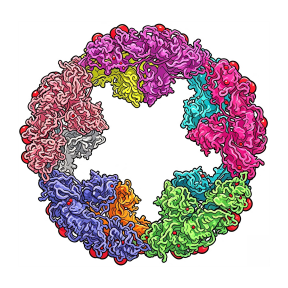
This gene encodes a member of the gap junction protein family (gap junction beta 2) but is more commonly known as connexin 26. The gap junctions were first characterized by electron microscopy as regionally specialized structures on plasma membranes of contacting adherent cells. These structures were shown to consist of cell-to-cell channels that facilitate the transfer of ions and small molecules between cells. Connexins form hexameric channels in the plasma membrane which regulate passage of ions and small molecules between the cell and its environment or, when joined with another cell, form a dodecameric intercellular gap junction channel. The connexin proteins are grouped into alpha, beta, and gamma subfamilies. Mutations in this gene are responsible for as much as 50% of pre-lingual, recessive deafness. [provided by RefSeq, Mar 2026]
|
Associated Diseases | Colorectal Carcinoma |
| Passage Ratio | 1:4~1:5 | Complete Culture Medium | mcCoy5A+10% FBS |
| Freezing Medium | 90% FBS/complete culture medium+10% DMSO |

* For research use only. Not intended for use in humans or animals, including clinical, therapeutic, or diagnostic purposes.
STR Profile
| Loci | STR Info (Sample Cell) Sample Cell Line: HCT 116 | STR Info (Cell bank) Cell Line: HCT 116 | ||||||
| Allele1 | Allele2 | Allele3 | Allele4 | Allele1 | Allele2 | Allele3 | Allele4 | |
| Amelogenin | X | X | ||||||
| CSF1PO | 7 | 10 | 7 | 9 | 10 | 11 | ||
| D2S1338 | 16 | 16 | ||||||
| D3S1358 | 12 | 17 | 18 | 19 | 12 | 18 | 19 | |
| D5S818 | 10 | 11 | 10 | 11 | ||||
| D7S820 | 11 | 12 | 11 | 12 | ||||
| D8S1179 | 10 | 12 | 14 | 15 | 10 | 12 | 14 | 15 |
| D13S317 | 10 | 12 | 10 | 12 | ||||
| D16S539 | 11 | 13 | 11 | 12 | 13 | 14 | ||
| D18S51 | 16 | 17 | 16 | 17 | ||||
| D19S433 | 12 | 13 | 12 | |||||
| D21S11 | 29 | 30 | 29 | 30 | ||||
| FGA | 18 | 23 | 18 | 23 | ||||
| Penta D | 9 | 13 | 9 | 13 | ||||
| Penta E | 12 | 13 | 14 | 12 | 13 | 14 | ||
| TH01 | 8 | 9 | 8 | 9 | ||||
| TPOX | 8 | 8 | ||||||
| vWA | 17 | 21 | 22 | 23 | 17 | 21 | 22 | 23 |
| D6S1043 | 13 | |||||||
| D12S391 | 17 | 21 | 22 | |||||
| D2S441 | 11 | 12 | ||||||
* STR authentication data of this cell line matches with that of cell lines sourced from ATCC, DSMZ, JCRB, and RIKEN databases.
Conclusion: The STR identification of this cell is correct.
Conclusion: The STR identification of this cell is correct.
