
























GO:0008781 N-acylneuraminate cytidylyltransferase activity: Mechanism, Genes and Research Methods
Research-grade guide for scientists and biopharma professionals
Key Takeaways
• GO:0008781 describes the enzymatic activity that converts CTP and N-acylneuraminate into CMP-N-acylneuraminate and diphosphate, the essential activation step for sialic acid utilization.
• The reaction is catalyzed by CMP-sialic acid synthetase (CSS), also known as N-acylneuraminate cytidylyltransferase, which is conserved from bacteria to humans [2,6].
• CMP-N-acylneuraminate is the universal donor substrate for sialyltransferases, making this activity indispensable for sialylation of glycoproteins and glycolipids [2,5].
• The enzyme is found in the nucleus and cytosol of mammalian cells, and its subcellular localization influences sialylation pathways.
• Bacterial CMP-sialic acid synthetases are structurally and mechanistically related to their eukaryotic counterparts and are used in metabolic engineering for sialylated oligosaccharide production [6,8].
• Dysregulation of sialic acid activation is linked to cancer, immune disorders, and pathogen virulence, making GO:0008781 a target for therapeutic and biotechnological research [2,8].
Description
N-acylneuraminate cytidylyltransferase activity (GO:0008781) is a molecular function that catalyzes the formation of CMP-N-acylneuraminate from CTP and N-acylneuraminate, releasing diphosphate. This reaction is the committed step in the activation of sialic acids, which are essential for the biosynthesis of sialylated glycoconjugates. The enzyme responsible, CMP-sialic acid synthetase (CSS), is conserved across species and has been studied in bacteria, amphibians, and mammals [3,4,6]. Researchers investigate this activity to understand sialic acid biology, host-pathogen interactions, and the development of sialylated therapeutics [2,8]. The kinetic properties of the enzyme from Pasteurella haemolytica A2 have been characterized, revealing a sequential ordered mechanism. In eukaryotes, the enzyme is found in both the nucleus and cytosol, suggesting compartmentalized roles in sialylation. This article provides a comprehensive overview of GO:0008781, covering its mechanism, key genes, disease relevance, and research methods.
N-acylneuraminate cytidylyltransferase activity At A Glance
| GO ID | GO:0008781 |
|---|---|
| GO term | N-acylneuraminate cytidylyltransferase activity |
| Ontology | molecular_function |
| Synonym | CMP-sialic acid synthetase activity; CMP-Neu5Ac synthetase activity; CMP-sialate synthase activity; acetylneuraminate cytidylyltransferase activity |
| Major function | Activates sialic acid by forming CMP-N-acylneuraminate, the donor substrate for sialyltransferases |
| Reaction | CTP + N-acylneuraminate = diphosphate + CMP-N-acylneuraminate |
| Cellular location | Nucleus and cytosol in mammalian cells |
| Enzyme class | Nucleotidyltransferase; cytidylyltransferase |
| Pathway | Sialic acid biosynthesis and activation; amino sugar and nucleotide sugar metabolism |
What Is GO:0008781?
GO:0008781, N-acylneuraminate cytidylyltransferase activity, is defined as the catalysis of the reaction: CTP + N-acylneuraminate = diphosphate + CMP-N-acylneuraminate. In other words, it is the enzymatic activity that activates sialic acid by conjugating it to CMP, forming the nucleotide sugar donor required for sialyltransferase reactions.
Why Is N-acylneuraminate cytidylyltransferase activity Important in Cell Biology?
GO:0008781 is critical because it produces CMP-N-acylneuraminate, the sole donor substrate for all sialyltransferases, thereby controlling the sialylation of glycoproteins and glycolipids. Sialylation affects cell-cell communication, immune recognition, and pathogen binding, and its dysregulation is associated with cancer, autoimmune diseases, and infections [2,8]. Understanding this activity is essential for glycobiology, drug development, and metabolic engineering of sialylated compounds [7,8].
• Provides the activated sialic acid donor for all sialylation reactions.
• Influences cell surface properties, including immune recognition and signaling.
• Plays a role in bacterial virulence and host-pathogen interactions.
• Is a target for metabolic engineering to produce sialylated oligosaccharides.
• Its nuclear localization suggests a role in nuclear sialylation events.
• Dysregulation is linked to cancer progression and metastasis.
• Enzyme kinetics and structure inform inhibitor design [3,6].
• Conserved mechanism across species aids comparative studies [4,6].
• Contributes to the synthesis of neuraminidase-resistant sialyl mimetics.
• Essential for understanding sialic acid biology in development and disease.
What Happens During N-acylneuraminate cytidylyltransferase activity?
Substrate Binding and Activation
In simple terms: The enzyme grabs CTP and sialic acid to start the reaction.
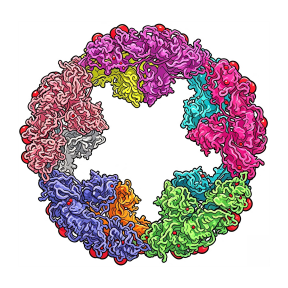
The enzyme binds CTP and N-acylneuraminate in an ordered sequential manner, as shown for the Pasteurella haemolytica A2 enzyme. Structural studies of the bacterial CMP-acylneuraminate synthetase reveal a conserved fold that accommodates both substrates.
Catalysis and Product Formation
In simple terms: The enzyme links sialic acid to CMP, releasing diphosphate.
Catalysis proceeds via nucleophilic attack of the sialic acid hydroxyl on the alpha-phosphate of CTP, forming CMP-N-acylneuraminate and releasing diphosphate. The reaction is reversible but favors product formation under physiological conditions.
Product Release and Utilization
In simple terms: The activated sialic acid is released for use in sialylation.
CMP-N-acylneuraminate is transported to the Golgi or nucleus, where it serves as the donor substrate for sialyltransferases [2,5]. In mammals, the enzyme is present in both nucleus and cytosol, suggesting distinct pools of CMP-sialic acid.
Regulation of Enzyme Activity
In simple terms: The enzyme's activity can be turned up or down.
Enzyme activity is regulated by substrate availability and possibly by feedback inhibition from CMP-sialic acid. In bacteria, the enzyme is often part of a sialic acid catabolism or capsule synthesis operon.
Key Genes Involved in GO:0008781 N-acylneuraminate cytidylyltransferase activity
The following genes encode enzymes with N-acylneuraminate cytidylyltransferase activity or are directly involved in the activation of sialic acid.
| Gene | Major Role | Research Relevance |
|---|---|---|
| CMAS (human) | Encodes CMP-sialic acid synthetase; catalyzes CMP-Neu5Ac formation | Target for cancer and immune studies [2,5] |
| NANS (human) | Encodes sialic acid synthase; produces Neu5Ac prior to activation | Mutations cause spondyloepimetaphyseal dysplasia |
| NANP (human) | Encodes N-acylneuraminate-9-phosphatase; not essential for de novo biosynthesis | Potential bypass pathway |
| neuA (bacteria) | Encodes CMP-sialic acid synthetase in bacteria | Virulence and capsule synthesis |
| neuB (bacteria) | Encodes sialic acid synthase | Sialic acid production in E. coli |
| neuC (bacteria) | Encodes UDP-GlcNAc 2-epimerase | Sialic acid biosynthesis |
| CSS (Pasteurella haemolytica) | CMP-sialic acid synthetase | Kinetic and structural studies [3,6] |
| CSS (frog liver) | CMP-sialic acid synthetase | Enzyme purification and characterization |
| ST6GAL1 | Sialyltransferase that uses CMP-Neu5Ac | Glycosylation studies |
| ST3GAL1 | Sialyltransferase that uses CMP-Neu5Ac | Cancer glycomics |
| SLC35A1 | CMP-sialic acid transporter | Golgi sialylation |
| GNE | UDP-GlcNAc 2-epimerase/ManNAc kinase | Sialic acid biosynthesis regulation |
| CMAS (mouse) | CMP-sialic acid synthetase | Knockout models for sialylation |
| NPL | N-acetylneuraminate pyruvate lyase | Sialic acid catabolism |
| NEU1 | Sialidase | Sialic acid turnover |
| NEU2 | Sialidase | Cytosolic sialidase |
| NEU3 | Sialidase | Plasma membrane sialidase |
| NEU4 | Sialidase | Lysosomal/mitochondrial sialidase |
How Is N-acylneuraminate cytidylyltransferase activity Regulated?
The activity of N-acylneuraminate cytidylyltransferase is regulated at multiple levels. In mammalian cells, the enzyme is localized to both the nucleus and cytosol, and its activity may be modulated by substrate availability and feedback inhibition by CMP-sialic acid [2,5]. In bacteria, expression of the enzyme is often controlled by operons involved in sialic acid metabolism and capsule synthesis. Additionally, the enzyme's kinetic properties, such as its ordered sequential mechanism, influence flux through the sialylation pathway.
N-acylneuraminate cytidylyltransferase activity and Human Disease
| Gene | Disease / Biology | Potential Experimental Model |
|---|---|---|
| CMAS | Cancer progression, immune evasion | CMAS knockout cancer cell lines |
| NANS | Spondyloepimetaphyseal dysplasia | NANS point mutation knock-in mice |
| neuA | Bacterial virulence | neuA deletion in Pasteurella |
| ST6GAL1 | Metastasis, cancer glycomics | ST6GAL1 overexpression in cancer cells |
| SLC35A1 | Congenital disorder of glycosylation | SLC35A1 knockout cell lines |
Cancer and Sialylation
Altered sialylation is a hallmark of cancer, and increased CMP-sialic acid synthetase activity can enhance tumor cell surface sialylation, promoting metastasis and immune evasion. Targeting this activity may reduce sialylated tumor antigens.
Infectious Diseases
Bacterial pathogens use CMP-sialic acid synthetases to produce sialylated capsules that mimic host glycans, aiding immune evasion. Inhibitors of this enzyme could attenuate virulence.
Metabolic Disorders
Mutations in genes involved in sialic acid biosynthesis, such as NANS, cause severe developmental disorders, highlighting the importance of the activation pathway. Although NANP is not essential, its role in bypass pathways is under investigation.
From N-acylneuraminate cytidylyltransferase activity-Related Genes to Experimental Models
| Research Question | Suitable Model |
|---|---|
| Does CMAS loss affect global sialylation? | CMAS knockout HEK293 cells |
| What is the effect of a catalytic point mutation? | CMAS point-mutation knock-in |
| Can we tag CMAS for localization studies? | Tagged knock-in (e.g., GFP-CMAS) |
| Does CMAS overexpression increase sialylation? | CMAS overexpression in CHO cells |
| Which genes regulate CMAS expression? | CRISPR library screening |
| How does CMAS activity affect cancer growth? | Xenograft with CMAS KO cells |
How to Study the N-acylneuraminate cytidylyltransferase activity Process
| Method | What It Measures | Typical Application |
|---|---|---|
| Enzymatic assay | CMP-sialic acid synthetase activity | Kinetic studies |
| HPLC | CMP-Neu5Ac production | Enzyme purification |
| X-ray crystallography | Protein structure | Active site analysis |
| Mass spectrometry | Sialylation patterns | Glycomics |
| Lectin blotting | Sialic acid content | Cell surface sialylation |
| CRISPR screen | Gene regulators | Pathway discovery |
| Metabolic engineering | Sialylated oligosaccharide yield | Biotechnology |
| qPCR/Western blot | Gene/protein expression | Regulation studies |
Enzymatic Assays
Radioactive or fluorescent assays using CTP and N-acylneuraminate can measure enzyme activity directly. HPLC-based methods quantify CMP-sialic acid formation.
Structural Biology
X-ray crystallography and cryo-EM reveal the enzyme's active site and conformational changes, as shown for the bacterial enzyme. These studies guide inhibitor design.
Glycomics and Sialylation Analysis
Mass spectrometry and lectin blotting assess global sialylation changes upon modulation of the enzyme. These methods are used in cancer and metabolic engineering research.
CRISPR Screening
Genome-wide CRISPR screens can identify genes that regulate CMP-sialic acid synthetase expression or activity, linking them to sialylation pathways.
How CRISPR Can Be Used to Study GO:0008781 N-acylneuraminate cytidylyltransferase activity
Knockout
CRISPR knockout of CMAS or bacterial neuA eliminates N-acylneuraminate cytidylyltransferase activity, leading to loss of sialylation and providing models to study its role in cancer and infection [2,8].
Point Mutation
Introducing catalytic point mutations (e.g., in the active site) via CRISPR knock-in allows dissection of enzyme mechanism and substrate specificity without complete loss of protein [3,6].
Knock-in
Tagged knock-in of CMAS (e.g., GFP or FLAG) enables live-cell imaging and proteomic studies to track localization and interactions.
Overexpression
CRISPR activation or cDNA overexpression of CMAS increases CMP-sialic acid levels, useful for enhancing sialylation in bioproduction and studying downstream effects.
How EDITGENE Supports N-acylneuraminate cytidylyltransferase activity Research
Researchers studying N-acylneuraminate cytidylyltransferase activity-related genes often need to determine whether a candidate gene is causally involved in sialylation, disease progression, or metabolic engineering. EDITGENE provides a comprehensive suite of CRISPR services to create precisely engineered cell models for such investigations.


Contact EDITGENE today to design your custom CRISPR model for N-acylneuraminate cytidylyltransferase activity research.
Related Products
| Product name | Cat.No. | Species | Gene ID | |
|---|---|---|---|---|
| CMAS Knockout HEK293 Cell Line | EDJ-KQ12958 | Human | 55907 | Details Get a Quote |
| CMAS Knockout A-549 Cell Line | EDJ-KQ42165 | Human | 55907 | Details Get a Quote |
| CMAS Knockout HCT 116 Cell Line | EDJ-KQ42166 | Human | 55907 | Details Get a Quote |
| CMAS Knockout HeLa Cell Line | EDJ-KQ42167 | Human | 55907 | Details Get a Quote |
| CMAS Knockout HAP1 Cell Line | EDC08187 | Human | 55907 | Details Get a Quote |
Frequently Asked Questions About N-acylneuraminate cytidylyltransferase activity
What is N-acylneuraminate cytidylyltransferase activity?
It is the enzymatic activity (GO:0008781) that catalyzes the formation of CMP-N-acylneuraminate from CTP and N-acylneuraminate, activating sialic acid for sialylation.
What genes are involved in N-acylneuraminate cytidylyltransferase activity?
The main gene is CMAS in humans, encoding CMP-sialic acid synthetase. Bacterial homologs include neuA [2,8].
What is the reaction catalyzed by GO:0008781?
CTP + N-acylneuraminate = diphosphate + CMP-N-acylneuraminate.
Where is CMP-sialic acid synthetase located in the cell?
It is found in both the nucleus and cytosol of mammalian cells.
What diseases are associated with N-acylneuraminate cytidylyltransferase activity?
Altered activity is linked to cancer, immune disorders, and bacterial infections [2,8].
How can I study N-acylneuraminate cytidylyltransferase activity?
Enzymatic assays, structural biology, glycomics, and CRISPR knockout models are common approaches [3,6].
What is the role of CMP-sialic acid synthetase in sialylation?
It produces CMP-sialic acid, the donor substrate for all sialyltransferases.
Are there bacterial enzymes with this activity?
Yes, many bacteria such as Pasteurella haemolytica and E. coli have CMP-sialic acid synthetases [3,7].
Can CRISPR be used to study GO:0008781?
Yes, CRISPR knockout, knock-in, and overexpression models are powerful tools to dissect its function.
What is the kinetic mechanism of N-acylneuraminate cytidylyltransferase?
It follows an ordered sequential mechanism, as shown for the Pasteurella haemolytica A2 enzyme.
Conclusion
N-acylneuraminate cytidylyltransferase activity (GO:0008781) is a central enzymatic step in sialic acid activation, producing the universal donor CMP-N-acylneuraminate for sialylation. Its conservation across species and involvement in cancer, infection, and metabolic disorders make it a key research target. Advances in CRISPR technology and structural biology continue to illuminate its mechanism and therapeutic potential [2,6].
References
- 1. Willems AP et al.. 2019. Activity of N-acylneuraminate-9-phosphatase (NANP) is not essential for de novo sialic acid biosynthesis.. Biochim Biophys Acta Gen Subj 1863(10):1471-1479 PMID: 31121216
- 2. Kean EL. 1991. Sialic acid activation.. Glycobiology 1(5):441-7 PMID: 1668304
- 3. Bravo IG et al.. 2001. Kinetic properties of the acylneuraminate cytidylyltransferase from Pasteurella haemolytica A2.. Biochem J 358(Pt 3):585-98 PMID: 11577688
- 4. Schauer R et al.. 1980. Isolation and characterization of acylneuraminate cytidylyltransferase from frog liver.. Hoppe Seylers Z Physiol Chem 361(5):641-8 PMID: 6253375
- 5. Kean EL et al.. 2004. CMP-sialic acid synthetase of the nucleus.. Biochim Biophys Acta 1673(1-2):56-65 PMID: 15238249
- 6. Mosimann SC et al.. 2001. Structure of a sialic acid-activating synthetase, CMP-acylneuraminate synthetase in the presence and absence of CDP.. J Biol Chem 276(11):8190-6 PMID: 11113120
- 7. Rivollier P et al.. 2023. Synthesis of Neuraminidase-Resistant Sialyllactose Mimetics from N-Acyl Mannosamines using Metabolically Engineered Escherichia coli.. Chemistry 29(46):e202301555 PMID: 37294058
- 8. Mizanur RM et al.. 2008. Bacterial CMP-sialic acid synthetases: production, properties, and applications.. Appl Microbiol Biotechnol 80(5):757-65 PMID: 18716769
