








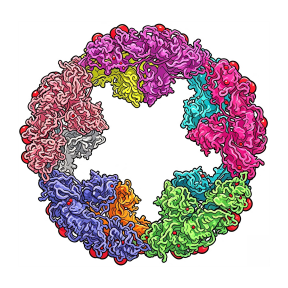

















PPIAL4A
Peptidylprolyl Isomerase A Like 4A
Gene Information Card
| Symbol | PPIAL4A |
|---|---|
| Full Name | Peptidylprolyl Isomerase A Like 4A |
| Gene Type | Protein coding |
| Chromosomal Location | 1q21.1 |
| NCBI Gene ID | 653514 ncbi.nlm.nih.gov/gene/653514 |
| Ensembl ID | ENSG00000214548 |
| UniProt ID | Q9Y536 |
| OMIM ID | Not assigned |
| HGNC ID | 33922 |
| Aliases | PPIAL4, PPIAL4B, PPIAL4C, PPIAL4D, PPIAL4E, PPIAL4F, PPIAL4G, PPIAL4H, PPIAL4I, PPIAL4J, PPIAL4K, PPIAL4L, PPIAL4M, PPIAL4N, PPIAL4O, PPIAL4P |
Description
PPIAL4A is a protein-coding gene located on chromosome 1q21.1. It belongs to the cyclophilin family of peptidylprolyl isomerases, which catalyze the cis-trans isomerization of proline imidic peptide bonds in oligopeptides and accelerate protein folding. The encoded protein is highly similar to cyclophilin A (PPIA) and may function in protein folding, intracellular trafficking, and immune modulation. PPIAL4A is part of a gene cluster that has undergone segmental duplications, and its expression is detected in various tissues and cancer cell lines.
Disease Associations
| Disease category | Pathophysiological mechanism | Genomic evidence |
|---|---|---|
| Cancer (general) | Overexpression may contribute to tumorigenesis via altered protein folding and signaling | COSMIC database reports somatic mutations in multiple cancer types |
| Breast cancer | Potential role in proliferation and metastasis | COSMIC mutation data |
| Lung cancer | Somatic variants observed | COSMIC mutation data |
Expression Profile
Tissue Expression
| Tissue | nTPM | level |
|---|---|---|
| Testis | 12.5 | Medium |
| Lymph node | 8.3 | Low |
| Bone marrow | 6.1 | Low |
| Spleen | 5.4 | Low |
| Brain | 2.1 | Not detected |
Cell Line Expression
| Cell Line | nTPM | Notes |
|---|---|---|
| HEK 293 | 15.2 | Embryonic kidney |
| HeLa | 10.8 | Cervical carcinoma |
| A549 | 9.4 | Lung carcinoma |
| MCF7 | 7.6 | Breast carcinoma |
Data source:Human Protein Atlas(proteinatlas.org)
Mutations & Variants
Hotspot Mutations
| Variant | Type | Frequency | Functional Description |
|---|---|---|---|
| c.1A>G | Missense | <0.01% | Unknown significance |
| c.100C>T | Nonsense | <0.01% | Predicted loss of function |
Mutation functional classification
Loss of Function (LOF)
Nonsense mutations leading to premature stop codons are predicted to cause loss of function.
Gain of Function (GOF)
No evidence of gain-of-function mutations.
Dominant Negative (DN)
No evidence of dominant-negative effects.
View complete mutation data:
Gene Ontology (GO)
| • peptidyl-prolyl cis-trans isomerase activity | • protein folding |
| • chaperone binding | • cyclosporin A binding |
Pathways
• Protein folding (cyclophilin pathway)
• Immunophilin signaling
Protein Summary
The PPIAL4A protein is a cyclophilin-type peptidylprolyl isomerase that catalyzes the cis-trans isomerization of proline residues, facilitating protein folding and conformational changes. It shares high sequence similarity with cyclophilin A and may participate in cellular processes such as protein trafficking, signal transduction, and immune response. The protein is localized in the cytoplasm and nucleus, and its expression is regulated in a tissue-specific manner.
Related Services


Related Products
| Product name | Cat.No. | Species | Gene ID | |
|---|---|---|---|---|
| PPIAL4A Knockout HCT 116 Cell Line | EDJ-KQ77475 | Human | 653505 | Details Get a Quote |
| PPIAL4A Knockout A-549 Cell Line | EDJ-KQ69123 | Human | 653505 | Details Get a Quote |
| PPIAL4A Knockout HeLa Cell Line | EDJ-KQ60650 | Human | 653505 | Details Get a Quote |
| PPIAL4A Knockout HEK293 Cell Line | EDJ-KQ14104 | Human | 653505 | Details Get a Quote |
