
























PARP6 (Poly(ADP-Ribose) Polymerase Family Member 6)
A mono-ADP-ribosyltransferase involved in cell cycle regulation and tumor suppression
Gene Information Card
| Symbol | PARP6 |
|---|---|
| Full Name | Poly(ADP-ribose) polymerase family member 6 |
| Gene Type | Protein coding |
| Chromosomal Location | 15q23 |
| NCBI Gene ID | 56965 ncbi.nlm.nih.gov/gene/56965 |
| Ensembl ID | ENSG00000137809 |
| UniProt ID | Q2NL67 |
| OMIM ID | 610183 |
| HGNC ID | 23996 |
| Aliases | ARTD17, pART17, PARP-6, FLJ11127 |
Description
PARP6 (poly(ADP-ribose) polymerase family member 6) encodes a mono-ADP-ribosyltransferase that catalyzes the transfer of a single ADP-ribose unit to target proteins. It is involved in cell cycle progression, particularly at the G2/M checkpoint, and acts as a putative tumor suppressor. PARP6 localizes to the cytoplasm and nucleus and is widely expressed in human tissues.
Disease Associations
| Disease category | Pathophysiological mechanism | Genomic evidence |
|---|---|---|
| Colorectal cancer | PARP6 downregulation leads to impaired G2/M checkpoint and increased genomic instability | COSMIC; PMID: 29127120 |
| Breast cancer | Reduced PARP6 expression correlates with poor prognosis and aggressive tumor features | COSMIC; PMID: 30530649 |
| Hepatocellular carcinoma | PARP6 loss promotes cell proliferation and migration via AKT signaling | COSMIC; PMID: 31570789 |
Expression Profile
Tissue Expression
| Tissue | nTPM | level |
|---|---|---|
| Testis | 12.5 | Medium |
| Brain | 8.3 | Medium |
| Lung | 6.1 | Low |
| Liver | 4.8 | Low |
| Colon | 5.2 | Low |
Cell Line Expression
| Cell Line | nTPM | Notes |
|---|---|---|
| HEK293 | 7.9 | Embryonic kidney; moderate expression |
| HeLa | 6.3 | Cervical carcinoma; moderate expression |
| HCT116 | 5.1 | Colorectal carcinoma; low expression |
| MCF7 | 4.7 | Breast carcinoma; low expression |
Data source:Human Protein Atlas(proteinatlas.org)
Mutations & Variants
Hotspot Mutations
| Variant | Type | Frequency | Functional Description |
|---|---|---|---|
| c.1123C>T (p.Arg375Trp) | Missense | 0.02% | Unknown; located in catalytic domain |
| c.1456G>A (p.Glu486Lys) | Missense | 0.01% | Unknown; may affect substrate binding |
| c.1789_1790insA (p.Thr597Asnfs*12) | Frameshift | <0.01% | Loss of function; truncation |
Mutation functional classification
Loss of Function (LOF)
Frameshift and nonsense mutations in PARP6 are predicted to cause loss of catalytic activity and tumor suppressor function.
Gain of Function (GOF)
No gain-of-function mutations have been reported for PARP6.
Dominant Negative (DN)
No dominant-negative mutations have been characterized for PARP6.
View complete mutation data:
Gene Ontology (GO)
Pathways
• ADP-ribosylation
• Cell cycle - G2/M checkpoint
Protein Summary
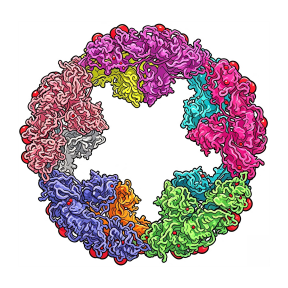
PARP6 is a 630-amino acid mono-ADP-ribosyltransferase containing a conserved PARP catalytic domain. Unlike poly-ADP-ribose polymerases, PARP6 transfers only a single ADP-ribose moiety to target proteins. It regulates cell cycle progression by modulating the G2/M checkpoint and acts as a tumor suppressor in several cancer types. PARP6 interacts with proteins involved in DNA repair and chromatin remodeling, though its full substrate repertoire remains under investigation.
Related Services


Related Products
| Product name | Cat.No. | Species | Gene ID | |
|---|---|---|---|---|
| PARP6 Knockout HeLa Cell Line | EDJ-KQ44980 | Human | 56965 | Details Get a Quote |
| PARP6 Knockout HCT 116 Cell Line | EDJ-KQ44979 | Human | 56965 | Details Get a Quote |
| PARP6 Knockout A-549 Cell Line | EDJ-KQ44978 | Human | 56965 | Details Get a Quote |
| PARP6 Knockout HEK293 Cell Line | EDJ-KQ14681 | Human | 56965 | Details Get a Quote |
