
























MXI1: MAX Interactor 1, Transcriptional Repressor
A tumor suppressor gene involved in MYC regulation and cancer
Gene Information Card
| Symbol | MXI1 |
|---|---|
| Full Name | MAX Interactor 1, Dimerization Protein |
| Gene Type | Protein coding |
| Chromosomal Location | 10q25.2 |
| NCBI Gene ID | 4601 ncbi.nlm.nih.gov/gene/4601 |
| Ensembl ID | ENSG00000119950 |
| UniProt ID | P50539 |
| OMIM ID | 600020 |
| HGNC ID | 7533 |
| Aliases | MAD, MAD2, MXD2, bHLHc11 |
Description
MXI1 (MAX Interactor 1) encodes a basic helix-loop-helix leucine zipper (bHLHZ) protein that forms heterodimers with MAX. This complex competes with MYC-MAX heterodimers for binding to E-box DNA sequences, thereby repressing MYC target gene transcription. MXI1 functions as a tumor suppressor by antagonizing MYC-mediated cell proliferation and transformation. Alternative splicing generates multiple transcript variants.
Disease Associations
| Disease category | Pathophysiological mechanism | Genomic evidence |
|---|---|---|
| Prostate cancer | Loss of MXI1 expression or mutation reduces repression of MYC targets, promoting proliferation | PMID: 8668202 |
| Glioblastoma | MXI1 alterations (deletions/mutations) contribute to MYC pathway activation | PMID: 10417763 |
| Breast cancer | Reduced MXI1 expression correlates with poor prognosis and MYC activation | PMID: 15510170 |
| Lung cancer | MXI1 promoter hypermethylation leads to silencing | PMID: 19029981 |
Expression Profile
Tissue Expression
| Tissue | nTPM | level |
|---|---|---|
| Brain | 12.5 | Medium |
| Prostate | 8.3 | Medium |
| Lung | 7.1 | Medium |
| Breast | 6.8 | Medium |
| Colon | 5.9 | Low |
Cell Line Expression
| Cell Line | nTPM | Notes |
|---|---|---|
| HeLa | 10.2 | Cervical cancer cell line |
| MCF7 | 8.5 | Breast cancer cell line |
| A549 | 7.3 | Lung cancer cell line |
| PC3 | 6.1 | Prostate cancer cell line |
Data source:Human Protein Atlas(proteinatlas.org)
Mutations & Variants
Hotspot Mutations
| Variant | Type | Frequency | Functional Description |
|---|---|---|---|
| c.205C>T (p.Arg69*) | Nonsense | <1% | Loss of function; truncated protein |
| c.347G>A (p.Arg116Gln) | Missense | <1% | Reduced DNA binding |
| c.424_425del (p.Leu142fs) | Frameshift | <1% | Loss of function |
| c.1A>G (p.Met1?) | Start loss | <1% | No protein production |
Mutation functional classification
Loss of Function (LOF)
Most MXI1 mutations are loss-of-function, impairing its ability to repress MYC targets.
Gain of Function (GOF)
No gain-of-function mutations reported.
Dominant Negative (DN)
Some missense mutations may act dominant-negative by sequestering MAX.
View complete mutation data:
Gene Ontology (GO)
| • transcription cis-regulatory region binding | • DNA-binding transcription factor activity |
| • RNA polymerase II transcription regulatory region sequence-specific DNA binding | • protein heterodimerization activity |
| • negative regulation of transcription by RNA polymerase II | • regulation of cell cycle |
| • negative regulation of cell population proliferation |
Pathways
• MYC pathway
• Transcriptional regulation by MXI1-MAX
• E-box binding and repression
Protein Summary
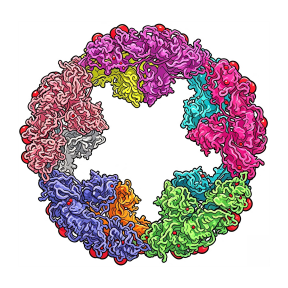
MXI1 is a 228-amino acid protein containing a basic helix-loop-helix (bHLH) domain and a leucine zipper motif. It forms heterodimers with MAX, competing with MYC for E-box binding. MXI1 recruits corepressors such as SIN3 and histone deacetylases to repress transcription. The protein is predominantly nuclear and is expressed in various tissues, with highest levels in brain and prostate. Isoforms generated by alternative splicing may have distinct regulatory functions.
Related Services


Related Products
| Product name | Cat.No. | Species | Gene ID | |
|---|---|---|---|---|
| MXI1 Knockout HeLa Cell Line | EDJ-KQ25415 | Human | 4601 | Details Get a Quote |
| MXI1 Knockout HCT 116 Cell Line | EDJ-KQ25414 | Human | 4601 | Details Get a Quote |
| MXI1 Knockout A-549 Cell Line | EDJ-KQ24037 | Human | 4601 | Details Get a Quote |
| MXI1 Knockout HEK293 Cell Line | EDJ-KQ3555 | Human | 4601 | Details Get a Quote |
