
























H2AL3 Gene: Structure, Function, and Clinical Relevance
A comprehensive overview of the H2AL3 histone gene, including genomic context, expression, and disease associations.
Gene Information Card
| Symbol | H2AL3 |
|---|---|
| Full Name | H2A histone family member L3 |
| Gene Type | protein-coding |
| Chromosomal Location | Xq22.2 |
| NCBI Gene ID | 100874080 ncbi.nlm.nih.gov/gene/100874080 |
| Ensembl ID | ENSG00000284291 |
| UniProt ID | P0C5Z0 |
| OMIM ID | Not available |
| HGNC ID | 48355 |
| Aliases | H2A.L.3, H2A histone family member L3 |
Description
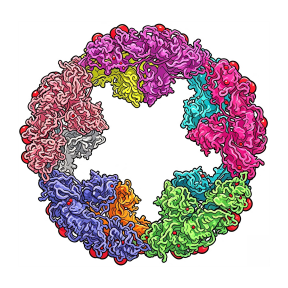
H2AL3 (H2A histone family member L3) is a protein-coding gene located on the X chromosome at Xq22.2. It encodes a histone H2A variant that is part of the nucleosome core, playing a role in chromatin structure and gene regulation. H2AL3 is expressed in testis and is involved in spermatogenesis, particularly in the replacement of histones during sperm chromatin remodeling. The protein contains a conserved histone-fold domain and a C-terminal extension unique to H2A variants. H2AL3 has been implicated in male fertility and may have roles in chromatin compaction and DNA damage response.
Disease Associations
| Disease category | Pathophysiological mechanism | Genomic evidence |
|---|---|---|
| Male infertility | Altered expression or mutations may disrupt histone-to-protamine transition, affecting sperm chromatin integrity. | Expression data from GTEx and studies on H2AL3 in testis; no direct clinical variant reported yet. |
Expression Profile
Tissue Expression
| Tissue | nTPM | level |
|---|---|---|
| Testis | 12.3 | High |
| Fallopian tube | 1.2 | Low |
| Skin | 0.8 | Low |
| Other tissues | 0.1 | Not detected |
Cell Line Expression
| Cell Line | nTPM | Notes |
|---|---|---|
| Spermatogonia | 15.0 | High expression in germ cells |
| Sertoli cells | 2.0 | Moderate |
| HeLa | 0.5 | Low |
| K562 | 0.3 | Low |
Data source:Human Protein Atlas(proteinatlas.org)
Mutations & Variants
Hotspot Mutations
| Variant | Type | Frequency | Functional Description |
|---|---|---|---|
| No known pathogenic variants | Not applicable | Not reported | No clinical significance |
Mutation functional classification
Loss of Function (LOF)
No loss-of-function mutations have been reported for H2AL3.
Gain of Function (GOF)
No gain-of-function mutations have been described.
Dominant Negative (DN)
No dominant-negative effects have been documented.
View complete mutation data:
Gene Ontology (GO)
| • DNA binding | • protein heterodimerization activity |
| • nucleosome assembly | • chromatin organization |
| • nucleus | • chromosome |
Pathways
• Formation of the beta-catenin:TCF transactivating complex
• Chromatin organization
• Epigenetic regulation of gene expression
Protein Summary
The H2AL3 protein is a histone H2A variant with a molecular weight of approximately 14 kDa. It contains a conserved histone-fold domain that mediates dimerization with H2B and interaction with H3/H4 tetramers. The protein is highly expressed in testis, where it localizes to chromatin during spermatogenesis. H2AL3 is involved in the replacement of somatic histones with protamines, a critical step for sperm DNA compaction. Its expression is tightly regulated during male germ cell development, and dysregulation may contribute to infertility.
Related Services


Related Products
| Product name | Cat.No. | Species | Gene ID | |
|---|---|---|---|---|
| H2AL3 Knockout HeLa Cell Line | EDJ-KQ43439 | Human | 115482686 | Details Get a Quote |
| H2AL3 Knockout A-549 Cell Line | EDJ-KQ43437 | Human | 115482686 | Details Get a Quote |
| H2AL3 Knockout HCT 116 Cell Line | EDJ-KQ42178 | Human | 115482686 | Details Get a Quote |
| H2AL3 Knockout HEK293 Cell Line | EDJ-KQ13708 | Human | 115482686 | Details Get a Quote |
