

























CLDN18.2 Emerges as a Key Target in Gastric Cancer: Targeted Therapies, CAR-T Cells, and Research Model Selection
CLDN18 is an important member of the claudin protein family. Located on chromosome 3q22.3, it encodes a tight-junction transmembrane protein. Claudins are widely involved in the formation of epithelial cell-cell junctions and help regulate paracellular permeability, tissue barrier integrity, and cell polarity. Alternative splicing of CLDN18 produces two major isoforms, CLDN18.1 and CLDN18.2. Although they share a similar transmembrane architecture, they differ substantially in tissue distribution and biological function. ● CLDN18.1: Primarily expressed in alveolar epithelial cells and involved in maintaining the pulmonary epithelial barrier. Because of its restricted expression in normal tissues and increased accessibility in gastric tumors, CLDN18.2 has become an important target in precision oncology. The therapeutic appeal of CLDN18.2 lies in the difference between its localization in normal tissue and its accessibility in tumor tissue. In normal gastric mucosa, CLDN18.2 is mainly confined to tight junctions between epithelial cells, where its extracellular epitopes are relatively inaccessible to circulating antibodies. During gastric tumorigenesis, however, loss of cell polarity and disruption of tight-junction architecture can expose these extracellular regions on the tumor-cell surface, making them more accessible to targeted antibodies. A 2026 review in CA: A Cancer Journal for Clinicians, titled “Advances in Therapeutic Approaches to Gastric Cancer,” reported that approximately 40% of gastric cancers express CLDN18.2, although the observed positivity rate varies with the assay and cutoff used. This makes CLDN18.2 one of the clinically important molecular targets in precision therapy for gastric cancer. The therapeutic value of CLDN18.2 is supported by three main features: 1. Relatively tissue-restricted expression: In normal adult tissues, CLDN18.2 is expressed predominantly in the gastric mucosa, providing a degree of tissue selectivity for targeted therapy. Clinical interest in CLDN18.2 accelerated with the development of the targeted antibody zolbetuximab. 1. Zolbetuximab: A Major Advance in CLDN18.2-Targeted Therapy SPOTLIGHT Trial: The SPOTLIGHT trial enrolled 565 patients with CLDN18.2-positive, HER2-negative, locally advanced unresectable or metastatic gastric or gastroesophageal junction adenocarcinoma and evaluated zolbetuximab in combination with mFOLFOX6. Key results: GLOW Trial: The GLOW trial enrolled 507 eligible patients and evaluated zolbetuximab in combination with CAPOX. Key results: Both phase III trials showed that adding zolbetuximab to chemotherapy improved progression-free and overall survival in patients with CLDN18.2-positive, HER2-negative advanced gastric cancer. These findings helped move CLDN18.2 from a potential biomarker to a clinically actionable therapeutic target and introduced a new precision-treatment option for selected patients. Patient selection should be based on an approved CLDN18.2 immunohistochemistry assay and the applicable drug indication. In these trials, CLDN18.2 positivity was defined as moderate-to-strong membranous staining (≥2+) in at least 75% of viable tumor cells.
2. Beyond Monoclonal Antibodies: Expanding CLDN18.2 Strategies with ADCs and CAR-T Cells These approaches are expanding the clinical potential of CLDN18.2 and broadening the target landscape beyond HER2. Gastric cancer treatment is increasingly moving from conventional chemotherapy toward more precise and individualized strategies. Immune checkpoint inhibitors are also being introduced into perioperative settings, while emerging targets such as CLDN18.2 continue to gain clinical relevance. Important challenges remain, including target co-expression, acquired resistance, and treatment accessibility. Future progress will depend on multi-omics analyses, rational combination strategies, and multidisciplinary collaboration to achieve more precise and durable benefit. Figure 1. Wang F, et al. CA Cancer J Clin. 2026;76:e70103. As CLDN18.2-directed therapies advance, researchers need to assess not only target expression but also target function and its relationship to drug response. Different research questions require different gene-edited cell models. 1. CLDN18.2 Overexpression Models: Linking Target Level to Drug Response Potential applications:
2. CLDN18.2 Knockout Models: Confirming Target Specificity Potential applications:
3. Drug-Resistant Models: Investigating Potential Resistance Mechanisms Key readouts may include CLDN18.2 abundance, cell-surface localization, drug internalization, and apoptosis. Together, these measurements can help distinguish changes in target expression from alterations in downstream drug-response pathways. Because CLDN18.2 is a membrane protein, flow cytometry, immunofluorescence, and Western blotting should be used in combination whenever possible; total protein abundance alone may not accurately reflect target accessibility at the cell surface. As CLDN18.2-targeted antibodies, ADCs, and CAR-T-cell therapies continue to advance, research questions are moving beyond whether the target is expressed to how target specificity, antigen density, and resistance mechanisms influence therapeutic response. Selecting an appropriate cell model is therefore essential. Overexpression models can be used to assess how CLDN18.2 abundance affects antibody binding, ADC internalization, and CAR-T-cell cytotoxicity. Knockout models enable parallel comparison with parental cells to determine whether drug activity depends on CLDN18 or a specific isoform. For resistance studies, long-term drug selection can be combined with target-expression and functional assays to establish and characterize resistant models. EDITGENE provides the following cell-model solutions for these research needs: ● Gene knockout cell models: CRISPR/Cas9-edited models can be compared with parental cells to confirm target-dependent drug activity and assess phenotypic changes following gene loss. In addition to custom services, EDITGENE also offers CLDN18-related gene-edited cell models for preliminary model screening and experimental condition optimization. Explore CLDN18-related products. [1] Wang F, Wang ZX, Zhang YJ, He Y, Ji JF, Li YF, Qu XJ, Ba Y, Yuan SQ, Xu RH. Advances in therapeutic approaches to gastric cancer. CA Cancer J Clin. 2026 Sep-Oct;76(5):e70103. doi: 10.3322/caac.70103. PMID: 42751916; PMCID: PMC13584074.
● CLDN18.2: Primarily expressed in differentiated gastric mucosal epithelial cells and essential for maintaining the gastric mucosal barrier.Why Has CLDN18.2 Become an Important Therapeutic Target in Gastric Cancer?
2. Accessibility on tumor cells: Structural disruption and loss of polarity in gastric tumors can expose CLDN18.2 on the cell surface, creating an accessible entry point for antibody-based therapies.
3. Clinical validation: CLDN18.2-targeting monoclonal antibodies have demonstrated therapeutic benefit in phase III trials, supporting the use of CLDN18.2 in molecular stratification and precision treatment of gastric cancer.Clinical Value of CLDN18.2: A New Targeted Option for Gastric Cancer
Zolbetuximab is a monoclonal antibody that recognizes CLDN18.2 on the tumor-cell surface and promotes tumor-cell killing through antibody-dependent cellular cytotoxicity (ADCC) and complement-dependent cytotoxicity (CDC). Its clinical value has been evaluated primarily in two phase III trials.
● Median progression-free survival (PFS): 10.61 vs. 8.67 months.
● Median overall survival (OS): 18.23 vs. 15.54 months.
● Hazard ratio for PFS: 0.75.
● Median PFS: 8.21 vs. 6.80 months.
● Median OS: 14.39 vs. 12.16 months.
● Hazard ratio for PFS: 0.687.
Beyond zolbetuximab, CLDN18.2 is being explored across several emerging anticancer modalities.
● CLDN18.2-targeted ADCs: These agents link a CLDN18.2-directed antibody to a cytotoxic payload. After binding to CLDN18.2-positive tumor cells, the complex is internalized and releases its payload to exert an antitumor effect. Multiple CLDN18.2-targeted ADCs are currently in clinical development.
● CLDN18.2 CAR-T cells: T cells are genetically engineered to express a chimeric antigen receptor that recognizes CLDN18.2, enhancing tumor-cell recognition and killing. Satri-cel and other CLDN18.2-directed CAR-T therapies have shown encouraging signals in clinical studies of advanced gastric cancer.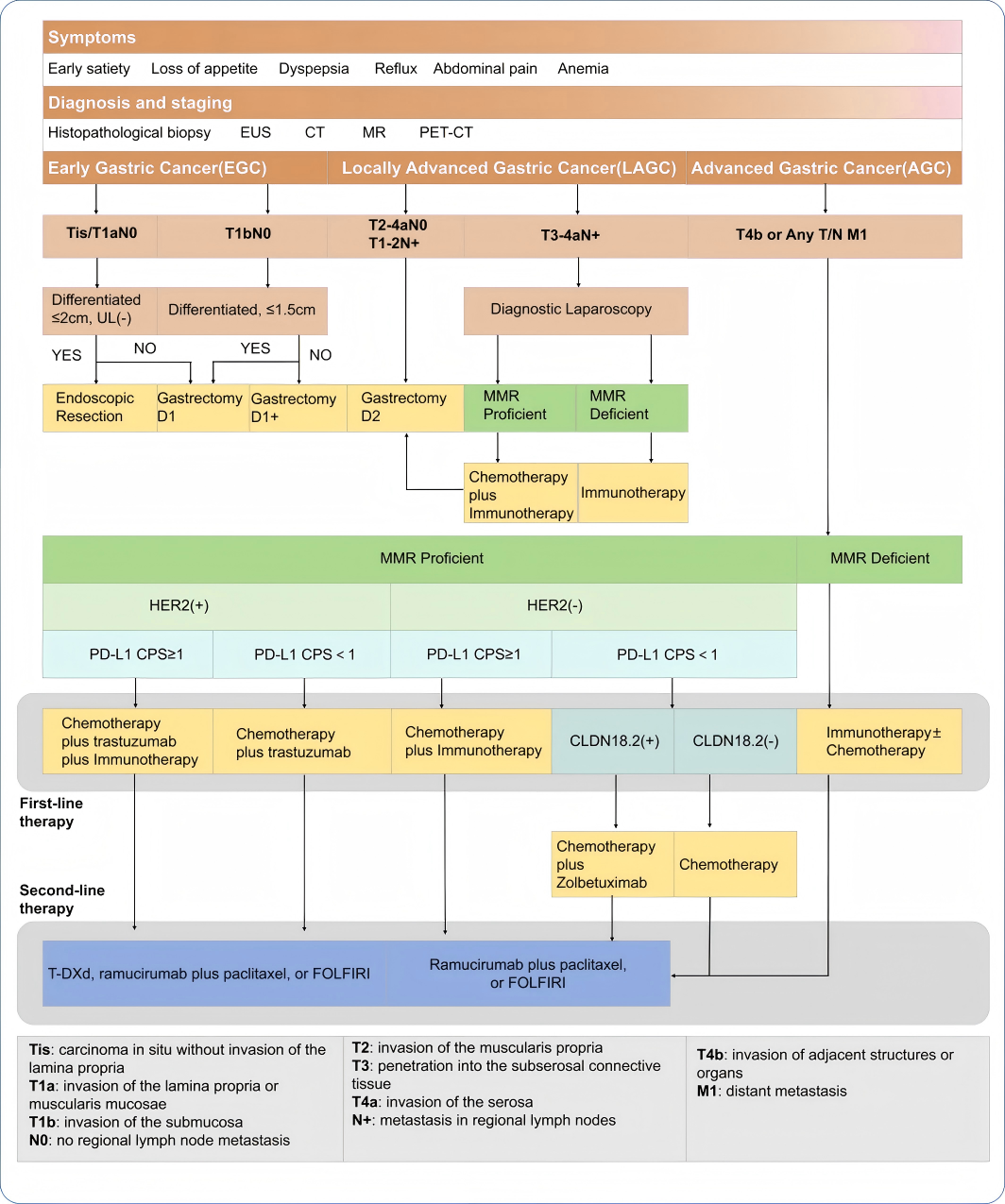
From Target Validation to Drug Response: How Should CLDN18.2 Research Models Be Selected?
Introducing CLDN18.2 into low-expressing or negative cell backgrounds can help determine how antigen density influences antibody binding, ADC internalization, and CAR-T-cell cytotoxicity.
● Evaluate the relationship between CLDN18.2 expression and sensitivity to targeted agents.
● Examine how different antigen-expression levels affect ADC activity.
● Generate CLDN18.2-positive target cells for CAR-T functional assays.
Knocking out the target gene in CLDN18.2-positive gastric cancer cells and comparing the edited cells with the parental line can help determine whether a drug response is dependent on CLDN18.2.
● Confirm the antigen dependence of targeted antibodies.
● Assess how CLDN18.2 loss affects ADC binding and cell killing.
● Investigate the relationship between target loss and potential resistance.
For projects focused on resistance to CLDN18.2-targeted therapies, drug-resistant cell models can be generated through prolonged selection and compared with the parental cells.How EDITGENE Can Support Your CLDN18.2 Studies
● Gene overexpression cell models: Designed to investigate relationships among target abundance, antibody binding, drug internalization, and cell killing, and to provide positive target-cell models for in vitro ADC and CAR-T functional assays.
● Point-mutation cell models: Precise nucleotide substitutions can be introduced at defined functional sites, candidate resistance positions, or clinically relevant variants to compare protein function, signaling, and drug response across genotypes.References
Tag
Share


