

























-
Precision Mutation Cell PanelsKnock-in cell lineWild Type Cell Line
-
CRISPR Knockout KitCRISPR Point Mutation KitKI Enhancer Drug
-
-
 Metabolism - Lipoprotein Stimulus
Cellular response to lipoprotein particle stimulus refers to the series of intracellular responses initiated by cells upon sensing stimulation from any type of lipoprotein particle (including low-density lipoprotein LDL, high-density lipoprotein HDL, very low-density lipoprotein VLDL, and oxidized lipoprotein oxLDL).
Gene knockout models built around these processes provide powerful tools to dissect the distinct roles of lipoprotein particles across different physiological and pathological contexts.
Based on the CRISPR technology platform, EDITGENE provides a series of cell products and services covering gene knockout related to multiple types of lipoprotein particles, supporting research on lipid transport mechanisms and the exploration of related disease targets.
Lipoprotein particles are lipid–protein complexes composed of lipids and apolipoproteins, and can be classified into chylomicrons, VLDL, LDL, and HDL based on density and function. These particles transport cholesterol, triglycerides, and other lipids through the circulatory system, supporting essential biological processes such as energy supply, membrane synthesis, and signaling molecule production.
Different classes of lipoprotein particles serve distinct roles; for example, LDL primarily delivers cholesterol to peripheral tissues, whereas HDL mediates reverse cholesterol transport. The structural composition and dynamic remodeling of these particles directly influence their biological functions. Dysregulation can lead to lipid accumulation, inflammation, and metabolic imbalance, contributing to atherosclerosis and other metabolic disorders.
Studying lipoproteins at the particle level provides a more refined understanding of lipid metabolism and its role in disease.
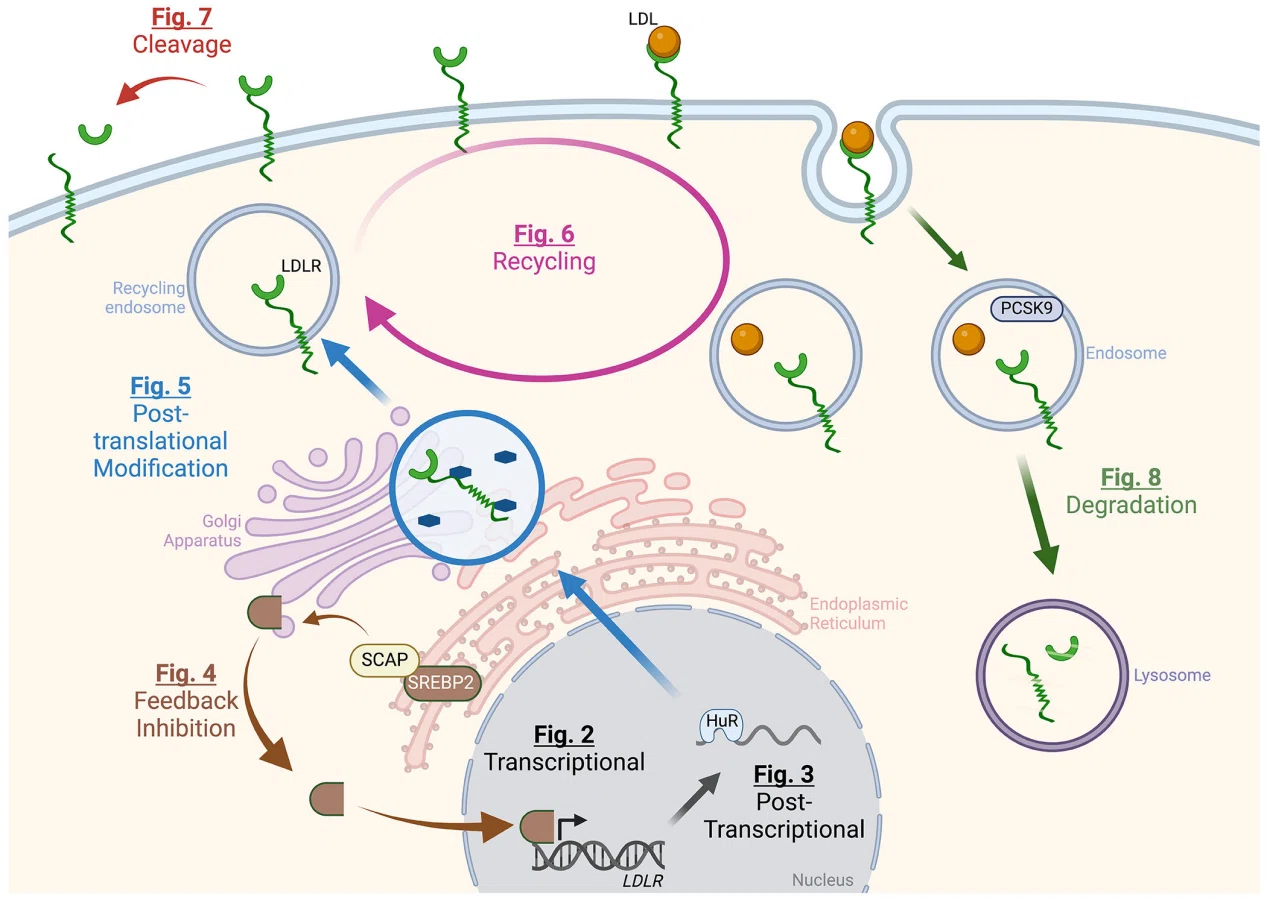
(Schmidt et al., Circ Res, 2025)
Research on Lipoprotein Particles has evolved from simple classification toward systematic analysis of particle composition, structure, and dynamic remodeling. The focus extends beyond functional differences among particle classes to include how structural changes influence function under various physiological and disease conditions. Integrative approaches enable the identification of key regulators that shape lipoprotein behavior.
In practice, this field often combines particle profiling, functional screening, and molecular perturbation strategies to systematically investigate lipoprotein-associated genes and assess their roles in disease contexts. This workflow—from structural characterization to functional impact and mechanistic insight—positions Lipoprotein Particles as a key entry point for studying lipid metabolism.
With CRISPR-based approaches, researchers can precisely manipulate genes involved in lipoprotein assembly, modification, and clearance, improving study efficiency and facilitating target validation.
· Atherosclerosis and Cardiovascular Research
Examine structural variations of lipoprotein particles such as LDL and HDL and their roles in cholesterol deposition and plaque formation.
· Dyslipidemia and Metabolic Disorders
Analyze how changes in particle composition and distribution contribute to hyperlipidemia, obesity, and diabetes.
· Lipoprotein Remodeling Mechanisms
Investigate structural remodeling processes, including lipid exchange and apolipoprotein dynamics, and their functional consequences.
· Inflammation and Immune Studies
Explore the roles of specific particles, such as oxidized LDL, in inflammatory signaling and immune activation.
· Genetic Lipid Disorders
Study the impact of mutations in key genes (e.g., APOB, APOE) on lipoprotein particle formation and function using gene editing models.
To support Lipoprotein Particles research, EDITGENE provides knockout cell models targeting key genes involved in lipoprotein structure and function. These standardized models enable efficient investigation of particle biology and regulatory mechanisms.
The following products cover major lipoprotein-associated targets, supporting applications in lipid metabolism research and disease studies.
-
Cat.No: EDC07598
Species: Mouse
Cell Name: BV-2
Gene Name: Trem2
Gene ID: 83433
Specs: 1×10⁶cells
-
Cat.No: EDC90437
Species: Human
Cell Name: HEK293
Gene Name: DRD2
Gene ID: 1813
Specs: 1×10⁶cells
-
Cat.No: EDC10177
Species: Human
Cell Name: HeLa
Gene Name: GTPBP2
Gene ID: 54676
Specs: 1×10⁶cells
-
Cat.No: EDC90436
Species: Human
Cell Name: A-549
Gene Name: SMPD3
Gene ID: 55512
Specs: 1×10⁶ cells
-
Cat.No: EDC07969
Species: Human
Cell Name: HAP1
Gene Name: ABCA1
Gene ID: 19
Specs: 1×10⁶cells
-
Cat.No: EDC09412
Species: Human
Cell Name: HAP1
Gene Name: TESK1
Gene ID: 7016
Specs: 1×10⁶cells
-
Cat.No: EDC90046
Species: Human
Cell Name: THP-1
Gene Name: CD9
Gene ID: 928
-
Cat.No: EDC90244
Species: Human
Cell Name: BEAS-2B
Gene Name: PPARG
Gene ID: 5468
Specs: 1×10⁶cells
-
Cat.No: EDC90124
Species: Human
Cell Name: Caco-2
Gene Name: ITGB1
Gene ID: 3688
Specs: 1×10⁶cells
-
Cat.No: EDC90589
Species: Chinese hamster
Cell Name: CHO
Gene Name: App
Gene ID: 100689222
Specs: 1×10⁶cells
-
Cat.No: EDJ-KQ37
Species: Human
Cell Name: Hep-G2
Gene Name: ITGB1
Gene ID: 3688
Specs: 1×10⁶cells
-
Cat.No: EDJ-KQ240
Species: Human
Cell Name: HEK293T
Gene Name: NPC1
Gene ID: 4864
Specs: 1×10⁶cells
-
Cat.No: EDJ-KQ273
Species: Human
Cell Name: HEK293
Gene Name: LDLR
Gene ID: 3949
Specs: 1×10⁶cells
-
Cat.No: EDJ-KQ446
Species: Human
Cell Name: HEK293
Gene Name: AKT1
Gene ID: 207
Specs: 1×10⁶cells
-
Cat.No: EDJ-KQ528
Species: Human
Cell Name: HEK293
Gene Name: SOCS5
Gene ID: 9655
Specs: 1×10⁶cells
- 1
- 2
- ...
- 11
- 12
- Next Page »
Subscribe
You can unsubscribe from these communications at any time. For more information on how to unsubscribe, our privacy practices, and how we are committed to protecting and respecting your privacy, please review our Privacy Policy.
By clicking submit below, you consent to allow EDITGENE to store and process the personal information submitted above to provide you the content requested.
