


























EDITGENE CO., LTD

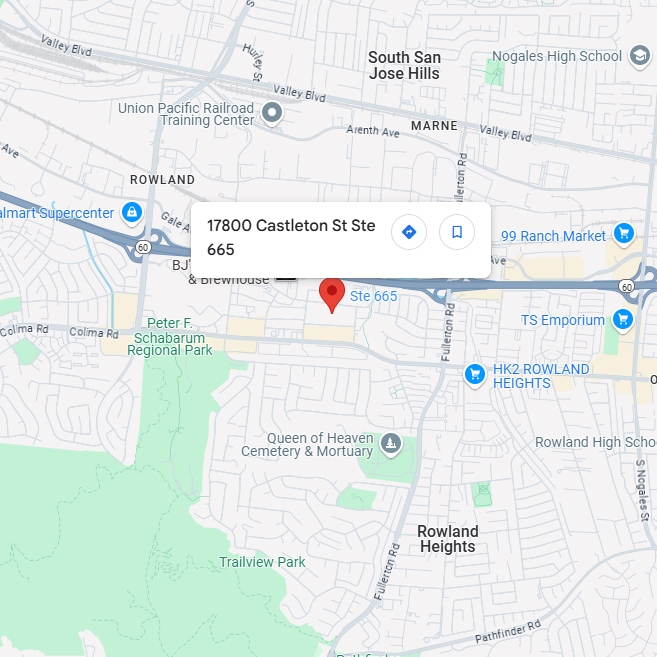
17800 Castleton St. Ste 665. City of Industry. CA 91748

info@editxor.com

+1-833-226-3234 (USA Toll-free)
+1-224-345-1927 (USA)
+86-19120102676 (Intl)

 Room 501, Building D, International Business Incubator, No.3 Juquan Road, Science City, Huangpu District, Guangzhou, Guangdong, China 510663
Technical Support

Support Center
Beijing Time: Monday to Friday, 8:00 AM - 6:00 PM
Toll-Free (USA): +833-226-3234
Direct Line (USA): +1-224-345-1927
Email: techsupport@editxor.com

After-Hours Support
Beijing Time: Monday to Sunday, 8:00AM - 6:00 PM
International Line: +86-19120102676
Email: info@editxor.com

Facebook Messenger
Reach out to us on Facebook Messenger for personalized assistance and detailed information.

Linkedin
Engage with us on LinkedIn for professional inquiries, the latest blogs, discoveries, and updates on our innovative work.
FAQ
Why does this kit cause minimal cellular damage?
The kit employs advanced biomolecular transfection technology, offering significant advantages over
traditional methods. Unlike chemical transfection, which may be cytotoxic, or electroporation, which can subject cells to physical stress, this approach ensures minimal damage while maintaining high efficiency.
How can high editing efficiency be achieved without selection?
This kit has been validated across multiple cell lines. The RNP complex enters cells and begins gene editing within 4 hours post-transfection. Cas9 protein is degraded within 24–48 hours, allowing efficient and transient expression-driven editing without the need for antibiotic or fluorescent selection.
Can comparable editing efficiency be achieved in suspension cells?
While suspension cells are generally more difficult to transfect, this kit performs exceptionally well in both adherent and suspension cell types. For example, in Jurkat cells, editing efficiency can reach up to 97%
within 48 hours post-transfection, demonstrating the kit’s outstanding performance and suitability for demanding suspension cell applications.
How can it be demonstrated that high editing efficiency is achieved without selection?
The product has been validated in multiple cell types. The RNP system enters cells and begins functioning within 4 hours post-transfection, and the Cas9 protein is degraded within 24-48 hours. This transient, high-efficiency expression enables gene editing without the need for continuous selection.
What should be done if gene knockout fails using the kit?
If gene knockout fails when using this kit, EDITGENE will not charge for the kit. Additionally, the fee you paid for the kit can be directly applied toward EDITGENE’s gene knockout service, ensuring that your gene editing experiments proceed without concerns.
Why does the product cause relatively low cellular damage?
The product utilizes advanced biomolecular transfection technology. Compared with the toxicity of traditional chemical transfection methods and the physical stress of electroporation, it shows significant advantages in preserving cell viability.
Can the same efficiency be achieved in suspension cells?
Transfecting suspension cells is generally more challenging. However, due to its superior performance, this product works efficiently not only in adherent cells but also in suspension cells. For example, in Jurkat cells, 48 hours post-transfection, editing efficiency can reach up to 97%, demonstrating the product’s high efficiency in suspension cell transfection and meeting demanding requirements.
Is this FcRn Knockout ST Cell Line compatible with overexpression rescue experiments?
Yes. FcRn rescue experiments require attention to heterodimer formation and pH-sensing:
• Construct design: use a codon-modified FcRn (FCGRT) sequence with a small intracellular C-terminal tag (FLAG, HA). FcRn (FCGRT) heavy chain associates non-covalently with β2-microglobulin (B2M) for surface expression — both subunits required.
• pH-binding-deficient rescue: H310A/H433A and other histidine residue mutations abolish pH-dependent IgG binding and serve as the standard specificity control.
• B2M partnership: rescue interpretation considers B2M expression — both FCGRT heavy chain and B2M are required for surface FcRn.
• Functional readout: rescue should restore pH 6.0 IgG binding and pH 7.4 IgG release, and IgG transcytosis activity.
ST-specific considerations:
• ST is a porcine testicular cell line widely used for swine virus research (transmissible gastroenteritis virus TGEV, porcine epidemic diarrhea virus PEDV) and porcine-specific receptor biology.
• Lentiviral transduction efficiency in ST cells may require optimization; the porcine species background must be considered for ortholog and antibody cross-reactivity.
• Cell line authentication is recommended.
What are the application scenarios for this model?
Primary applications:
• IgG pH-dependent binding: IgG binding to FcRn at pH 6.0 (endosomal mimic) and pH 7.4 (extracellular mimic) by SPR or BLI.
• Porcine IgG biology: in heterologous porcine immunology contexts, characterization of porcine FcRn-IgG interactions.
• FcRn antagonist specificity: critical genetic control for efgartigimod (FDA-approved for myasthenia gravis), rozanolixizumab, nipocalimab in autoantibody-mediated disease.
• Antibody half-life engineering: YTE (M252Y/S254T/T256E), LS (M428L/N434S), AAA (S298A/E333A/K334A) Fc variants affecting FcRn binding.
EDITGENE recommends this porcine model for researchers investigating FcRn-IgG biology, particularly in agricultural/veterinary immunology and xenotransplantation contexts.
Which is better for studying FcRn function, FcRn Knockout ST Cell Line or FcRn overexpression ST Cell Line?
The choice depends on whether you are studying FcRn (neonatal Fc receptor)'s role in IgG and albumin homeostasis or modeling porcine IgG biology and transcytosis. The Knockout line is the standard tool for asking whether FcRn is required for these processes — FcRn is a non-classical MHC class I-like receptor expressed on epithelial cells, endothelial cells, and antigen-presenting cells; FcRn binds IgG at acidic pH (early endosome) and releases at neutral pH (cell surface), enabling IgG transcytosis (gut absorption in neonates, placental transfer) and IgG recycling (extending IgG serum half-life to ~3 weeks). Overexpression is useful for studying FcRn in heterologous expression contexts.
For porcine immunology and transcytosis research, the EDITGENE FcRn Knockout in ST is uniquely valuable — ST is a porcine testicular cell line, and porcine FcRn has specific applications in agricultural immunology and xenotransplantation research. Rescue with wild-type or pH-binding-deficient (H310A/H433A) FcRn enables structure-function studies. The knockout is valuable for studying IgG pharmacokinetics, antibody half-life extension strategies (YTE, LS, AAA mutations enhance FcRn binding), and FcRn antagonists (efgartigimod, FDA-approved for myasthenia gravis; rozanolixizumab; nipocalimab — for autoantibody-mediated diseases).
Is this SSPN Knockout C2C12 Cell Line compatible with overexpression rescue experiments?
Yes. SSPN rescue experiments are particularly important given its therapeutic relevance for muscular dystrophy:
• Construct design: use a codon-modified SSPN sequence with a small C-terminal cytoplasmic tag (FLAG, HA). SSPN is a tetraspanin-family membrane protein — N-terminal tags can interfere with membrane topology.
• Differentiation-stage-specific rescue: SSPN expression normally increases during myogenic differentiation; rescue experiments should test both proliferating myoblast and differentiated myotube contexts.
• Overexpression for therapeutic studies: SSPN overexpression has been shown to ameliorate dystrophin deficiency in mouse models — rescue at supraphysiological levels is informative for therapeutic mechanism studies.
• Functional readout: rescue should restore DGC component levels (β-dystroglycan, sarcoglycans) and sarcolemmal stability during myotube formation.
C2C12 transduces efficiently with lentivirus and standard expression vectors; the myogenic differentiation program is preserved through standard rescue protocols, enabling staged phenotypic analysis.
Which is better for studying SSPN function, SSPN Knockout C2C12 Cell Line or SSPN overexpression C2C12 Cell Line?
The choice depends on whether you are studying SSPN's role in the dystrophin-glycoprotein complex (DGC) or modeling its emerging therapeutic potential in muscular dystrophy. The Knockout line is appropriate for asking whether SSPN is required for DGC stability, sarcolemmal integrity, or laminin binding in a muscle-relevant background. Overexpression is useful for testing SSPN's reported therapeutic effect in muscular dystrophy models — SSPN overexpression has been shown to compensate for dystrophin loss in mouse models.
For muscle biology research, the EDITGENE SSPN Knockout in C2C12 is particularly relevant — C2C12 is the standard murine myoblast differentiation model, and SSPN expression increases during myogenic differentiation. Both KO and overexpression are valuable: KO reveals SSPN's contribution to DGC stability in differentiated myotubes, while overexpression tests its compensatory potential. Rescue with wild-type or domain-deletion SSPN dissects which protein regions mediate DGC stabilization.
What are the application scenarios for this model?
Primary applications:
• DGC stability assays: Western blot analysis of dystrophin-glycoprotein complex components (β-dystroglycan, sarcoglycans) in differentiated myotubes from knockout C2C12.
• Myogenic differentiation: fusion index quantification and myotube morphology during differentiation, given SSPN's expression increases during myogenesis.
• Laminin binding: integrin α7β1 and laminin-binding capacity assessment in the absence of SSPN.
• Therapeutic potential studies: rescue with SSPN overexpression to test SSPN's reported ability to compensate for dystrophin loss in muscular dystrophy models.
EDITGENE recommends this model for researchers investigating dystrophin-glycoprotein complex biology, muscular dystrophy mechanisms, and SSPN-based therapeutic strategies.
Is this FEM1A Knockout C2C12 Cell Line compatible with overexpression rescue experiments?
Yes. FEM1A rescue experiments require attention to ankyrin repeat architecture:
• Construct design: use a codon-modified FEM1A sequence with a small C-terminal tag (FLAG, HA). FEM1A has N-terminal ankyrin repeats (substrate recognition) and C-terminal regions — preserve all elements.
• Substrate-binding-deficient rescue: ankyrin repeat mutations disrupt C-terminal degron substrate binding.
• CRL2 scaffolding: rescue with FEM1A retains CRL2 complex assembly — rescue interpretation considers CUL2-elongin BC complex.
• Functional readout: rescue should restore CRL2-FEM1A substrate degradation.
C2C12-specific considerations:
• C2C12 is a murine myoblast cell line (C3H mouse origin) — the principal continuous skeletal muscle cell model for myogenesis, muscle differentiation, and metabolic research.
• Lentiviral transduction is supported with moderate efficiency; characterize myoblast markers (MyoD, Myf5) and respond to differentiation cues (low-serum medium) to drive myotube formation.
• C2C12 differentiation into multinucleated myotubes is a hallmark feature useful for studying muscle-relevant gene function.
What are the application scenarios for this model?
Primary applications:
• CRL2-FEM1A substrate stability: candidate substrate protein stability analysis in FEM1A-null cells given CRL2-FEM1A E3 ligase function.
• Myogenic differentiation: MyoD, myogenin, MHC expression and myotube formation analysis given C2C12's myogenic capacity.
• C-terminal degron biology: assessment of C-terminal R/arginine-ending degron substrate accumulation in the absence of FEM1A.
• Fem1 family comparative studies: FEM1B, FEM1C expression analysis to interpret FEM1A-specific functions.
EDITGENE recommends this C2C12-based model for researchers investigating skeletal muscle Fem1a biology and CRL2-FEM1A-mediated protein quality control.
