Mitochondrial Energy Restoration + Ferroptosis Blockade: Next-Generation Nanotherapy Strategy for Stroke Recovery

Ischemic stroke is an acute cerebrovascular emergency triggered by prolonged cerebral hypoperfusion, characterized by rapid onset, high mortality, and significant long-term disability—remaining a critical therapeutic challenge.
Ferroptosis, a recently recognized form of regulated cell death, plays a pivotal role in stroke pathophysiology. Its interaction with mitochondrial energy failure creates a self-amplifying "ferroptosis-bioenergetics axis," accelerating neuronal death through a vicious cycle.
Recently, a groundbreaking study published on the PMC open-access platform reported a hierarchical collapsing nanomotor (Mit-CY@Nps) that addresses oxidative stress-driven neuronal injury at its biochemical origin by inhibiting mitochondrial ferroptosis and restoring cellular energy homeostasis.
EDITGENE proudly supplied PC12, HT22, BV-2, and bEnd.3 cell models, supporting this cutting-edge research.
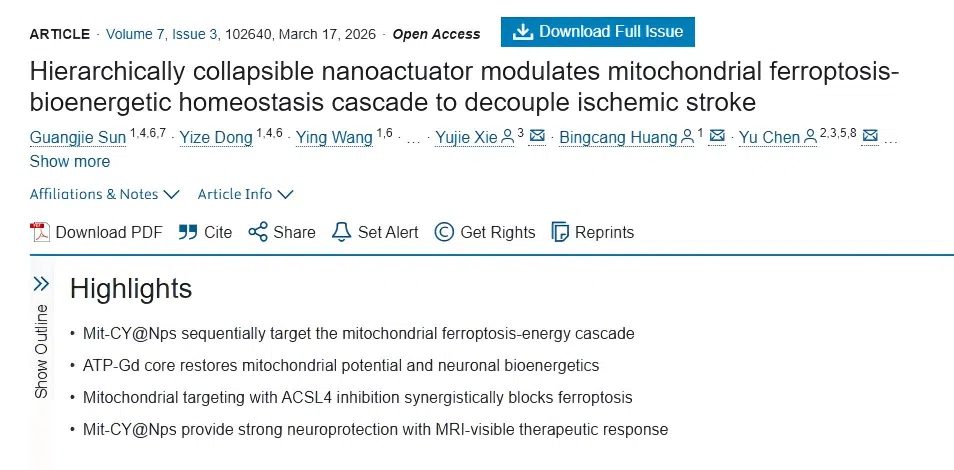
Original article:https://pmc.ncbi.nlm.nih.gov/articles/PMC13006402/#abs0010
Research Highlights
1. Dual-Target Synergy: Energy Restoration + Ferroptosis Blockade
Mit-CY@Nps restores mitochondrial function through ATP supplementation while releasing chrysin (CY) to inhibit ACSL4-mediated lipid peroxidation. This "energy repair + ferroptosis inhibition" dual-protection strategy breaks the vicious cycle of ischemia-reperfusion injury.
Mit-CY@Nps restores mitochondrial function through ATP supplementation while releasing chrysin (CY) to inhibit ACSL4-mediated lipid peroxidation. This "energy repair + ferroptosis inhibition" dual-protection strategy breaks the vicious cycle of ischemia-reperfusion injury.
2. Intelligent Hierarchical Collapse + Theranostic Integration
The nanoplatform leverages ROS-responsive shells and ATP-Gd cores for on-demand drug release in hypoxic microenvironments. Gd³⁺ confers MRI imaging capability, enabling real-time dynamic monitoring throughout treatment.
The nanoplatform leverages ROS-responsive shells and ATP-Gd cores for on-demand drug release in hypoxic microenvironments. Gd³⁺ confers MRI imaging capability, enabling real-time dynamic monitoring throughout treatment.
3. Robust Protection & Safety Validated Across Multiple Models
Mit-CY@Nps demonstrates reduced oxidative stress, suppressed ferroptosis, neuronal protection, and improved motor function in both cell-based and transient middle cerebral artery occlusion (tMCAO) mouse models, with excellent biosafety profiles.
Mit-CY@Nps demonstrates reduced oxidative stress, suppressed ferroptosis, neuronal protection, and improved motor function in both cell-based and transient middle cerebral artery occlusion (tMCAO) mouse models, with excellent biosafety profiles.
01
Nanostructure Design & Intelligent Hierarchical Collapse
The research team designed Mit-CY@Nps to simultaneously regulate ferroptosis and energy metabolism imbalance.
Core-Shell Architecture:
· Outer layer: ROS-responsive selenium-crosslinked polymer combined with mitochondrial-targeting peptide SS31, enabling blood-brain barrier (BBB) penetration and accumulation in damaged mitochondria
· Inner core: ATP-gadolinium (ATP-Gd) coordination polymer loaded with ferroptosis inhibitor chrysin (CY)
Mechanism of Action: In the high-ROS microenvironment generated by ischemia-reperfusion, the nanoparticle shell undergoes responsive degradation, promoting inner structural collapse and triggering on-demand release of ATP and CY.
· ATP function: Replenishes damaged mitochondrial energy supply, restores mitochondrial membrane potential, and recovers respiratory chain function
· CY function: Regulates the ACSL4 pathway to inhibit polyunsaturated fatty acid oxidation, reduces lipid peroxidation levels, and blocks ferroptosis
Additionally, the ATP-Gd core confers MRI imaging capability, enabling real-time tracking of drug distribution during treatment and achieving theranostic integration.
02
Transbarrier Delivery & Subcellular Targeting
One of the central challenges in CNS disease treatment is penetrating the blood-brain barrier (BBB) and precisely delivering therapeutic payloads to critical functional sites within damaged cells.
Mit-CY@Nps achieves precision delivery from tissue to organelle through a dual-strategy approach: BBB penetration + mitochondrial targeting.
In vitro BBB co-culture models demonstrated effective transbarrier penetration. Guided by targeting peptide SS31, Mit-CY@Nps accumulated significantly within mitochondria within 6 hours, achieving precise intervention at the core sites of ferroptosis and energy crisis.
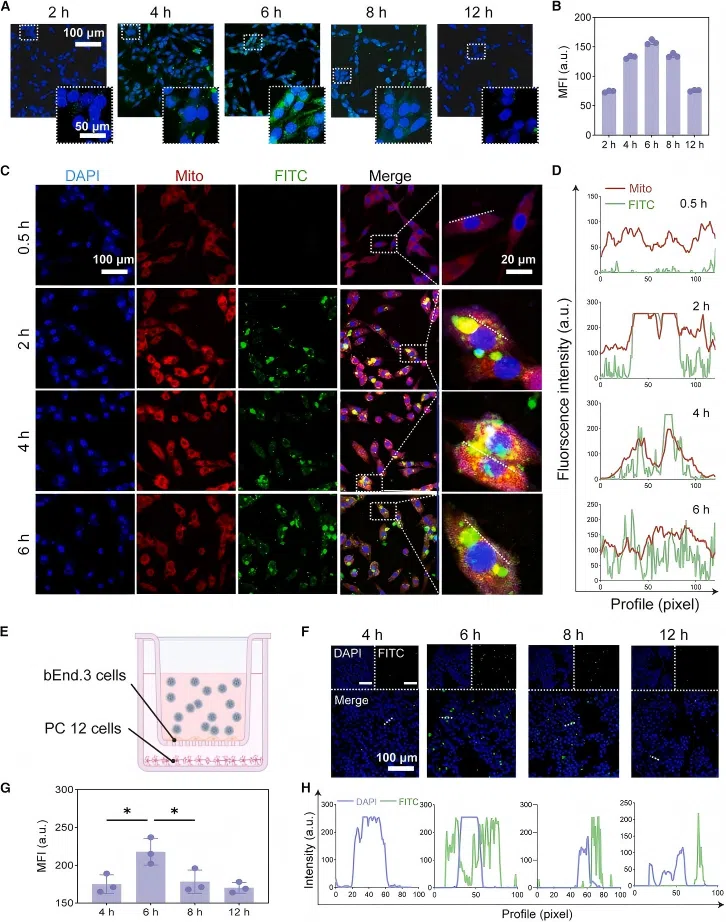 Figure 1: Transwell BBB co-culture model showing nanoparticle transbarrier transport and quantitative subcellular localization analysis
 03
In Vitro Ferroptosis-Energy Cascade Regulation & Molecular Mechanisms
In oxygen-glucose deprivation/reoxygenation (OGD/R) neuronal injury models, Mit-CY@Nps demonstrated synergistic regulation of ferroptosis and mitochondrial energy dysfunction.
Key Effects:
· Reduced cellular and mitochondrial ROS levels
· Minimized lipid peroxidation damage
· Restored glutathione (GSH) levels
· Reduced malondialdehyde (MDA) accumulation
· Effectively inhibited ferroptosis progression
Energy Recovery: Mit-CY@Nps compensated for inadequate energy supply in hypoxic conditions by supplementing ATP, restoring mitochondrial membrane potential and respiratory chain function, maintaining mitochondrial structural integrity, and reducing cell death from mitochondrial damage.
Molecular Pathway Analysis: RNA sequencing revealed regulation of 689 differentially expressed genes. Western blot validation demonstrated:
· Downregulation of ferroptosis key regulator ACSL4
· Upregulation of antioxidant protein GPX4
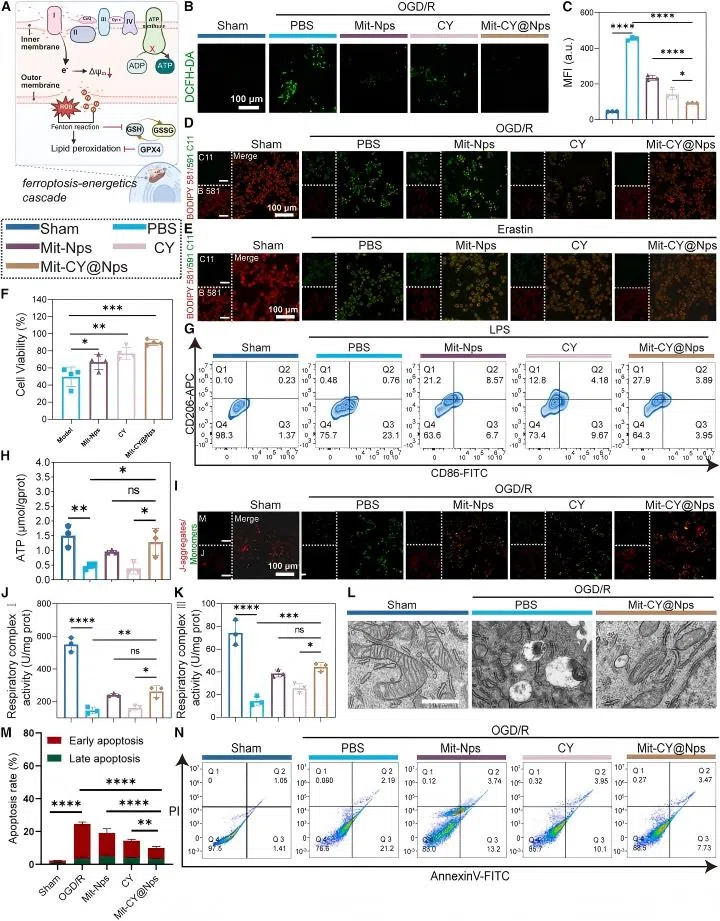 Figure 2: Reduction in ROS and lipid peroxidation (BODIPY C11) levels in OGD/R models
 04
In Vivo Imaging, Biodistribution & Therapeutic Efficacy
In transient middle cerebral artery occlusion (tMCAO) mouse models, Mit-CY@Nps demonstrated excellent brain delivery capability and neuroprotection effects.
Imaging Results:
· IR780-labeled nanoparticles accumulated in ischemic brain regions
· T₁-MRI enabled dynamic imaging of infarct areas, validating BBB penetration and imaging-monitoring capability
Therapeutic Outcomes:
· 61% reduction in infarct volume (from 45.2% to 17.6%)
· Alleviated cerebral edema
· Promoted cerebral blood flow recovery
· Protected neurons and inhibited ferroptosis-related and inflammatory damage
· Reduced activation of multiple cell death pathways
Behavioral Assessment: Mit-CY@Nps improved motor function and sensorimotor integration in mice, with excellent biocompatibility demonstrated in long-term safety evaluations.
05
Summary & Future Perspectives
This study designed mitochondria-targeted hierarchical collapsing nanomotors (Mit-CY@Nps) that achieve synergistic regulation of the ferroptosis-bioenergetics-stability cascade in cerebral ischemia-reperfusion injury.
Paradigm Shift: This strategy transcends traditional single-target therapeutic models. By repairing mitochondrial function and blocking the ferroptosis-oxidative stress cycle, it provides a new research direction for ischemia-reperfusion injury therapy.
Future Directions:
· Further validation in large animal models closer to clinical settings for pharmacokinetics, safety, and translational potential
· Potential expansion to other oxidative stress-related neurodegenerative diseases, including Parkinson's disease and Alzheimer's disease
· Broader application of the "mitochondrial precision delivery + oxidative stress response + metabolic repair" design philosophy
Contact us
+ 833-226-3234 (USA Toll-free)
+1-224-345-1927 (USA)
info@editxor.com
Tag
Share