KRAS Mutant Cell Lines for Precision Oncology: From Allele-Specific Signaling to Targeted Therapy Resistance

KRAS is one of the most frequently mutated oncogenes in human cancers, yet different mutation subtypes (G12C, G12D, G12V, G13D, etc.) exhibit significant differences in oncogenic potential, signaling pathway preferences, and drug sensitivity.
The approval of the first G12C inhibitor in 2021 ushered in a new era of precision targeting of KRAS. Understanding allele-specific functions, screening sensitive drugs, and dissecting resistance mechanisms all rely on isogenic cell models with consistent genetic backgrounds.
This article systematically reviews the clinical significance and therapeutic breakthroughs of major KRAS mutation subtypes, and introduces EDITGENE's off-the-shelf cell lines with KRAS point mutation in HCT116 and LLC, built on the Bingo™ PE7 platform. These ready-to-ship cell lines provide academic institutes and pharmaceutical companies with ideal tools ranging from in vitro screening to in vivo efficacy evaluation.
01
KRAS mutation spectrum: heterogeneous distribution across different cancer types
KRAS is the most frequently mutated oncogene in human cancers, with mutation rates reaching 77.4% in pancreatic ductal adenocarcinoma (PDAC), 41.1% in colorectal cancer (CRC), and 27.2% in non-small cell lung cancer (NSCLC). In 2021, the world's first KRAS G12C inhibitor, sotorasib (Lumakras), was approved by the FDA, marking the transition of KRAS from an "undruggable" target into a new era of precision targeted therapy.
However, KRAS mutations are not a single entity. Mutant subtypes arising from different codons and amino acid substitutions exhibit marked differences in oncogenic potential, signaling pathway preferences, and drug sensitivity.
The development of precise cell models covering multiple KRAS mutant subtypes has become an indispensable core tool for analyzing allele-specific functions, screening sensitive drugs, and studying resistance mechanisms.
02
Functional Characteristics and Clinical Significance of Major KRAS Mutant Subtypes
1. KRAS G12C: A Milestone in Successful Targeting and the Frontier of Resistance Mechanism Research
G12C is the most common KRAS mutant subtype in NSCLC, accounting for nearly 50% of all Gly12 mutations. The G12C mutation occurs in the Switch II region, where the mutant introduces a nucleophilic cysteine residue that enables small-molecule inhibitors to form irreversible covalent bonds, locking KRAS in its inactive GDP-bound state. Based on this mechanism, sotorasib and adagrasib have been successively approved for clinical use.
Although G12C inhibitors have shown clear clinical efficacy, most patients experience disease progression within 5–6 months. Resistance mechanisms fall into three main categories:
(1) secondary KRAS mutations that alter the inhibitor-binding pocket, such as Y96D;
(2) bypass signaling activation, including gain-of-function mutations in NRAS, BRAF, or RET, as well as loss-of-function mutations in PTEN;
(3) histological transformation. Isogenic cell models play an irreplaceable role in dissecting these resistance mechanisms and screening combination treatment strategies—such as SHP2 inhibitors, MEK inhibitors, or immune checkpoint inhibitors.
(1) secondary KRAS mutations that alter the inhibitor-binding pocket, such as Y96D;
(2) bypass signaling activation, including gain-of-function mutations in NRAS, BRAF, or RET, as well as loss-of-function mutations in PTEN;
(3) histological transformation. Isogenic cell models play an irreplaceable role in dissecting these resistance mechanisms and screening combination treatment strategies—such as SHP2 inhibitors, MEK inhibitors, or immune checkpoint inhibitors.
Isogenic cell models focused on G12C inhibitor resistance have become a core tool in drug discovery. EDITGENE has successfully developed the KRAS (p.G12C) point mutation HCT116 cell line and the KRAS (p.G12C) point mutation LLC cell line. The LLC cell line is particularly suitable for immunocompetent mouse models, enabling precise evaluation of the in vivo pharmacodynamic effects of targeted drugs in combination with immunotherapy.
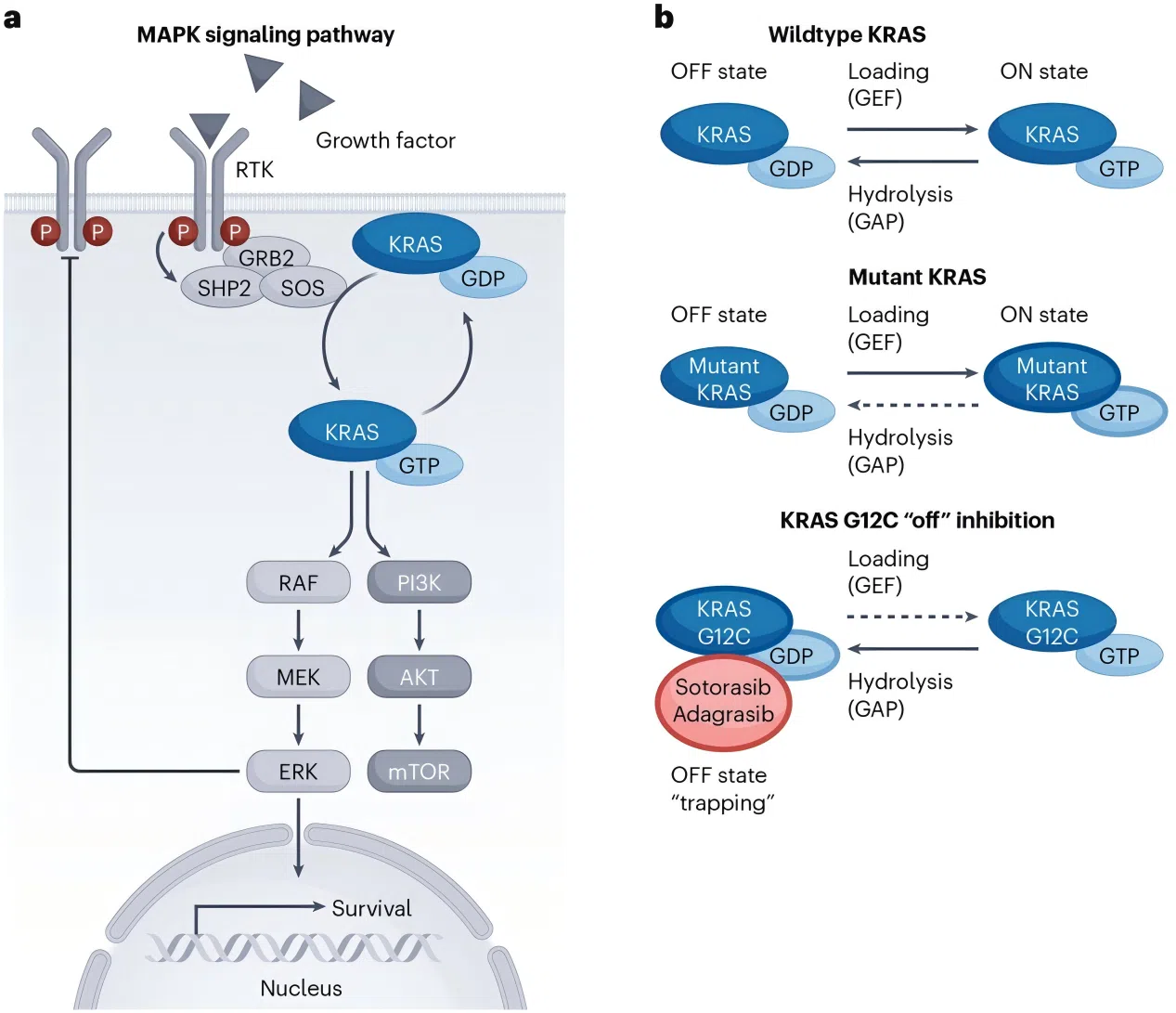 Figure 1. Regulation of KRAS and Signal Transduction Pathways
 2. KRAS G12D: A Therapeutic Breakthrough for the Target with the Greatest Unmet Need.
G12D is the predominant KRAS mutant subtype in pancreatic cancer as well as a common mutation in colorectal cancer and gastric cancer. Due to the absence of a covalently targetable cysteine residue, G12D inhibitors have long been considered as the "largest unmet need" in the KRAS field.
In recent years, this area has witnessed breakthrough progress. The novel oral G12D (ON/OFF) inhibitor GFH375 has demonstrated impressive anti-tumor activity in Phase I/II clinical trials, further underscoring the critical value of isogenic cell models expressing G12D mutations for drug screening and preclinical validation. As G12D inhibitors advance into clinical development, the demand for high-quality G12D cell models has increased sharply.
EDITGENE has successfully generated the KRAS (p.G12D) point mutation HCT116 cell line, providing a precise tool for evaluating the in vitro efficacy of targeted drugs and studying resistance mechanisms.
3. Other Important KRAS Mutant Subtypes: Allele-Specific Signaling and Therapeutic Strategies
In addition to G12C and G12D, multiple KRAS mutant subtypes hold significant clinical relevance in specific cancer types, with notable differences in their responses to targeted therapies.
● G12V is a common mutation in lung cancer and colorectal cancer. Tumors driven by G12V are characterized by activation of the MAPK signaling and receptor tyrosine kinase pathways, exhibiting significant transcriptomic differences compared to G12C and G12D.
● G13D occurs in approximately 15–20% of colorectal cancers. Its downstream signaling shows relatively stronger dependence on EGFR blockade. KRAS G13D mutations are significantly associated with high tumor mutational burden (TMB) and microsatellite instability-high (MSI-H) status in colorectal cancer, indicating that allele-specific isogenic cell models are highly valuable for distinguishing prognosis and guiding immunotherapy strategies.
● Relatively rare mutant subtypes such as G12A, G12S, G12R, Q61H, etc., which possess unique biological properties, also display allele-specific differences in drug sensitivity, signaling preferences, and resistance mechanisms.
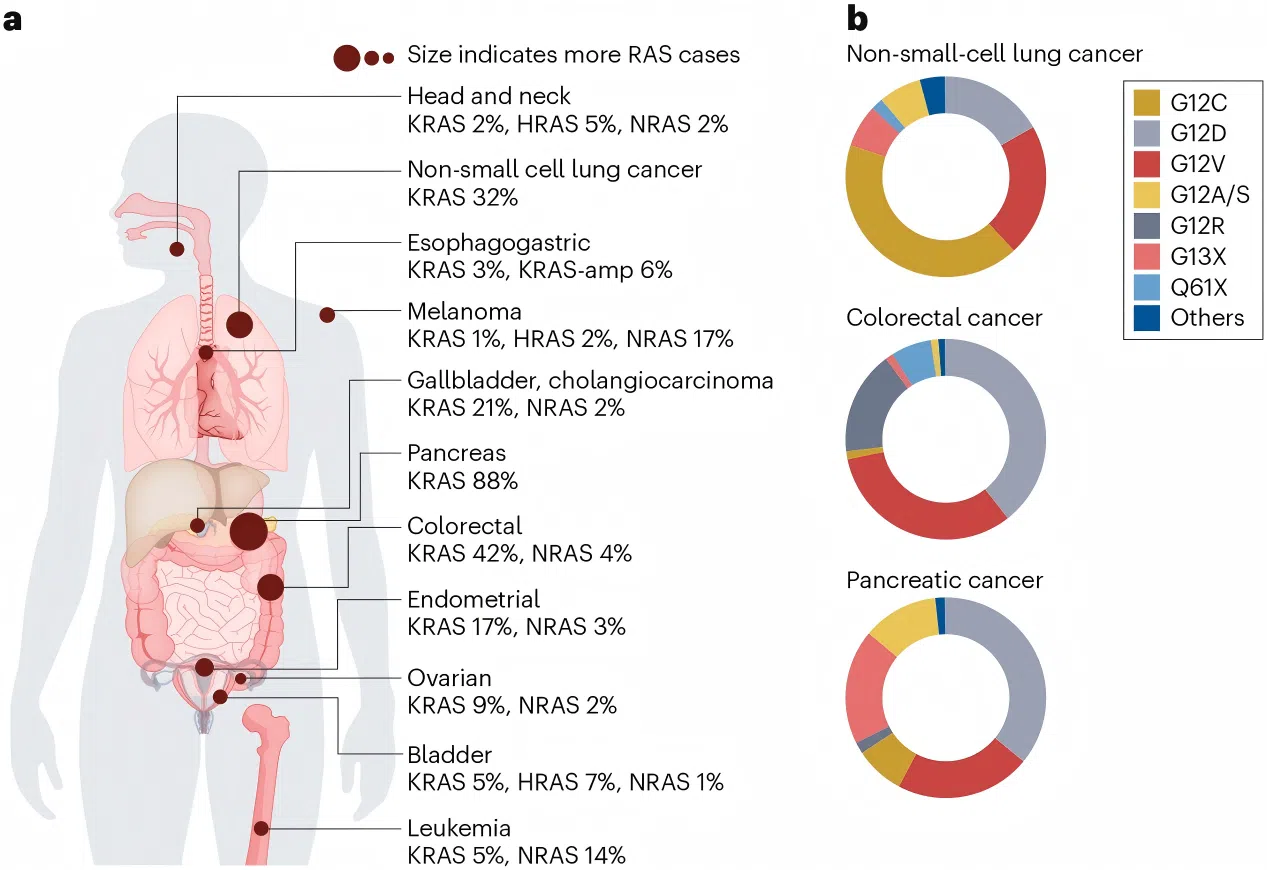 Figure 2. RAS Mutations in Cancer
 03
Isogenic Cell Models: The Core Tool for Decoding Allele-Specific Differences
The complex differences among various KRAS mutant subtypes (G12C, G12D, G12V, G13D) in biochemical properties, signaling pathway preferences, and drug sensitivity make isogenic cell models an indispensable tool for precise research.
By using a series of cell lines with identical genetic backgrounds but differing only in specific alleles, researchers can eliminate background noise between different cell strains and directly attribute phenotypic changes to a single allele. These models are widely used for:
● Drug screening and sensitivity evaluation: Assessing the allele selectivity and anti-tumor activity of compounds;
● Resistance mechanism analysis: Identifying secondary mutations and adaptive bypass signaling activation;
● Synthetic lethality validation: Discovering novel therapeutic targets through CRISPR-based screening;
● In vivo pharmacodynamic studies: Establishing allele-specific xenograft mouse models.
04
Conclusion
From the breakthrough of G12C inhibitors to the rapid clinical progress of G12D inhibitors, and from exploring allele-specific signaling in G12V/G13D to the multi-target iteration of pan-RAS inhibitors, KRAS-targeted therapy is evolving into a precision strategy that integrates allele-specific mechanisms with combination therapies to overcome resistance. In this process, isogenic cell lines covering different KRAS mutant subtypes have become the most fundamental and accessible tools connecting genotype to phenotype and facilitating clinical translation.
Leveraging the Bingo™ PE7 precise point mutation platform and the EditX™ gene editing platform, EDITGENE has successfully developed a range of KRAS mutant cell models, including the major subtypes such as G12C, G12D, G12V, G13D, and Q61H. All cell lines are constructed on HCT116 or LLC backgrounds, validated by Sanger sequencing, and guaranteed to be monoclonal. They are available for immediate off-the-shelf use.
| Catalog# | Cell Name | Gene | PM Site/Locus | Order Now |
|---|
| EDC03036 | HCT 116 | KRAS | p.G13S, c.37G>A | Order |
| EDC03038 | HCT 116 | KRAS | p.G13R, c.37G>C | Order |
| EDC03035 | HCT 116 | KRAS | p.G13D, c.38G>A | Order |
| EDC03196 | HCT 116 | KRAS | p.G12S, c.34G>A | Order |
| EDC03199 | HCT 116 | KRAS | p.G12R, c.34G>C | Order |
| EDC03203 | HCT 116 | KRAS | p.G12C, c.34G>T | Order |
| EDC03206 | HCT 116 | KRAS | p.G12D, c.35G>A | Order |
| EDC03208 | HCT 116 | KRAS | p.G12A, c.35G>C | Order |
| EDC03030 | HCT 116 | KRAS | p.G13C, c.37G>T | Order |
| EDC03023 | HCT 116 | KRAS | p.Q61H, c.183A>C | Order |
| EDC03013 | LL/2 (LLC1) | Kras | p.G12C, c.34G>C | Order |
| EDC03014 | LL/2 (LLC1) | Kras and Trp53 | Kras, p.G12C, c.34G>T and Trp53, p.R172H, c.515G>A | Order |
Beyond the KRAS series, EDITGENE also offers off-the-shelf point mutation products across multiple cell backgrounds for other high-demand targets, including TP53, PIK3CA, EGFR, BRAF, PTEN, ESR1, KIT, and IDH1/2. For a complete list of available off-the-shelf point mutations and custom services, please contact EDITGENE customer support.
References
[1]. Choucair, K., Imtiaz, H., Uddin, M. H., et al. (2025). Targeting KRAS mutations: orchestrating cancer evolution and therapeutic challenges. Signal Transduction and Targeted Therapy, 10, 385.
[2]. Singhal, A., Li, B. T., & O'Reilly, E. M. (2024). Targeting KRAS in cancer. Nature Medicine, 30, 969–983.
[3]. Li, R., Huang, et al. (2025). Targeting KRASG12C mutation: Development of effective strategies to overcome drug resistance and limited efficacy. Bioorganic Chemistry, 159, 108346.
[4]. Zhu, Y., et al. (2026). Systematic and precise interventions for KRAS-mutant cancers. Experimental Hematology & Oncology, 15, 33.
Contact us
+ 833-226-3234 (USA Toll-free)
+1-224-345-1927 (USA)
info@editxor.com
Tag
Share