


























EDITGENE CO., LTD

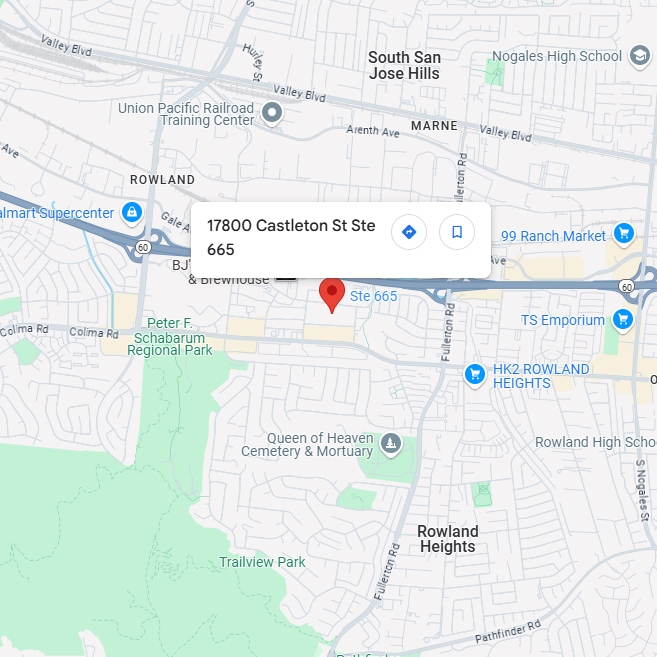
17800 Castleton St. Ste 665. City of Industry. CA 91748

info@editxor.com

+1-833-226-3234 (USA Toll-free)
+1-224-345-1927 (USA)
+86-19120102676 (Intl)

 Room 501, Building D, International Business Incubator, No.3 Juquan Road, Science City, Huangpu District, Guangzhou, Guangdong, China 510663
Technical Support

Support Center
Beijing Time: Monday to Friday, 8:00 AM - 6:00 PM
Toll-Free (USA): +833-226-3234
Direct Line (USA): +1-224-345-1927
Email: techsupport@editxor.com

After-Hours Support
Beijing Time: Monday to Sunday, 8:00AM - 6:00 PM
International Line: +86-19120102676
Email: info@editxor.com

Facebook Messenger
Reach out to us on Facebook Messenger for personalized assistance and detailed information.

Linkedin
Engage with us on LinkedIn for professional inquiries, the latest blogs, discoveries, and updates on our innovative work.
FAQ
Which is better for studying CHCHD6 function, CHCHD6 Knockout HAP1 Cell Line or CHCHD6 overexpression HAP1 Cell Line?
The choice depends on the experimental question. CHCHD6 (coiled-coil-helix-coiled-coil-helix domain containing 6, MIC25) is a component of the MICOS (mitochondrial contact site and cristae organizing system) complex. The Knockout line is appropriate for asking whether CHCHD6 is required for predicted activities — CHCHD6 is one of multiple CHCHD-domain proteins that participate in MICOS complex assembly with MIC60/CHCHD3 paralogs; MICOS organizes the inner mitochondrial membrane cristae junctions essential for mitochondrial function. Overexpression is useful for studying CHCHD6 in heterologous expression contexts.
For mitochondrial biology research, the EDITGENE CHCHD6 Knockout in HAP1 enables study of MICOS biology. Other MICOS components (MIC60/IMMT, MIC19/CHCHD3, MIC25/CHCHD6, MIC10/MICOS10, MIC13, MIC26, MIC27) expression analysis aids interpretation. Rescue with wild-type CHCHD6 is the standard specificity control. The knockout is valuable for studying cristae junction architecture and mitochondrial inner membrane organization.
What are the application scenarios for this model?
Primary applications:
• MICOS complex assembly: co-immunoprecipitation of MICOS components in CHCHD6-null cells to characterize complex integrity.
• Cristae morphology: electron microscopy analysis of mitochondrial inner membrane cristae junctions in CHCHD6-null cells.
• Mitochondrial bioenergetics: Seahorse OCR analysis given MICOS's role in mitochondrial function.
• MICOS family paralog studies: CHCHD3 (MIC19), MIC60 (IMMT) expression analysis.
EDITGENE recommends this model for researchers investigating MICOS biology and mitochondrial cristae organization.
Is this CHCHD6 Knockout HAP1 Cell Line compatible with overexpression rescue experiments?
Yes. CHCHD6 rescue experiments require attention to mitochondrial targeting and MICOS assembly:
• Construct design: use a codon-modified CHCHD6 sequence with a small C-terminal tag (FLAG, HA). CHCHD6 has N-terminal mitochondrial targeting sequence and CHCH (twin CX9C) domain — preserve mitochondrial targeting and disulfide bonds.
• Mitochondrial localization validation: confirm mitochondrial localization by appropriate compartment markers.
• Functional readout: rescue should restore MICOS complex integrity and cristae junction morphology.
HAP1-specific considerations:
• Diploidization: HAP1 cells gradually diploidize during extended culture — confirm ploidy by flow cytometry at the time of phenotypic assay.
• Integration site sensitivity: position effects on transgene expression are more pronounced in near-haploid backgrounds; generating multiple independent rescue clones is strongly recommended.
• Transduction efficiency: HAP1 transduces with lentivirus at moderate efficiency — increase MOI compared to standard immortalized lines.
Which is better for studying BRCA2 function, BRCA2 Knockout BT-549 Cell Line or BRCA2 overexpression BT-549 Cell Line?
The choice depends on whether you are studying BRCA2's role as the principal RAD51-loading factor for homologous recombination or modeling BRCA2-deficient cancers for PARP inhibitor synthetic lethality. The Knockout line is the standard tool for asking whether BRCA2 is required for these processes — BRCA2 is a critical homologous recombination (HR) repair factor that, together with PALB2 and DSS1, loads RAD51 onto resected single-stranded DNA at double-strand break sites; BRCA2 contains the BRC repeats (RAD51 binding) and DNA-binding domain. BRCA2 germline mutations cause hereditary breast and ovarian cancer syndrome (HBOC) with substantially elevated lifetime cancer risk; BRCA2 is also implicated in Fanconi anemia complementation group D1 (biallelic mutations) and prostate, pancreatic cancer predisposition. Overexpression is useful for studying BRCA2 in heterologous expression contexts.
For HR-deficient cancer therapy research, the EDITGENE BRCA2 Knockout in BT-549 is uniquely valuable — BT-549 is a triple-negative breast cancer (TNBC) cell line, providing a clinically relevant context for HR-deficient cancer research. Rescue with wild-type or patient-derived BRCA2 mutations enables disease modeling. The knockout is a critical specificity control for ⭐⭐⭐ PARP inhibitors: ⭐⭐⭐ olaparib (Lynparza), talazoparib (Talzenna), niraparib (Zejula), rucaparib (Rubraca) — the foundational PARP inhibitor class for BRCA-mutated breast, ovarian, prostate, and pancreatic cancers exploiting synthetic lethality.
What are the application scenarios for this model?
Primary applications:
• PARP inhibitor synthetic lethality: critical genetic background for ⭐⭐⭐ olaparib (Lynparza), talazoparib (Talzenna), niraparib (Zejula), rucaparib (Rubraca) sensitivity testing — BRCA2-null TNBC should show profound PARP inhibitor hypersensitivity.
• HR deficiency studies: RAD51 foci formation and IR-induced DSB repair analysis.
• PARP inhibitor resistance: rescue with BRCA2 reversion mutations (clinically observed PARP inhibitor resistance mechanism) enables resistance modeling.
• TNBC modeling: in BT-549 TNBC context, BRCA2-null phenotypes relevant for hereditary breast cancer biology.
EDITGENE recommends this BT-549 TNBC-based model as the gold-standard genetic null for PARP inhibitor research and HR-deficient cancer therapy development.
Is this BRCA2 Knockout BT-549 Cell Line compatible with overexpression rescue experiments?
Yes, with significant technical considerations for this very large protein:
• Construct design: BRCA2 is a ~3,418 aa protein (~390 kDa) with 8 BRC repeats (RAD51 binding), DNA-binding domain (DBD), and OB-folds — full-length cDNA rescue is technically challenging due to the >10 kb mRNA size.
• Domain-focused rescue: BRC repeat regions or partial BRCA2 constructs may be more tractable for specific functional rescue.
• PARP inhibitor sensitivity rescue: WT BRCA2 rescue should restore HR proficiency and PARP inhibitor resistance — provides on-target PARP inhibitor validation.
• BRCA2 reversion mutation rescue: clinically observed reversion mutations enable PARP inhibitor resistance mechanism studies.
• Functional readout: rescue should restore RAD51 foci formation and IR-induced HR repair.
BT-549-specific considerations:
• BT-549 is a human triple-negative breast cancer (TNBC) cell line with characteristic basal-like features — relevant for TNBC biology, BRCA-deficient cancer modeling, and PARP inhibitor research.
• Lentiviral transduction is supported with moderate efficiency.
• BT-549 has TP53 mutation and other features of aggressive TNBC.
Which is better for studying CD46 & CD55 & CD59 function, CD46 & CD55 & CD59 Knockout HEK293 Cell Line or CD46 & CD55 & CD59 overexpression HEK293 Cell Line?
The choice depends on whether you are studying combined complement regulation or distinguishing the contributions of the three membrane-bound complement regulators. The Triple Knockout line is uniquely valuable for asking whether CD46/CD55/CD59 are required for complement regulation — CD46 (membrane cofactor protein, MCP), CD55 (decay-accelerating factor, DAF), and CD59 (protectin) constitute the three principal membrane-bound complement regulatory proteins (CRPs); CD46 functions as a cofactor for factor I-mediated cleavage of C3b/C4b, CD55 accelerates the decay of C3/C5 convertases, and CD59 inhibits MAC (membrane attack complex) assembly by binding C8 and C9. Combined triple knockout completely eliminates membrane CRP regulation, generating maximally complement-sensitive cells.
For complement biology and antibody-dependent cellular cytotoxicity (CDC) research, the EDITGENE CD46 & CD55 & CD59 Triple Knockout in HEK293 is the gold-standard genetic tool — single or double knockouts retain residual CRP activity; triple knockout completely abolishes membrane-anchored complement regulation. Single-isoform rescue (CD46 alone, CD55 alone, or CD59 alone) enables isoform-specific functional dissection — the gold-standard experimental design for the three-CRP system. The triple knockout is uniquely valuable for studying ⭐ rituximab, obinutuzumab, ofatumumab CDC mechanisms (these anti-CD20 antibodies eliminate B-cell lymphomas partially via CDC), eculizumab/ravulizumab pharmacology (anti-C5 antibodies for PNH/aHUS), xenotransplantation research (porcine CRPs are not effective against human complement), and emerging CDC-enhanced therapeutic antibody development.
What are the application scenarios for this model?
Primary applications:
• Complement-dependent cytotoxicity (CDC): in heterologous antibody-treated systems, CDC activity should be dramatically enhanced in the triple KO given complete loss of membrane CRP regulation.
• Anti-CD20 antibody CDC mechanism: critical genetic background for studying ⭐ rituximab, obinutuzumab, ofatumumab CDC contribution to B-cell lymphoma elimination.
• Single-isoform rescue: re-introduction of CD46, CD55, or CD59 alone enables systematic functional dissection — gold-standard experimental design.
• Eculizumab/ravulizumab mechanism: in heterologous PNH/aHUS-relevant contexts, anti-C5 antibody mechanism studies.
• Xenotransplantation research: porcine cells require human CRP rescue to evade human complement — this triple KO provides the human CRP-null platform.
EDITGENE recommends this triple knockout as the gold-standard genetic tool for complement biology, CDC-enhanced antibody therapy development, and xenotransplantation research.
Is this CD46 & CD55 & CD59 Knockout HEK293 Cell Line compatible with overexpression rescue experiments?
Yes, and rescue experiments are uniquely powerful in this triple knockout:
• Single-isoform rescue: re-introduction of CD46, CD55, or CD59 alone in the triple knockout enables systematic functional dissection — gold-standard experimental design for the three membrane CRPs.
• Construct design: use codon-modified sequences with small tags. CD46 (type I membrane protein) — small intracellular C-terminal tag (FLAG, HA); CD55 (GPI-anchored) — small N-terminal tag (after signal peptide; C-terminal GPI signal cleaved); CD59 (GPI-anchored) — small N-terminal tag (similar GPI processing).
• Surface localization validation: confirm plasma membrane localization for each CRP before complement assays.
• Pairwise rescue: combinations of two CRPs enable understanding of CRP cooperation.
• Functional readout: rescue should restore CRP-specific complement protection — CD46 should rescue C3b/C4b inactivation, CD55 should rescue convertase decay, CD59 should rescue MAC inhibition.
HEK293 transduces efficiently with lentivirus and supports systematic isoform-specific rescue experiments for the foundational complement regulation field.
Which is better for studying CSTL function, CSTL Knockout HEK293 Cell Line or CSTL overexpression HEK293 Cell Line?
The choice depends on the experimental question. CSTL (CSTL1, cystatin-like 1, CTES1, dJ322G13.4) is a less-characterized member of the type 2 cystatin family with a cystatin-like fold but undetermined specific function. The Knockout line is appropriate for asking whether CSTL1 is required for predicted activities — the cystatin superfamily includes active cysteine protease inhibitors (type 1 stefins, type 2 cystatins such as cystatin C/CST3) and proteins that may have lost or never acquired inhibitory activity; CSTL1 is located at the telomeric end of the chromosome 20 cystatin locus and its specific function has not been determined. Overexpression is useful for studying CSTL1 in heterologous expression contexts.
For cystatin family discovery research, the EDITGENE CSTL Knockout in HEK293 provides a clean genetic background for characterizing CSTL1-specific functions — CSTL1 represents an emerging gene with limited functional characterization. Rescue with wild-type CSTL1 is the standard specificity control. The knockout is valuable for cystatin family discovery research, identification of CSTL1 binding partners by interactome analysis, and emerging characterization of CSTL1 biology.
What are the application scenarios for this model?
Primary applications:
• Cystatin family biology: in vitro cysteine protease inhibition assays to determine whether CSTL1 retains inhibitory activity.
• Discovery proteomics: interactome analysis in CSTL1-null versus rescued cells to identify candidate binding partners.
• Cystatin family comparative studies: parallel analysis with CST3 (cystatin C), CST6, and other cystatin family members for functional comparison.
• Phenotypic discovery: parallel wild-type rescue during phenotypic characterization distinguishes CSTL1-dependent phenotypes.
EDITGENE recommends this model for researchers investigating less-characterized cystatin family biology and CSTL1 function discovery.
Is this CSTL Knockout HEK293 Cell Line compatible with overexpression rescue experiments?
Yes. CSTL1 rescue experiments require attention to type 2 cystatin architecture:
• Construct design: use a codon-modified CSTL1 sequence with a small C-terminal tag (FLAG, HA). CSTL1 has N-terminal signal peptide (cleaved, secreted) and mature cystatin-like fold — preserve all elements.
• Secretion validation: confirm conditioned media secretion by ELISA or immunoblot.
• Discovery-oriented rescue: parallel wild-type rescue during phenotypic characterization distinguishes CSTL1-dependent phenotypes.
• Functional readout: rescue should restore phenotypes identified during knockout characterization.
HEK293 transduces efficiently with lentivirus and supports stable rescue line generation.
Which is better for studying CLK1 function, CLK1 Knockout HAP1 Cell Line or CLK1 overexpression HAP1 Cell Line?
The choice depends on whether you are studying CLK1 (CDC-like kinase 1)'s role as a splicing factor kinase or its functions in alternative splicing regulation. The Knockout line is the standard tool for asking whether CLK1 is required for these processes — CLK family (CLK1-4) are dual-specificity kinases that phosphorylate serine/arginine (SR) proteins (SRSF1-12) on the RS domain, regulating SR protein localization (nuclear speckle release) and splicing factor activity; CLK1 is the most-characterized CLK family member. Overexpression is useful for studying CLK1 gain-of-function effects.
Important consideration: CLK family (CLK1, CLK2, CLK3, CLK4) members share substantial substrate scope — single CLK1 knockout may show modest phenotypes if other CLKs compensate. This product complements the parallel CLK4 Knockout in HAP1 (also available) for paralog-specific functional dissection. Rescue with wild-type or kinase-dead CLK1 is the standard specificity control. The knockout is a critical specificity tool for CLK inhibitors (TG003, T-025, T-039, SM08502/lociletum-emerging) in cancer (myeloid malignancies, breast cancer) and Down syndrome (DYRK1A/CLK family inhibition) drug development.
What are the application scenarios for this model?
Primary applications:
• SR protein phosphorylation: phospho-SRSF1, phospho-SRSF2 Western blot to characterize CLK1 kinase activity in serine speckles.
• Alternative splicing regulation: RNA-seq analysis of alternative splicing in CLK1-null cells.
• CLK family dissection: parallel analysis with CLK4 Knockout in HAP1 (also available) for paralog-specific characterization.
• CLK inhibitor specificity: critical genetic control for TG003, T-025, T-039, SM08502 in cancer drug development.
EDITGENE recommends this model for researchers investigating splicing factor kinase biology.
Is this CLK1 Knockout HAP1 Cell Line compatible with overexpression rescue experiments?
Yes. CLK1 rescue experiments require attention to dual-specificity kinase architecture:
• Construct design: use a codon-modified CLK1 sequence with a small C-terminal tag (FLAG, HA). CLK1 has N-terminal RS domain and central kinase domain — preserve all elements.
• Kinase-dead rescue: K191R mutation in the ATP-binding lysine abolishes catalytic activity.
• Functional readout: rescue should restore SR protein phosphorylation patterns.
HAP1-specific considerations:
• Diploidization: HAP1 cells gradually diploidize during extended culture — confirm ploidy by flow cytometry at the time of phenotypic assay.
• Integration site sensitivity: position effects on transgene expression are more pronounced in near-haploid backgrounds; generating multiple independent rescue clones is strongly recommended.
• Transduction efficiency: HAP1 transduces with lentivirus at moderate efficiency — increase MOI compared to standard immortalized lines.
