EDITGENE CO., LTD
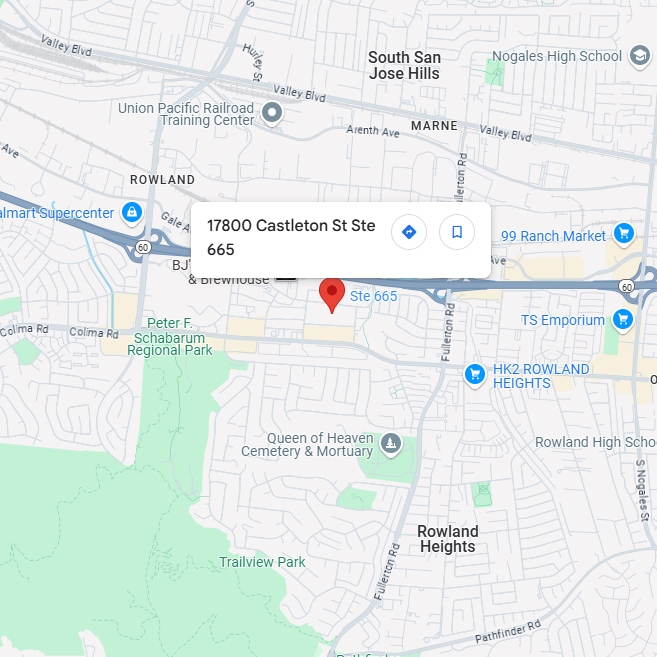
17800 Castleton St. Ste 665. City of Industry. CA 91748
info@editxor.com
+1-833-226-3234 (USA Toll-free)
+1-224-345-1927 (USA)
+86-19120102676 (Intl)

Technical Support

Support Center
Beijing Time: Monday to Friday, 8:00 AM - 6:00 PM
Toll-Free (USA): +833-226-3234
Direct Line (USA): +1-224-345-1927
Email: techsupport@editxor.com

After-Hours Support
Beijing Time: Monday to Sunday, 8:00AM - 6:00 PM
International Line: +86-19120102676
Email: info@editxor.com
Facebook Messenger
Reach out to us on Facebook Messenger for personalized assistance and detailed information.

Linkedin
Engage with us on LinkedIn for professional inquiries, the latest blogs, discoveries, and updates on our innovative work.
FAQ
Which is better for studying ZMYM3 function, ZMYM3 Knockout HAP1 Cell Line or ZMYM3 overexpression HAP1 Cell Line?
The choice depends on whether you are asking what ZMYM3 normally contributes to chromatin regulation and DNA damage response, or whether elevated ZMYM3 levels are sufficient to alter these processes. The Knockout line is the appropriate tool for the former and is particularly informative in HAP1, where the near-haploid genome eliminates allelic compensation. Overexpression is more useful for testing sufficiency hypotheses or for studying the consequences of ZMYM3 elevation seen in certain pathological contexts.
For ZMYM3 — where functional characterization is still active — the EDITGENE Knockout line in HAP1 offers the cleanest loss-of-function signal available, making it the more defensible primary tool. Rescue with wild-type or domain-mutant ZMYM3 then provides the most rigorous validation.
What are the application scenarios for this model?
Primary applications:
• DNA damage response assays: damage induction (ionizing radiation, topoisomerase inhibitors) combined with repair kinetics readouts (γH2AX foci resolution, comet assay) to probe ZMYM3's potential contribution to genome integrity maintenance.
• Transcriptomic profiling: RNA-seq to identify transcriptional changes associated with ZMYM3 loss and prioritize hypotheses about regulatory complex function.
• Chromatin pathway analysis: assays examining ZMYM3-associated complex composition and activity.
• CRISPR functional screening: HAP1's near-haploid background is well-suited to genetic interaction screens requiring clean loss-of-function genetics.
EDITGENE recommends this model for researchers working on chromatin regulation, genome stability, and DNA damage response pathway biology.
Is this ZMYM3 Knockout HAP1 Cell Line compatible with overexpression rescue experiments?
Yes, but HAP1's near-haploid genome introduces considerations that differ from standard rescue experiments in diploid lines:
• Integration site sensitivity: in a near-haploid background, lentiviral integration site effects on expression are more pronounced because there is no second allele to buffer position effects. Generating multiple independent rescue clones is strongly recommended.
• Diploidization caveat: HAP1 cells gradually diploidize during long-term culture, which can alter rescue interpretation. Confirm ploidy status by flow cytometry at the time of phenotypic assay.
• Construct design: use a codon-modified ZMYM3 sequence with a C-terminal tag. ZMYM3 contains multiple MYM zinc fingers; rescue with individual domain deletion mutants is informative for assigning function to specific structural elements.
• Functional readout: for DNA damage response phenotypes, rescue should restore both transcriptional changes and damage repair kinetics — discordance between the two suggests m6A-independent or chromatin-only functions.
HAP1 tolerates lentiviral transduction, though transduction efficiency is moderate compared to common immortalized lines — increase MOI accordingly during rescue line generation.
Which is better for studying ZFYVE28 function, ZFYVE28 Knockout BV-2 Cell Line or ZFYVE28 overexpression BV-2 Cell Line?
The choice depends on the experimental question. The Knockout line is appropriate for asking whether ZFYVE28 is required for endosomal sorting, trafficking, or microglial functions such as phagocytosis. Overexpression is appropriate when asking whether forced ZFYVE28 expression is sufficient to alter endosomal compartment dynamics or to modulate inflammatory signaling.
For an emerging factor with limited prior functional characterization, the EDITGENE Knockout line is the more conservative starting point — loss-of-function phenotypes provide clearer interpretive ground than overexpression artifacts, which are common for FYVE domain proteins due to their membrane recruitment behavior. Rescue with wild-type or FYVE-domain mutant constructs is particularly valuable here for assigning function to the phosphoinositide-binding domain.
What are the application scenarios for this model?
Primary applications:
• Endosomal localization studies: fluorescence microscopy co-localization with EEA1, Rab5, or Rab7 markers to assess whether ZFYVE28 loss disrupts endosomal compartment identity or dynamics.
• Trafficking assays: receptor internalization and degradation kinetics to quantify trafficking pathway integrity.
• Microglial functional assays: phagocytosis assays and inflammatory stimulation (LPS, cytokine treatment) to assess downstream consequences of endosomal pathway disruption on innate immune signaling.
• Transcriptomic analysis: RNA-seq to identify transcriptional changes associated with ZFYVE28 loss in a microglial background.
EDITGENE recommends this model for researchers investigating endosomal sorting, vesicular trafficking, and microglial biology.
Is this ZFYVE28 Knockout BV-2 Cell Line compatible with overexpression rescue experiments?
Yes. As a FYVE domain protein, ZFYVE28 rescue experiments require specific design considerations:
• Construct design: use a codon-modified ZFYVE28 sequence. Tag position is critical — the FYVE domain mediates membrane recruitment via phosphoinositide binding, and N-terminal tags can disrupt this function. C-terminal tagging is strongly preferred.
• Domain mutant rescue: a FYVE domain-binding-defective mutant (typically a conserved cysteine mutation that abolishes Zn²⁺ coordination) is essential as a specificity control. This distinguishes phenotypes dependent on endosomal recruitment from those mediated by other regions of the protein.
• Localization validation: confirm that exogenous wild-type ZFYVE28 recovers endosomal localization (co-staining with EEA1 or Rab5) before assessing functional rescue.
• Delivery method: BV-2 is a partially adherent murine microglial line with moderate transfection efficiency. Lentiviral transduction is the recommended approach; transient transfection is acceptable for short-term localization assays but not for inflammatory stimulation experiments requiring stable expression.
Polyclonal rescue pools are generally adequate for BV-2 given its phenotypic homogeneity in inflammatory assays.
Which is better for studying ZFP36L1 function, ZFP36L1 Knockout MAC-T Cell Line or ZFP36L1 overexpression MAC-T Cell Line?
The choice depends on whether you are asking what ZFP36L1 normally destabilizes in the mammary epithelial context, or whether forced ZFP36L1 expression is sufficient to drive enhanced decay of candidate ARE-containing transcripts. The Knockout line reveals the endogenous regulatory landscape — which transcripts accumulate when ZFP36L1 is absent. Overexpression tests sufficiency for accelerating decay or for outcompeting other ARE-binding proteins.
For post-transcriptional regulation studies, the EDITGENE Knockout line typically gives more interpretable results because ARE-binding protein competition (with TTP, ZFP36L2) complicates overexpression readouts. Rescue experiments with wild-type or zinc finger mutant ZFP36L1 are essential for assigning observed effects to RNA-binding activity rather than other protein domains.
What are the application scenarios for this model?
Primary applications:
• mRNA stability assays: actinomycin D chase experiments to measure half-life changes in ARE-containing candidate transcripts upon ZFP36L1 loss.
• Transcriptome-wide profiling: RNA-seq to systematically identify transcripts that accumulate in the knockout, providing an unbiased basis for candidate prioritization.
• Mammary differentiation studies: assays examining lactogenic differentiation markers and milk protein gene expression regulation.
• Inflammatory response studies: cytokine stimulation experiments to assess ZFP36L1's role in controlling inflammatory transcript stability in a mammary epithelial context.
EDITGENE recommends this model for researchers investigating post-transcriptional gene regulation, ARE-mediated mRNA decay, and bovine mammary biology.
Is this ZFP36L1 Knockout MAC-T Cell Line compatible with overexpression rescue experiments?
Yes. ZFP36L1 rescue experiments require attention to RNA-binding activity and paralog competition:
• Construct design: use a codon-modified ZFP36L1 sequence. Either N- or C-terminal small tags (HA, FLAG) are tolerated; avoid large fusion tags that may interfere with RNA binding or AU-rich element recognition.
• Zinc finger mutant rescue: a CCCH zinc finger RNA-binding-defective mutant is the critical specificity control for ZFP36L1 — it distinguishes phenotypes dependent on direct mRNA binding from those mediated by other protein interactions.
• Paralog considerations: ZFP36L1 has functional overlap with ZFP36 (TTP) and ZFP36L2. If endogenous paralogs are expressed in MAC-T at relevant levels, rescue interpretation should account for partial functional redundancy.
• Bovine-specific considerations: MAC-T is a bovine cell line; standard human/murine expression vectors are functional but bovine-codon-optimized constructs can improve expression. Lentiviral transduction works well in MAC-T with standard mammalian promoters (CMV, EF1α).
• Functional readout: rescue should restore both transcriptome-wide ARE-transcript decay patterns and specific phenotypic outputs (differentiation markers, inflammatory gene expression).
Which is better for studying ZEB1 function, ZEB1 Knockout HEK293 Cell Line or ZEB1 overexpression HEK293 Cell Line?
The choice depends on the experimental question, and for ZEB1 the answer is more context-dependent than for most factors. The Knockout line is appropriate when asking whether ZEB1 is required for repression of E-cadherin and other epithelial junction genes — although in HEK293, endogenous ZEB1 levels are modest, so the magnitude of phenotypic change may be smaller than in epithelial cancer lines. Overexpression is the more standard tool for driving EMT phenotypes in HEK293 and for activating mesenchymal gene programs.
For mechanistic dissection of ZEB1's regulatory logic — E-box binding, miR-200 circuit dynamics, co-repressor recruitment — the EDITGENE Knockout line in HEK293 provides a clean genetic background for reporter assays and rescue experiments. For phenotypic EMT studies, overexpression in HEK293 or work in endogenous-EMT cell lines (e.g., MDA-MB-231) is generally more appropriate.
What are the application scenarios for this model?
Primary applications:
• EMT marker profiling: E-cadherin and vimentin expression as direct readouts of ZEB1's epithelial gene repression function.
• miR-200/ZEB1 circuit analysis: reporter assays with miR-200 target sequences or ZEB1 promoter elements to dissect double-negative feedback loop dynamics.
• Transcription factor binding studies: ChIP or CUT&RUN to map ZEB1 occupancy at E-box-containing promoters.
• Rescue experiments: re-introduction of wild-type or domain-mutant ZEB1 constructs to assign specific functions to structural domains.
EDITGENE recommends this model for researchers investigating EMT transcriptional networks, ZEB1-regulated gene programs, and cancer invasion mechanisms.
Is this ZEB1 Knockout HEK293 Cell Line compatible with overexpression rescue experiments?
Yes, and rescue experiments are particularly important for ZEB1 because of its dose-sensitive role in EMT:
• Construct design: use a codon-modified ZEB1 sequence with a small C-terminal tag (FLAG, HA). Avoid large tags — ZEB1's multiple zinc fingers and homeodomain are sensitive to steric interference.
• Expression level control: this is critical for ZEB1. Overexpression beyond endogenous levels can drive EMT independently of any rescue effect, confounding interpretation. Inducible systems (Tet-On) with titration to physiological levels are strongly recommended.
• Domain mutant rescue: rescue with zinc finger DNA-binding mutants distinguishes ZEB1's transcriptional activity from protein-protein interaction functions. miR-200 binding site mutants in the 3' UTR can probe regulatory feedback.
• Functional readout: rescue should restore E-cadherin repression and mesenchymal gene expression. If endogenous miR-200 levels in HEK293 are high, they may suppress exogenous ZEB1 — consider miR-200-resistant rescue constructs (mutated 3' UTR seed sites).
HEK293's high transfection efficiency and stable lentiviral integration make it well-suited for ZEB1 rescue line generation.
Which is better for studying ZBTB39 function, ZBTB39 Knockout HEK293 Cell Line or ZBTB39 overexpression HEK293 Cell Line?
The choice depends on the experimental question, but for ZBTB39 — where prior functional characterization is limited — the framing of the question itself often needs to come first. The Knockout line is the appropriate tool for unbiased discovery: identifying transcripts and pathways affected by ZBTB39 loss without prior assumptions about its function. Overexpression is more useful once candidate regulatory activities have been proposed, allowing tests of sufficiency at specific loci.
For initial characterization of an understudied factor like ZBTB39, the EDITGENE Knockout line is the higher-value starting point — it generates the foundational data needed to guide subsequent overexpression experiments. Rescue with wild-type or BTB-domain mutant constructs then provides specificity controls and assigns function to structural domains.
What are the application scenarios for this model?
Primary applications:
• Discovery transcriptomics: RNA-seq to identify transcriptional changes associated with ZBTB39 loss, generating testable hypotheses about candidate downstream programs rather than validating pre-established pathways.
• Reporter assays: promoter and enhancer activity assays to probe regulatory function at specific genomic loci of interest.
• Protein interaction studies: co-immunoprecipitation or proximity labeling (BioID, TurboID) to identify BTB domain-dependent binding partners and place ZBTB39 within the broader ZBTB regulatory network.
• Rescue experiments: re-introduction of wild-type ZBTB39 or domain mutants to validate phenotypes and assign function to specific structural elements.
EDITGENE recommends this model as a starting platform for functional characterization of ZBTB39 in transcriptional regulatory biology.
Is this ZBTB39 Knockout HEK293 Cell Line compatible with overexpression rescue experiments?
Yes, and rescue experiments are particularly valuable for an understudied factor like ZBTB39 where specificity controls are essential:
• Construct design: use a codon-modified ZBTB39 sequence with a C-terminal tag (FLAG, HA). Avoid N-terminal tags near the BTB domain — this region mediates protein-protein interactions critical to ZBTB39 function.
• Domain mutant rescue: include both BTB domain mutants (disrupting co-repressor recruitment) and zinc finger DNA-binding mutants. For a factor with limited functional characterization, domain mutant rescues are often more informative than wild-type rescue alone — they help assign discovered phenotypes to specific protein activities.
• Expression level: titrate to approximate endogenous levels using inducible systems. For poorly characterized transcription factors, overexpression artifacts are a particularly serious concern because reference data on physiological function is limited.
• Functional readout: rescue should restore transcriptional changes identified in the discovery transcriptomics experiments. Discordance between wild-type and domain mutant rescue is often the most informative result for emerging factors.
HEK293 supports stable lentiviral integration with high transduction efficiency, making it well-suited for generating panels of rescue sublines.

Room 501, Building D, International Business Incubator, No.3 Juquan Road, Science City, Huangpu District, Guangzhou, Guangdong, China 510663