Cas12a2 CRISPR Breakthrough: RNA-Triggered Chromatin Shredding for Precision Cancer Cell Killing
On June 8, 2026, two back-to-back Nature studies introduced a transformative CRISPR application: a Cas12a2-based RNA-triggered "chromatin shredding" system capable of selectively eliminating cancer cells carrying mutations in genes such as TP53, EGFR, and MYC.
Unlike conventional genome editing tools that act at specific DNA loci, this strategy shifts CRISPR function from gene editing to cellular identification and destruction.
By recognizing cancer-specific mutant mRNA, Cas12a2 activates widespread DNA and RNA cleavage, leading to irreversible genome collapse and cell death—offering a new therapeutic avenue for traditionally "undruggable" oncogenic targets.
01
Strategy Shift: From Gene Editing to Cell Destruction
CRISPR technology has long been used for gene editing via targeted DNA double-strand breaks. However, these new studies redefine its role entirely.
One study from the Jennifer Doudna lab (UC Berkeley) and another from the University of Utah (Yang Liu lab) demonstrated that Cas12a2 can be programmed to respond to mutant RNA signals in human cells, triggering broad-spectrum nucleic acid degradation instead of single-site editing.
This RNA-layer activation allows precise discrimination between cancer and normal cells, opening new possibilities for targeting historically undruggable mutations such as TP53, MYC, and EGFR.
02
Mechanism: RNA Recognition → Chromatin Shredding
Cas12a2 is a V-type CRISPR nuclease with a unique dual-mode activity:
· RNA sensing phase
Cas12a2 binds to mutant mRNA via engineered sgRNA designed for TP53, EGFR, and MYC mutations.
Cas12a2 binds to mutant mRNA via engineered sgRNA designed for TP53, EGFR, and MYC mutations.
· Trans-cleavage activation
Upon recognition, Cas12a2 triggers non-specific cleavage of single-stranded DNA and RNA, causing genome-wide DNA damage (chromatin shredding).
Upon recognition, Cas12a2 triggers non-specific cleavage of single-stranded DNA and RNA, causing genome-wide DNA damage (chromatin shredding).
· Cell death outcome
The extensive DNA damage overwhelms cellular repair systems, leading to irreversible apoptosis-like cell death.
The extensive DNA damage overwhelms cellular repair systems, leading to irreversible apoptosis-like cell death.
This mechanism effectively functions as a precision "molecular trigger + genome-level destruction" system, activated only in mutant RNA–expressing cancer cells.
03
Mechanistic and Translational Advances: Dual Breakthroughs
Doudna Lab: Mutation-Specific sgRNA for Selective Cancer Killing
The Doudna team focused on transforming Cas12a2 into a programmable cancer-cell "molecular switch."
They engineered sgRNAs targeting mutation-derived mRNA signals, including:
● TP53 mutations
TP53 is the most frequently mutated gene in human cancers (>50% of solid tumors) and has long been considered undruggable. Cas12a2 recognition of mutant TP53 transcripts triggers chromatin shredding, selectively eliminating p53-deficient cells while sparing normal p53-expressing cells.
TP53 is the most frequently mutated gene in human cancers (>50% of solid tumors) and has long been considered undruggable. Cas12a2 recognition of mutant TP53 transcripts triggers chromatin shredding, selectively eliminating p53-deficient cells while sparing normal p53-expressing cells.
● EGFR mutations
In non-small cell lung cancer (NSCLC), common activating mutations such as L858R and exon 19 deletions were successfully targeted. Experiments demonstrated mutation-dependent cytotoxicity in cell line models.
In non-small cell lung cancer (NSCLC), common activating mutations such as L858R and exon 19 deletions were successfully targeted. Experiments demonstrated mutation-dependent cytotoxicity in cell line models.
● MYC overexpression
MYC is a broadly activated oncogene and transcription factor that has historically been difficult to target directly. Cas12a2 leverages abnormal MYC mRNA abundance in cancer cells to trigger chromatin shredding, offering a new strategy for previously "undruggable" targets.
MYC is a broadly activated oncogene and transcription factor that has historically been difficult to target directly. Cas12a2 leverages abnormal MYC mRNA abundance in cancer cells to trigger chromatin shredding, offering a new strategy for previously "undruggable" targets.
The study further validated tumor suppression in multiple cancer cell lines and xenograft mouse models, showing significant inhibition of tumor growth with minimal detectable off-target toxicity.
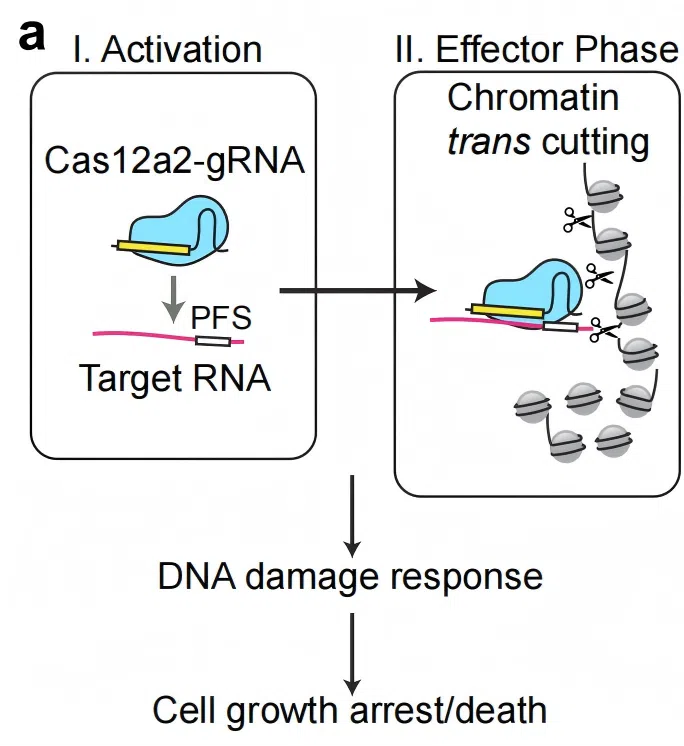 Figure 1. Schematic of Cas12a2-mediated trans-cleavage and mammalian cell killing mechanism
 Liu Lab: First Full Mechanistic Validation in Eukaryotic Cells
The University of Utah team filled a critical gap by translating Cas12a2 from bacterial systems into human cells and systematically dissecting its mechanism.
They demonstrated:
· RNA-triggering kinetics and activation thresholds in eukaryotic cells
· Spatiotemporal distribution of genome-wide DNA double-strand breaks
· Cell death pathways (p53-independent apoptosis-like mechanisms)
· Off-target assessment across transcriptome-wide profiles, showing no significant unintended cleavage activity
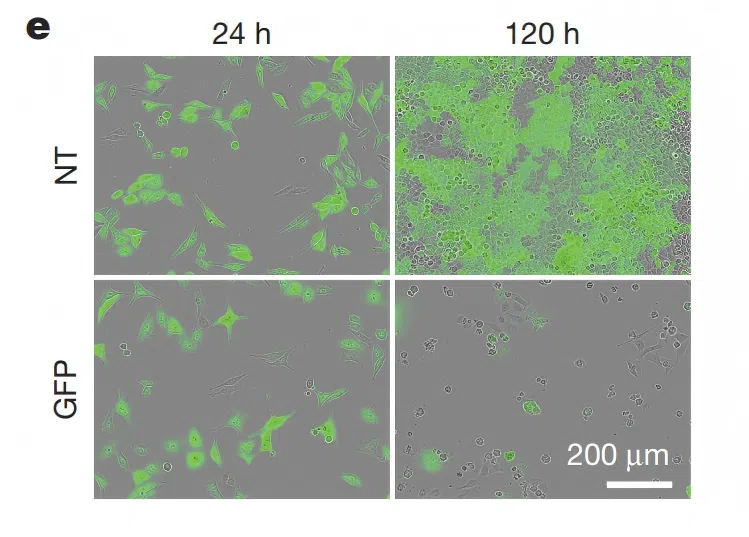 Figure 2. RNA-triggered targeted cell elimination mediated by GeCas12a2 in human cells
 Together, the two studies are highly complementary:
· The Doudna study emphasizes therapeutic feasibility and application design
· The Liu study focuses on mechanistic and molecular validation
Combined, they establish a complete evidence chain from fundamental biology to translational oncology potential.
Compared with Cas9, the most transformative feature of Cas12a2 is that it does not rely on specific genomic DNA target sequences. Instead, it directly reads mutation-specific mRNA signatures, enabling previously inaccessible targets such as TP53 and MYC to become actionable.
04
Challenges and Future Perspectives: How Far Is Clinical Translation?
The RNA-triggered chromatin-shredding strategy introduces a new class of therapeutic possibilities for "undruggable" mutations, but several key challenges remain:
● Delivery systems
Efficient in vivo delivery of Cas12a2–sgRNA complexes remains a major bottleneck. Lipid nanoparticles (LNPs), AAV vectors, and virus-like particles (VLPs) are expected to be key research directions.
Efficient in vivo delivery of Cas12a2–sgRNA complexes remains a major bottleneck. Lipid nanoparticles (LNPs), AAV vectors, and virus-like particles (VLPs) are expected to be key research directions.
● Off-target safety
Although current datasets show no obvious off-target effects, the complexity of the human transcriptome requires larger-scale and more comprehensive safety evaluations.
Although current datasets show no obvious off-target effects, the complexity of the human transcriptome requires larger-scale and more comprehensive safety evaluations.
● Mutation coverage
A single sgRNA typically recognizes a specific mutation site, but clinical tumors often exhibit extensive mutational heterogeneity. Multiplex sgRNA strategies may be required in future applications.
A single sgRNA typically recognizes a specific mutation site, but clinical tumors often exhibit extensive mutational heterogeneity. Multiplex sgRNA strategies may be required in future applications.
● Immunogenicity
As Cas proteins originate from bacteria, immune responses may limit therapeutic use. Protein engineering optimization will be necessary.
As Cas proteins originate from bacteria, immune responses may limit therapeutic use. Protein engineering optimization will be necessary.
Despite these challenges, the two Nature studies clearly mark the beginning of a new era in RNA-targeted CRISPR cancer therapy. With continued advances in delivery technologies and preclinical validation, Cas12a2 may emerge as a next-generation cancer treatment modality alongside CAR-T and ADC therapies.
05
Experimental Foundation: Precision Mutation Cell Models Accelerating Validation
The development and validation of this strategy rely heavily on accurate and well-characterized mutation-specific cellular systems.
Based on the mature Bingo™ Prime Editing platform, EDITGENE has established a comprehensive library of ready-to-use point mutation cell lines covering key targets such as TP53, EGFR, and KRAS.
Each cell line is accompanied by complete QC datasets and can be directly used for:
· Pathway mechanism studies
· Drug screening
· Functional validation of therapeutic strategies
References
[1] Zeng, J., et al. (2026). Targeting cancer-specific mutations with RNA-triggered chromatin shredding by CRISPR-Cas12a2. Nature.
[2] Scholz, P., et al. (2026). RNA-triggered cell killing with CRISPR-Cas12a2. Nature.
Contact us
+ 833-226-3234 (USA Toll-free)
+1-224-345-1927 (USA)
info@editxor.com
Tag
Share