Nature Breakthrough: Prime Assembly Enables Precise 11 kb Large DNA Insertions

Prime Editing (PE) has achieved precise single-base substitutions and small-fragment insertions. However, the targeted integration of large DNA fragments has remained a significant challenge.
On April 29, 2026, Nature published the paper “Prime assembly with linear DNA donors enables large genomic insertions,” which introduces the Prime Assembly (PA) strategy.
This approach builds upon the PE system and uses the single-stranded flaps generated by twin Prime Editing (twinPE) to anneal with the complementary ends of linear DNA donors, enabling precise insertion of fragments ranging from 0.1 kb to 11 kb, with efficiency reaching up to 40%.
PA does not rely on homologous recombination or exogenous integrases and remains effective in non-dividing cells, offering a more flexible and safer solution for large-fragment gene therapy.
01
Challenges in Large-Fragment Genomic Insertion and the Contributions of PE
Prime Editing has successfully enabled precise single-base edits and small insertions without inducing DNA double-strand breaks (DSBs), significantly enhancing editing safety.
However, the targeted insertion of large DNA fragments (such as full-length gene cDNAs spanning hundreds to thousands of bases) still faces major efficiency bottlenecks.
Traditional strategies relying on homology-directed repair (HDR) exhibit low efficiency in non‑dividing cells, often accompanied by p53 activation and cellular toxicity. Integrase‑based systems, meanwhile, tend to leave scar sequences at the junctions and pose challenges regarding immunogenicity as well as the delivery of exogenous proteins.
Therefore, developing an efficient, precise, and safe method for large‑fragment insertion based on prime editing (PE) has become a critical breakthrough required in the field.
02
Design Principle of Prime Assembly (PA): A Clever Upgrade to the PE System
Researchers have developed a novel Prime Assembly (PA) strategy. Its core concept is to use dual prime editing (twinPE, employing two pegRNAs) to generate two single-stranded flaps (approximately 35 nt each) at the genomic target site. These flaps are designed to be complementary to the sequences at both ends of a linear double-stranded DNA donor.
When PE6c, twinPE pegRNAs, and PCR-amplified linear dsDNA donors are co-transfected, the cell’s endogenous DNA repair machinery promotes annealing of the donor ends with the flaps, followed by ligation to achieve precise insertion of the donor DNA.
This method bypasses the need for exogenous reverse transcriptase or DNA polymerase to synthesize long DNA strands. Instead, it directly utilizes exogenous DNA donors, overcoming the previous limitation of PE in generating long inserts.
Additionally, the linear DNA donors used in PA can be easily prepared via PCR, avoiding the immunogenicity issues associated with plasmids while preserving the key advantage of the PE system — editing without DSBs.
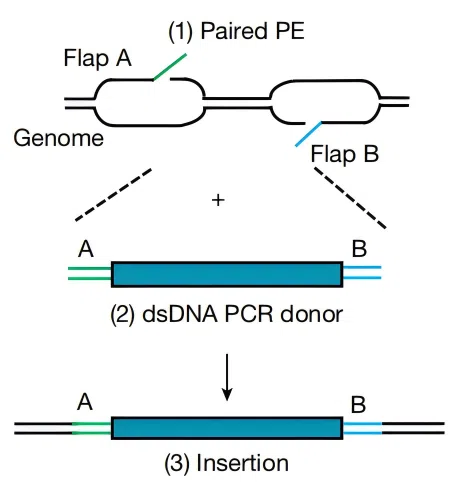 Figure 1. Principle of Prime Assembly Technology
 03
Efficient and Precise Large-Fragment Insertion: From 0.8 kb to 11 kb
At the AAVS1 safe harbor locus in HEK293T cells, researchers evaluated the insertion of a 0.8 kb DNA donor. Clear insertion bands were observed only when PE6c, two pegRNAs, and linear dsDNA donor were all present simultaneously.
In contrast, use of circular plasmid donors yielded almost no detectable insertion. Sanger sequencing confirmed that the insertion junctions were precise and seamless.
Compared with existing technologies such as PAINT 3.0 and evoCAST, PA demonstrated markedly higher insertion efficiency (approximately 20% for PA versus about 5% for PAINT/evoCAST).
PA is not limited to 0.8 kb fragments—it also efficiently inserts 2.2 kb and 4 kb donors. Most notably, researchers successfully integrated a full-length 11.3 kb DMD (dystrophin) cDNA into the AAVS1 locus. ddPCR quantification showed an insertion efficiency of approximately 10%.
The accuracy and integrity of the full-length insertion were further validated by junction PCR, Southern blot, and other methods.
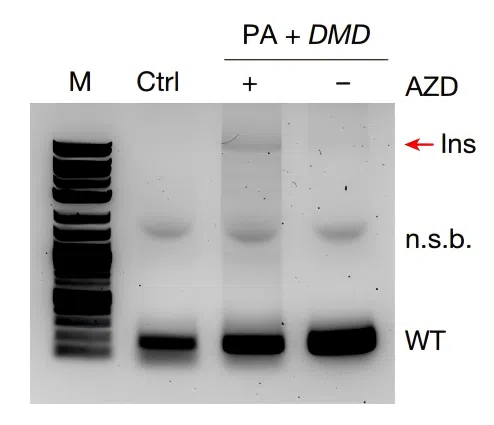 Figure 2. Prime Assembly mediated precise insertion of 11.3 kb full-length DMD cDNA
 04
High Specificity and Precision
To comprehensively assess the genome-wide specificity of PA, researchers developed a PA-tag detection system based on PE-tag/UDiTaS. The results showed prominent insertion signals exclusively at the target site, with off-target insertions being extremely rare.
Amplicon deep sequencing of the insertion junctions revealed that the proportion of precise junctions reached 83–88%. Taking into account background sequencing error rates, the actual editing precision is likely close to 95%.
Notably, addition of the DNA-PK inhibitor AZD-7648 further increased the precise junction rate to 88–91%, while also enhancing overall insertion efficiency.
05
Optimization Strategy: Split Donor Assembly and Therapeutic Potential
To overcome the limitations of synthesizing long DNA fragments by PCR, researchers drew inspiration from Gibson assembly and divided a large insert into multiple smaller donor fragments with 30 bp overlaps between adjacent fragments.
Upon co‑transfection of two overlapping GFP fragments (each ~430 bp), they achieved successful intracellular assembly and insertion of the complete 0.8 kb GFP sequence at ~30% efficiency. Even three overlapping AAT gene fragments (totaling 1.9 kb) were correctly assembled and inserted inside cells.
This split‑donor strategy offers a practical solution for bypassing the bottleneck associated with synthesizing long DNA fragments.
To demonstrate therapeutic applicability, researchers precisely inserted a 2.4 kb CD19‑CAR gene into the T cell receptor alpha constant region (TRAC) locus, achieving site‑specific CAR integration. These results highlight PA's significant potential for the development of off‑the‑shelf CAR‑T cell therapies.
06
A New Member of the PE Family — PA
Prime Assembly (PA) represents a major advancement of the prime editing (PE) platform. By leveraging the complementary annealing between single-stranded flaps generated by twinPE and the ends of linear DNA donors, PA enables efficient, precise, and scarless insertion of large DNA fragments up to 11 kb in mammalian cells.
PA retains the key safety advantage of PE—no double-strand breaks—while eliminating the need for exogenous integrases or plasmids. This results in lower immunogenicity, easier delivery, and compatibility with both dividing and non-dividing cells.
As a powerful and safe new tool, PA opens exciting possibilities for gene therapy (such as large-gene replacement for DMD and hemophilia), cell therapy (site-specific CAR-T integration), and complex genome engineering.
EDITGENE is a strong advocate of prime editing (PE) technology. We closely track the latest advances in PE and its derivatives—such as PA—and are committed to providing researchers with end-to-end solutions, from editing tools to disease models.
On the services side, our proprietary Bingo™7 prime editing platform enables efficient gene knock-ins, generation of disease-relevant point-mutant cell lines, and customized gene knockout projects.
For off-the-shelf products, EDITGENE offers over 5,000 ready-to-use gene-edited cell lines covering key targets across immunology, neuroscience, oncology, and other research areas. Each line is rigorously validated by Sanger sequencing, STR authentication, as well as sterility and mycoplasma testing, ensuring both genotypic accuracy and high cell viability.
Reference
Liu, B., et al. (2026). Prime assembly with linear DNA donors enables large genomic insertions. Nature. https://doi.org/10.1038/s41586-026-10460-4
Contact us
+ 833-226-3234 (USA Toll-free)
+1-224-345-1927 (USA)
info@editxor.com
Tag
Share