Flash-KI Platform
High-Efficiency Targeted Integration Platform (FLASH-KI): Precise Writing, Unprecedented Efficiency
Core Technology 1: FLASH-KI Delivery System
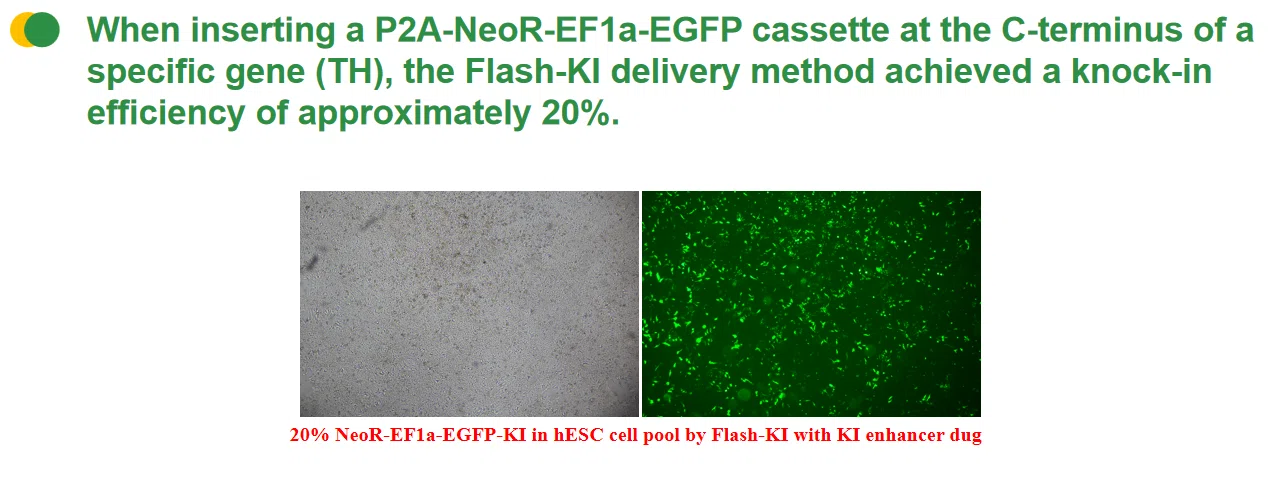
Conventional knock-in strategies typically require separate delivery of Cas9 protein, sgRNA, and Donor templates, resulting in cumbersome procedures and limited efficiency. EDITGENE’s proprietary FLASH-KI delivery vector enables the simultaneous delivery of the RNP complex and Donor DNA, significantly streamlining the workflow and boosting synergistic efficiency.
Core Technology 2: NHEJ Inhibitor (KI Enhancer Drug)
During CRISPR-mediated DNA double-strand break repair, Non-Homologous End Joining (NHEJ) is the dominant repair pathway, while HDR efficiency is typically below 10%. EDITGENE has independently developed an NHEJ inhibitor that transiently and reversibly suppresses key NHEJ proteins during the editing process, forcing the cell to prioritize the HDR pathway.
Service Advantages:
FLASH-KI vs. Conventional Methods
| Dimension | Key Scientific Question | Our Technology | Key Resources |
| Point Mutations | Which variants are true drivers of tumorigenesis? | Precision genome editing | Mutation cell model library |
| Tumor Dependency | Which genes are essential for cancer cell survival? | Gene dependency profiling | Tumor dependency evaluation platform |
| Drug Targets | Which genes are viable therapeutic targets? | Target validation, functional assessment | Knockout cell line panels |
Expected Performance Across Different Cell Types (FLASH-KI Platform)
| Difficulty Level | Representative Cell Lines | Expected KI Efficiency (Pool) | Project Success Rate (Homozygous Clones) | Turnaround Time | Key Influencing Factors |
|
⭐Low
(Standard Immortalized) |
HEK293, HeLa, CHO, HCT-116 | 60-90% | >90% | 8-10 weeks | Target locus, Donor design quality |
|
⭐⭐Medium
(Hard-to-transfect, some suspension) |
A9, THP-1, K562, Jurkat | 30-60% | 70-80% | 10-12 weeks | Cell state, transfection parameters, NHEJ inhibitor concentration |
|
⭐⭐⭐High
(Stem cells, Primary, Organoids) |
iPSC, hESC, Primary T cells, Organoids | 15-30% | 60-70% | 12-14 weeks | Cell health, monoclonal formation efficiency |
High-Purity Cell Pool: For easily transfected cells and housekeeping genes (e.g., GAPDH, ACTB), we directly deliver a cell pool with >80% positivity, saving time on monoclonal screening.
Custom Hard-to-Transfect Cells: Exclusive optimized protocols for hESCs, iPSCs, and primary cells to ensure the generation of clean, single-background positive monoclonal cell
- As of Q1 2026, the FLASH-KI platform has successfully delivered 20+ commercial projects covering immortalized cells, tumor cells, and stem cells, achieving precise integrations of fragments ranging from 0.5 to 5.5 kb. The overall project success rate is 98.6%, with a 100% success rate for fragments under 5500 bp.
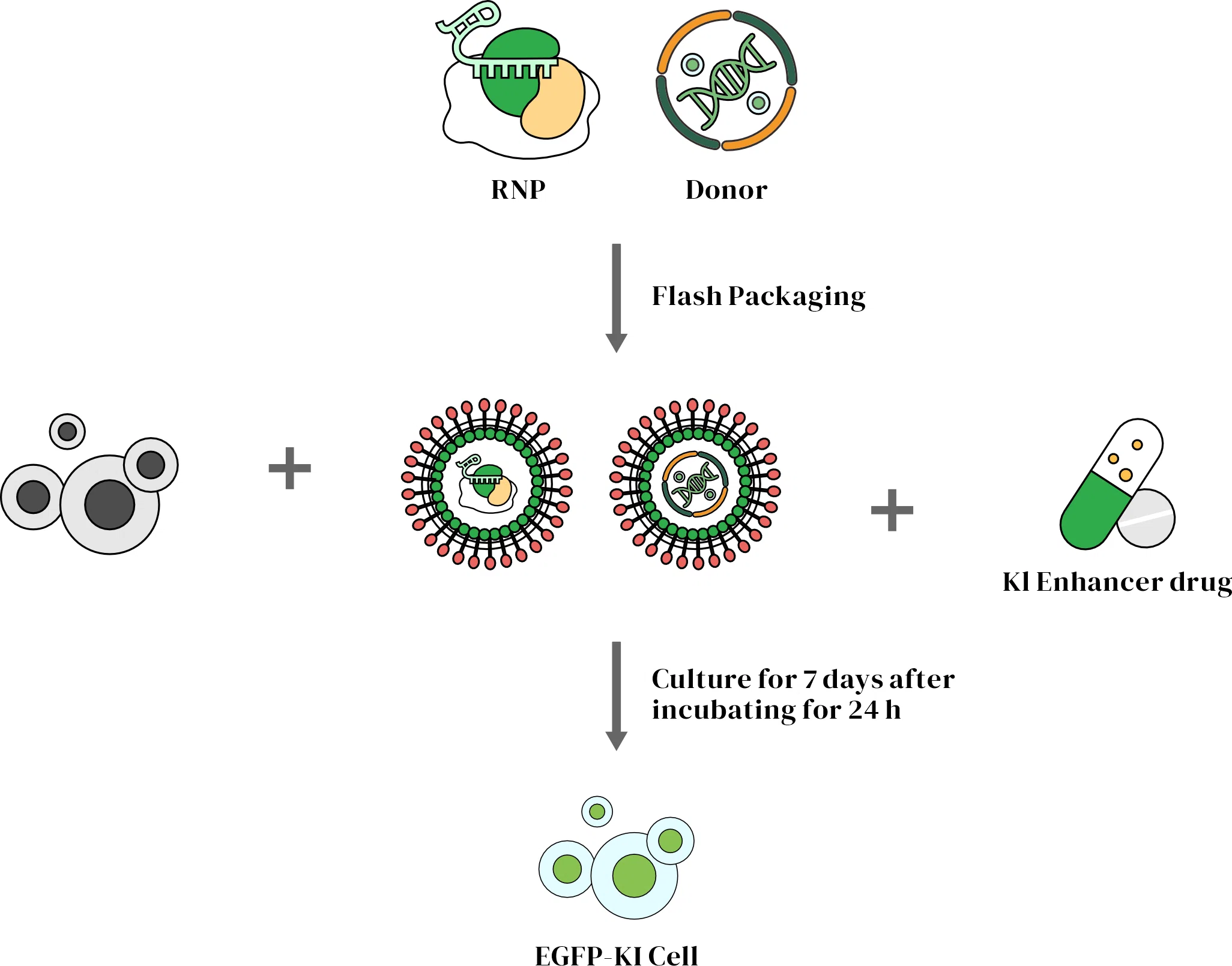
Case 1: Precise KI of a High-Abundance Gene (HEK293T-GAPDH-EGFP)
Technical Breakthrough: Conventional electroporation yielded only 68% positivity with 30% cell death. FLASH-KI achieved: ① 88% positivity without antibiotic screening; ② >95% cell viability; ③ 40% improvement in fluorescence signal uniformity.
Timeline: Delivered an 88% positive polyclonal pool in 4 weeks; obtained homozygous KI monoclonal cell lines in 8 weeks (30% faster than the industry average).
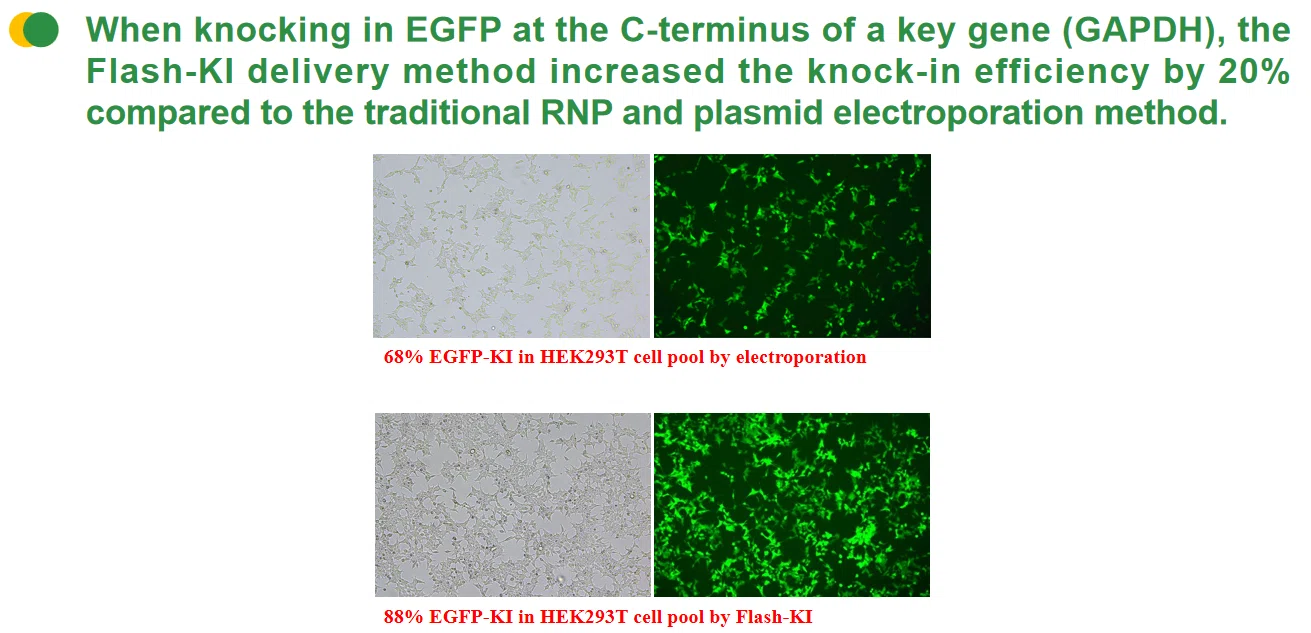
Case 2: Complete Gene KI at a Random Target (A-9-T1R1-CoGFP-Puro)
Technical Breakthrough: FLASH-KI achieved: ① 46% positivity without selection markers; ② >95% cell viability; ③ Monoclonal stability exceeding 15 passages.
Timeline: Functional polyclonal pool in 5 weeks; monoclonal screening and validation completed in 9 weeks.
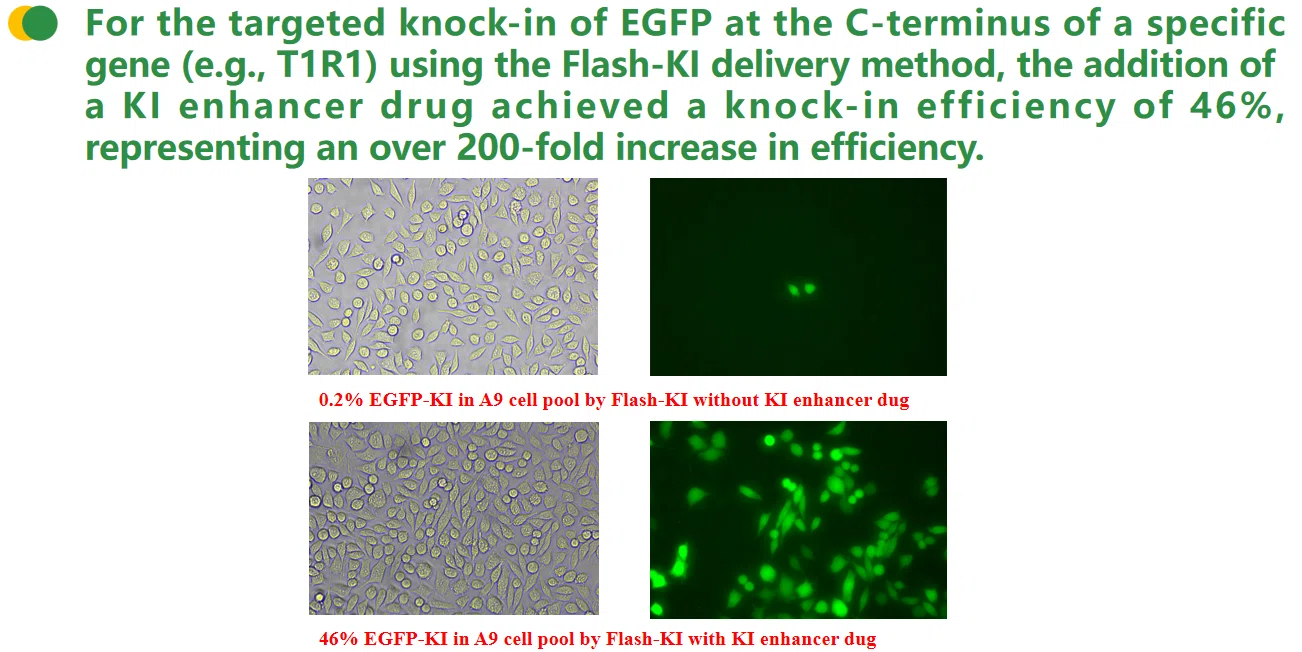
Case 3: Human Embryonic Stem Cell Editing (hESC-H9-TH-P2A-EGFP)
Technical Breakthrough: Overcame barriers for hard-to-transfect stem cells: ① 20% positivity without drug selection (industry average <5%); ② >90% cell viability; ③ Normal expression of Oct4/Sox2 pluripotency markers.
Timeline: 20% positive polyclonal pool in 5 weeks; monoclonal identification completed in 11 weeks.